
We Donate One Week's Wages to the Victorian Bush Fire Appeal

Image from Guardian.co.uk

With news of the Victorian Bushfires dominating the news and views of the whole of Australia for most of February, it was with incredulity and awe that we listened to it all. The great extremes of the climate produced by this continent were asserting themselves dramatically. As we were experiencing the Wet season in the Top End, and the mighty river systems rose and flowed in flood and deluge, with creeks torrential and the floodplains vast, in the south of the country, in Victoria, they were having the worst, the most destructive and devastating Bushfires in Australian history.

Around the same time in Ingham, on Queensland's coast, the rain fell uninterrupted for 33 straight days, flooding many out of their homes, and drowning the crops the farmers rely on for their living. Not a drop of this vast deluge touched the southern end of the island, instead a drought, that had been constant for nearly seven years, culminated this year in record temperatures soaring into the mid-forties as a scorching heat-wave sent the state of Victoria into full alert; residents were warned of the potential for Bushfires; the bone-dry dense scrub surrounding the populated areas was like tinder, and coupled with high winds gusting through, a state-wide fire ban was called and extreme caution urged.
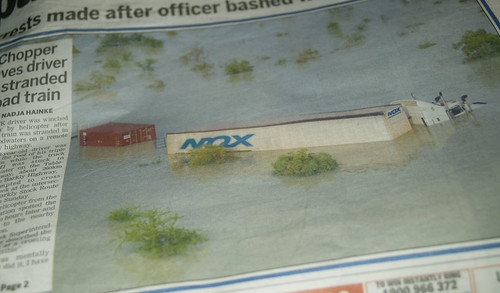

DSC_0673

When the first fires broke out, some, we found out later, deliberately, they erupted and consumed and burnt with an intensity that no one anticipated. Black Saturday, February 7th, saw more than four hundred bushfires variously burning with degrees of ferocity as the wind fanned and spread the flames. The policies towards Bushfires propose that citizens in the path of one choose one of two options: to escape and take with you what you can, or to stay, prepare a defence, and fight. The fires were so intense and furious that some people had neither time nor warning to do either. 120 people died that day alone.

Over 175 people died all told, more than 500 injured, over 3,500 buildings were razed completely, with damage to thousands more. Entire communities were burnt to a cinder, the bodies of families trying to flee the inferno were found in their cars, still in their driveway, unable to escape in time. Those that survived talked of a 'Tsunami of fire' that roared through the hillside, hurled along by 100 kilometre and hour winds, giving those that had made all the proper preparations to protect their homes no opportunity to as much as think of defending themselves. Fire-breaks were rendered useless, new fires erupted from the smouldering ash, igniting the dense layers of scrub, as firemen backtracked and worked furiously trying to contend with it all, and as the wind threw it along.

Listening to the reports as they came in on the radio, we were horrified to learn of the carnage, as daily it got worse. More fires started as the wind carried with it spark and cinder, fanning the blaze over large distances and areas. It was terrible. Utter helplessness and total loss followed in its wake as home after home and family after family were affected. The series of fires consumed many towns north-east of the state capital Melbourne and most were badly damaged or almost completely destroyed - Kinglake, Marysville, Narbethong, Strathewen and Flowerdale among those towns that no longer exist. The fires affected 78 individual townships in total and left an estimated 7,500 people homeless.

Those unaffected, and those elsewhere in Australia, however, quickly sprang into action; providing temporary accommodation, in the form of spare rooms, and caravans, tents and beds in community relief centres. Clothing was sent by the truckload, food and water brought in also. Fodder and hay for the animals was found. By the fifth day, with fires still burning, over $88 million had been raised, by the end of the week over $200 million, as individuals, businesses and the Australian nation rallied behind the ravaged state of Victoria and dug deep to help out.

The culture of mateship, and helping others that we have had experience of ourselves was now fully behind the survivors; people from all over were taking a personal responsibility to raise as much as they could, taking it upon themselves to organize matters and do whatever they could. This very Australian of characteristics, borne of an ingrained can-do willingness to help the underdog, to aid where possible when needed and to do it all briskly, robustly and totally naturally, was taking from the adversity and giving those whose lives had been reduced to ash, some hope that things may get better.

Every town we passed through from Kununurra to Port Headland, had their own Bushfire Appeal and were intent on helping out. As small as our contribution was, we hoped that through contributing we could give back a little of the amazing kindness and generosity Australians have shown to us. The fires of Black Saturday and the following days, were of a magnitude scarcely credible, but so too was the response to it.......
Read a cheeky bit more!

Kununurra to Broome - Phil's Birthday Behind Bars

DSC_9200

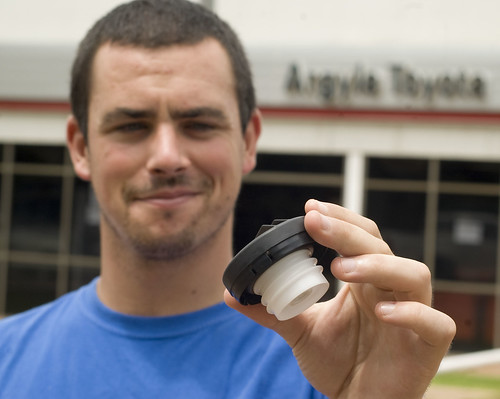
A forgotten fuel cap is replaced (again)by Argyle Toyota

The day was hot and damp and steadily, not spectacularly, raining as we left Kununurra and made our way along the Great Northern Highway for our next intended stay in Broome. It had been a hot night in Kununurra. Sweat and rain intermingled. We had seen the night sky turn from dark blue to a deeply bruised purple as its ominous growling and churning yielded to spectacular sheet-lightning and the growling boom of thunder.

The strobe-like illuminations of an electric storm had flashed intermittent and when the threatened rain came it rattled the corrugated iron roofs with an assaulting drum-roll, cascading down, overspilling gutters within seconds, while the drains lustily drank the deluge.

The air that morning was still heavy and damp, the build up continuing. It had been raining a lot and would yet for another two months. It may be this fact, or it may not, that contributed to the story circulating that neatly encapsulates how small town Australia, small town anywhere really, works.

Kununurra is the Aboriginal word for "meeting of big waters", and where the waters meet they have been diverted into the Lake Argyle Dam. Lake Argyle covers an area 18 times the size of Sydney harbour, 1000 square kilometres. At full flood level that area increases to 2100 square kilometres and with 150,000 litres every second pouring into it from its catchments during the flood, it is a mighty contribution to the towns water supply and irrigation.

Told, undoubtedly as a joke it quickly became the rumour which caused a lot of stress for the residents of the Mirima community in Kununurra. The story spread that the Lake Argyle dam wall had cracked, was cracking, had breached, was spilling and in the way of all that pent up water waiting to burst its way down was firstly the Aboriginal settlement of Mirima then the town of Kununurra itself.

Untitled_Panorama1

The Police received a number a calls from concerned residents, the locals were terrified and with the heavy, heavy rain still falling they were concerned the whole wall would break. According to the local paper one resident said that: "I was sleeping in my house, when I got a shock one night because one lady comes up and told me; "get up, get, up, get up" the dam is going to bust. So I got up, wake my brother in law, wake my grandson, I got a shock that night."

The Water Corporation, the Police, their experts and engineers, all concluded there was no foundation to the rumour, and while the locals concerned themselves with the foundation of the dam, the rumour grew and more worried calls flooded in.

Notice was issued by those experts and engineers, refuting completely the whole affair; the rumour was the work of malignant drunks or innocent fools, and that there was absolutely no evidence to support it. It was completely, unequivocally untrue. But the fact that they sent all those people there to look at what they claimed to be a blatant lie seemed to signify there had to be a problem.

Untitled_Panorama1darwinbroome

Panic ensued. If a drunken yarn, or tall story it really was, then the Water Authority and Police would not be so involved or so worked up about it. Stricken locals, unable to get through to the overloaded switchboards, and driven to fever-pitch by their own hysteria, considered evacuating, those that had one took to their cars, others barricaded their homes, boats were readied, supplies stored away, the boatless residents demanding something be done to save them as they could not even swim (a dam bursts, the front end of 10,763,000 megalitres starts coming towards you, but you're ok, you have your water wings inflated and rubber ring on) and the more it was denied there was anything the matter, the more they demanded something be done, and the rumour ran riot as their imaginations worst nightmare struggled to contain itself and idle conjecture turned to solid fact.

DSC_9265

It reached its height with tales of the dam having already broken and with witnesses reporting a concerned engineer conducting emergency repairs (150,000 litres per second pouring in one end, an engineer's thumb blocking up the other?) and with that the Police got on air and on radio and told everyone to stop it! just calm down ok! And as far as we know, they did, but that crack there, hairline, you can barely see it....

We spent the day driving and it became clear that we would make it no further than Halls Creek. The Roadhouses and Service Stations we stopped and asked at along the way could not help and it was with a diminishing supply of fuel that we approached. By the time we got there we had emptied the second of our three Jerry cans into the thirsty tank and still had 600 kilometres or so to go until Broome.

Halls Creek is not much. In fact as far as not much goes it is probably a little less. We did bump into Bernie though, Lou's other half, on his route through from Karratha in his Road Train. He could not talk long and we had to find someplace to sleep. We shook him by the hand and thanked him again for all he and Lou had done for us.

DSC_9264

We found some accommodation quickly enough at a Motel. Phil did the talking then we settled in and I was startled to discover that the price of the room was my presence in the kitchen of the adjoining restaurant, washing up, as I was the only one with 'proper' shoes, and it had anyway already been arranged. I took it for the team, though it was hard to watch all the steaks and chops disappear from view out the swinging door, while I had instant noodles and cold beans for tea.

DSC_9258

The job for the morning, before we could really head off anywhere, was to find some fuel. With limited choice we had to find it at one of two places on the main strip we had been told were the only Servos in town. Both said they could not help. But undeterred as only the truly desperate can be, we asked again whether there were any more, and hold on, said one fella, hang-yer-hat, if there isn't another one just down the way, round that corner and on the left.

DSC_9256

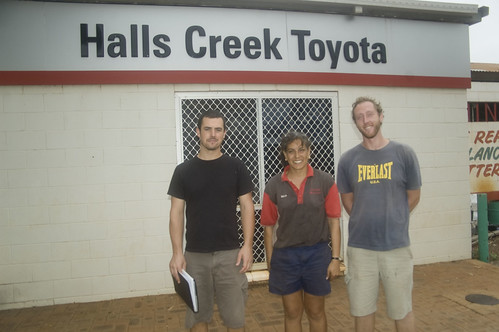
We saw the Toyota Garage, parked up, went in, and asked. Delia the bosslady said yes, of course, no worries. Relief. Just use that diesel pump there, number five. Anxiety. We're on unleaded, we said. We have no unleaded left, Delia answered. A bitten fingernail, a chew of the lip, attested to the tricky spot. But I'll get on the phone to my husband and see what we can do. Hope. Good old Diego, he and Delia agreed to donate to us $90 for fuel, here you go have it. Anxiety again. Erm, we can't actually handle the cash we murmured, any cash we are given must go to Book Aid. Back on the phone to Diego, and it was agreed that Delia would accompany us to the Servo and pay for us after we filled-her-up. That we made everything as hard as possible for them and that they still came through it testament to the good nature of these small towns and its people.

DSC_9237

It was Phil's birthday today, and as usual we all forgot. Or were we unsure, and not wanting to admit we didn't know (erm, I thought it was last week..?) and besides who knew how old he was? either 19 or 27, possibly 29, what with his mercurial existence making him elusive to the confines of chronological ageing and all (I'm a name not a number!) but we pretended we knew all along as Phil made subtle then not so subtle hints as to the specialness of this special day. Special boy that he is he was duly awarded the pride of place window seat position in the van.


DSC_9241

We had been warned that the Fitzroy River was liable to flood at any time but that it had been crossable for the past couple of days, but not to delay much, as it rose quite quickly. Reports came to us via various sources (yarns, everyone loves telling travellers these yarns, especially one with a dramatic twist) that the River had at one point been ten metres above the bridge, and in danger of flooding the town. Equally dramatic had been the assertion that it rose some forty metres in under an hour, when the rains came and drowned out the dry.


In Fitzroy Crossing we discovered these claims to be true. The Fitzroy River can be one of the fastest flowing in the world. Its flow rate down the 15 kilometre wide flood plain has been estimated to be 30,000 cubic metres per second. In flood, it is probably the largest river in Australia. Fact, for those who like them. It was, thankfully for our safe passage over, probably ten metres under the bridge when we passed through and into Fitzroy Crossing itself.

Untitled_Panorama2darwin broome

We headed for the Crossing Inn, the local pub/hotel/motel/restaurant, figuring that we should probably try to find somewhere to stay in which we could toast Phil's (alleged) birthday with a couple of schooners of the cold stuff. Terry the manager gave us a donga (Australian word for a basic unit, or cabin, transportable, but not on wheels) and as Phil demanded we make him birthday tea, I went to talk with Terry alone, to bargain for some beers, and he agreed to a few each if I wash his car. Duly done, Terry fed us, and the beers came, and we toasted Phil's (possible) birthday with as much joy as people who-are-not-even-sure-if-it-is-his-real-birthday-at-all-but-that-are-going-along-with-it-because-Phil-is-making-such-a-fuss can be.

The pub was teeming with life as the seemingly all the Aboriginals in the area were having a party. I asked the barlady, Hilda, if it was a busy night an she said 'nah', in a way that made me think of the response Capitain Ahab would give if you went fishing with him and exclaimed as he pulled up a Spanish Mackerel that it was 'a big fish eh'. Hilda had seen worse, or better, I don't know.

DSC_9270


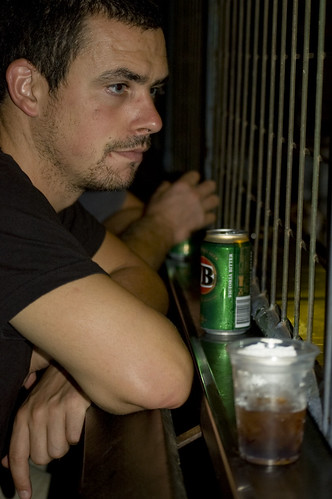
Lulled into a false sense of drinking comfort and security, we sit at the bar, swaying away to the harmonica playing on the duke box. We are just getting merry with our third drinks and then all of a sudden the jovialities are cut to a prompt finish with the sound of a loud siren. The girl behind the counter shouts last orders and we quickly get our last green cans and rum cokes. I still have one drink to get but I’m not allowed to get it. Can I get two? No, you can only have one because it is one drink per person. Can’t I drink it really quickly and get another? No. Can you just give me a double then? No.
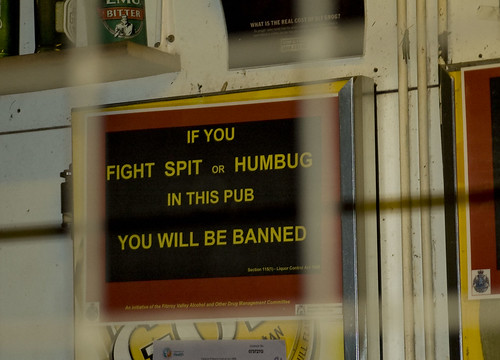
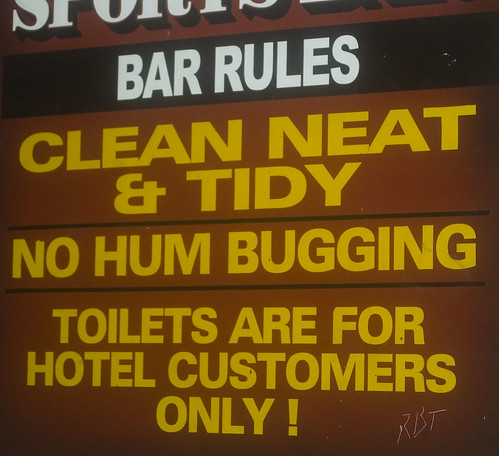
Ten minutes after the last order is called everyone is booted out the bar, metal cages come down around us as we are asked to move our drinks. I notice the signs behind the bars stating no spitting, fighting or humbugging. Left sat on stools, stunned at the change of scenery around us in the space of ten minutes we are asked to drink faster in a firm tone.
I am in no position to complain, I haven’t exactly paid for the beer, Gareth has worked for it but we had no money crossing palms. If I was a paying customer I would have had some words to say to the boss.
The staff left and the lights were turned off.
It is eight thirty five. Apparently the day ends early here.

Phil is stunned. Happy birthday.


DSC_9276

The mossies were busy that night, situated as we were not far from the Fitzroy River, but we were by the time we got back to the Donga, merrily inebriated (Anne had oonl ha-d two drinks- hic!) and prepared to admit that it was Phil's birthday if he were prepared to take the joke this far.

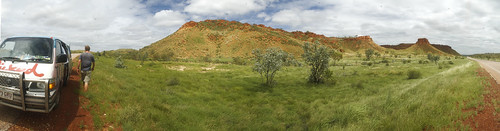
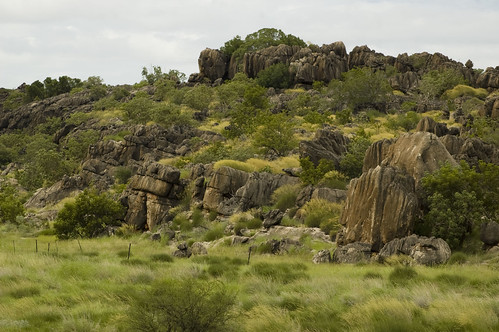
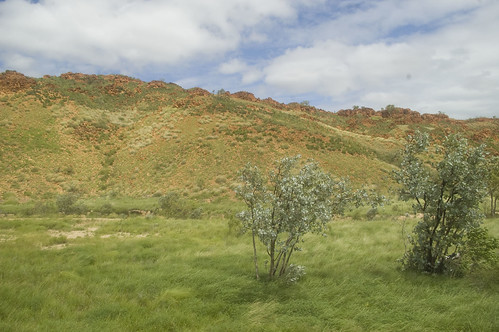
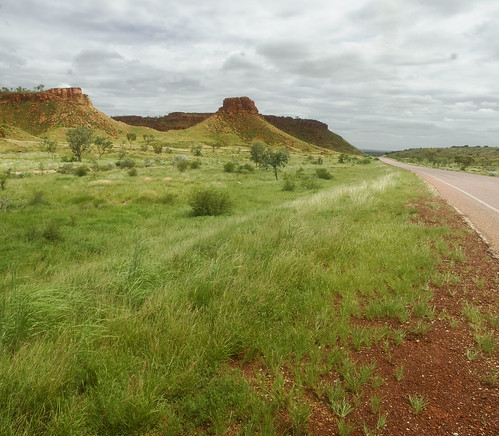
We were up and-at-them the next morning with 400 kilometres to Broome, along country that it is hard to describe the barrenness of. With no trees in all four directions, as far as the horizon blank and featureless, without even an undulation pretending to be a hill. But it was all verdant and lush thanks to all the rain, with the deep rich red-ochre earth framing the picture of the thirstily thriving flora.

DSC_9279
Presenters of Fitzroy Crossing local radio gave us Tshirts and caps, showing us around their station as the signal was down

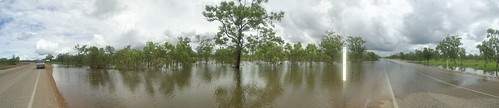
With much water still on the roads, we were careful to avoid being too reckless as we drove over the flooded roads (cautionary yarns by well-meaning Aussies, of wheels snapping! and axles breaking! and people stranded! in the middle of nowhere! for days! because they didn't know the road was not there anymore under all the water) with care and made it to Broome around five o'clock, heading for Cable Beach besides that other vast tract of water the Indian Ocean.
Read a cheeky bit more!
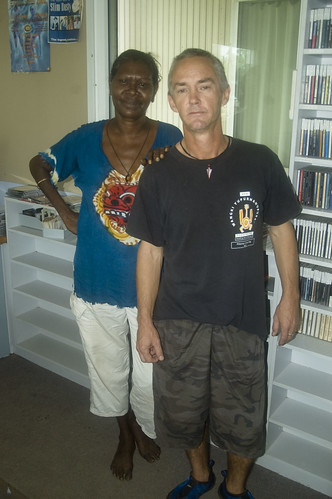
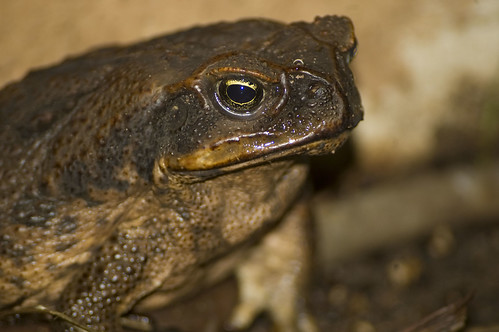
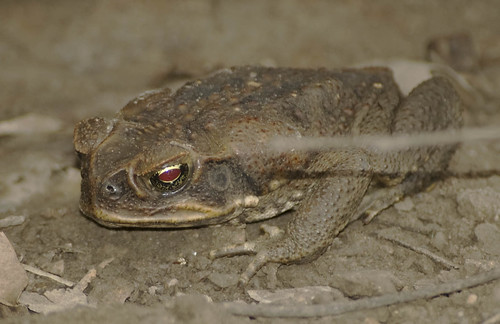
What is listed as a Class 1 drug, has a nation watching its invading front and is used to play baseball and cricket? The Cane Toad

DSC_9056

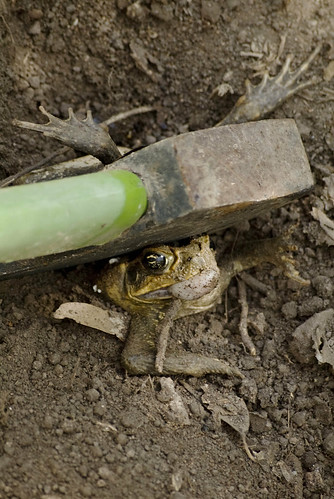
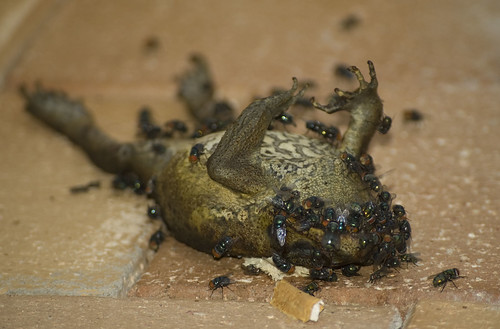
The chemical Bufotenin excreted from the glands behind the eyes of a cane toad is classified, just as heroin, as a Class 1 drug under Australian drug laws. Toad licking could result in serious illness or death and many a pet dog has fell prey to these unappetising poison bags. Apparently the toxic skin has been smoked to obtain hallucinogenic effects, but after seeing a multitude of these vulgar cretins with white puss squirting out, it is certainly not something I have ever found myself compelled to do. Pets and animals eating the creatures become sick and die and so the cane toad has become something of a national focus for hatred and disgust. Thriving in conditions where they have no natural predators, and with the ability to kill most native wildlife in Australia when ingested, this introduced species has become one of Australia’s biggest mistakes.

DSC_2768
The cane toad front is something that has been closely watched by a nation, especially farmers and nature conservationists can be watched on Australian TV after the weather. Native to Central and South America, the cane toad was introduced to Australia to help eradicate the cane beetle in 1935, the idea being they would eat all the cane beetles leaving the crops pest free without the use of pesticides. However, the cane beetles live on the top of the crops and guess what, because of its voracious and unselective appetite, the cane beetle is too fat to climb up and get them.
DSC_2759

The migration of the cane toad from its introduction area in Queensland has been rapid. As we passed through quarantine at the state boarder for Western Australia we saw signs all over advising that vehicles must be checked for cane toads. On the table by the checkpoint a fat, sorrowful pickled specimen squashed into a large yet still too small jar is on show for those who don’t know what a cane toad looks like. As I asked the boarder security guys about the cane toad they advised me that it would not be long now before the cane toad is upon them anyway, they are merely kilometres away from the check point. As it happens, we were in Western Australia a matter of days before there was a report on the evening news showing a lowly single cane toad hoping over the state boarder before it was caught and put in a jar next to the one I had asked about, the first of many to come crossing through to Western Australia.
“The impact of the cane toad, if allowed to happen, will literally destroy one of the last unique biodiversity wilderness frontiers in Australia," Lee Scott-Virtue. Kimberley Specialists in Research.


In April 2005, in an attempt to give Australian native species a fighting chance against the cane toads, Dave Tollner, a Northern Territory Member of Parliament, called for legalisation of attacking cane toads.
People were encouraged to kill as many as they could and even though many animal and conservation groups criticised the inhumane way of killing, I have seen detol being poured over them, cars swerving all over the road to run over those cane toads that sit on the bitumen, I have seen farmers tossing and kicking toads against walls, and I witnessed the axing of a toad in half. And in those states where the cane toad is common, and with parents positively encouraging their children to eradicate the cane toads from their gardens, some rather cruel 'sports' have developed, such as cane toad golf, baseball and cricket, where cane toads are used as balls. A bounty of 40c per toad has even been discussed in some areas. But with one adult female laying up to 20,000 eggs, and with some people telling of the toads strange ability to vomit their guts out and then swallow them back again they have so far beaten any attempts of eradication.

DSC_2081

Queensland has galvanised residents into taking part in mass culls.Townsville council encouraged people to track down and bag up the toads in an event called Toad Day Out, where live animals were taken to a collection point the following day, weighed and either frozen or gassed to death, with the carcasses turned into fertiliser.
DSC_8463

"The cane toad is probably the most disgusting creature and the most destructive creature," said Queensland politician Shane Knuth, who came up with the Toad Day Out idea. "They're killing our native wildlife, they're taking over our habitat and they're hopping all through this country." Those who criticise claim that freezing is a more humane way to kill cane toads rather than hitting them with cricket bats, but as I watched a conscientious member of the public collect dozens of toads from around his house in plastic bags and place them in a bucket, the odd plastic bag escaping the bucket, hopping off blindly around the kitchen until the fish fingers were moved over to make room in the freezer, I couldn’t help but wonder if freezing was actually any kinder at all.
Read a cheeky bit more!
Wa Border and What do you Eat when you have No Money?

Airlie Beach 042

Anything and everything!


Sorry but this is going to be a little bit of a four month without money fuelled whinge. One thing we have prepared ourselves for is to go hungry. We knew right from the start that with no ability to purchase food that we would sometimes have to go without. However, we are yet to starve, and although we are eating strange things, we are well enough.

DSC_7283
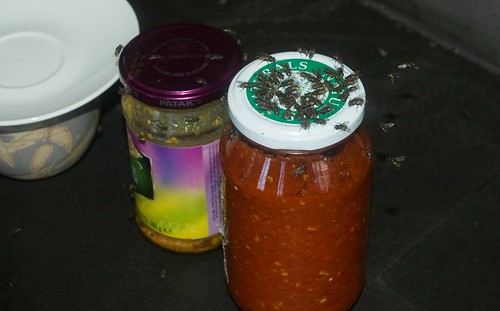
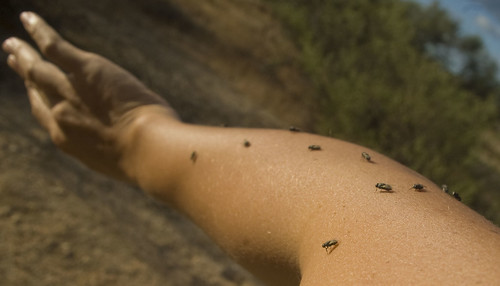
Flies plague our food

We had been on the road all day, stopping only for a camping stove tea and stale biscuit break and we were all famished. Phil is cooking. I was hovering around the stove with little patience, willing the food to be ready with the fortitude of a girl in a toilet queue on New Years Eve; time drags, the minutes canter the wrong way up the down escalators.
Without seasoning, oil or proper cooking implements Phil tries to make something of the meagre ingredients, mostly being pulled from aluminium tins, squelching as the cylindrical food matter, falls out of its self made vacuum and slides into the pan with a big plop. We are so hungry it really doesn’t matter what we eat, anything will do, but we are looking forward to the meal to come due to the lavish way Phil is sprinkling things to the pan and for the amount of time he is spending on food preparations. Unfortunately, to call Phil’s culinary repertoire limited would be boastful, and the only thing we could do to get the fodder he prepared down our necks was to cover it in the fish flavoured sauce we had. It is, I think, the first time I have eaten anything which you could honestly describe as being gruel.

DSC_1754

As a test of our will power people eat ice-cream in our wake in the midday sun, eat T-bone steaks on cloth covered tables to the left and drink cold beer that we can’t get our hands on to the right. It is hard sometimes, it has definitely been brought home to me just how much I rely on my ability to go out and buy myself anything I want to eat or snack on, anytime I like [in my normal life], to cope with different situations: something cold and icy when I’m hot; something stodgy and comforting when I’m cold; something full of grease and carbohydrates when I want to veg out; fresh fruit and vegetables when I need a detox; something chocolate covered when I’m feeling a little down.

DSC_9189
Tempting......


Now that we can’t do that we have to be inventive about keeping our mind, and our eyes for that matter, off those food and drink items we covet. With little in the form of provisions in the Cheeky Camper we often have to work for a feed.
We have opened packets to find food crawling with weevils, opened long life milk to find it curdled after a few hours in the immense heat and taken mouthfuls of water to find it putrid and eggy, yes, sometimes it is tough.

DSC_9689

Flies suck the moisture from you

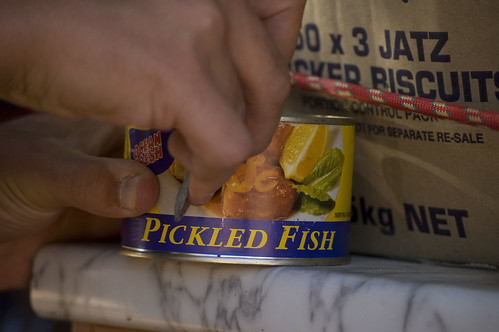
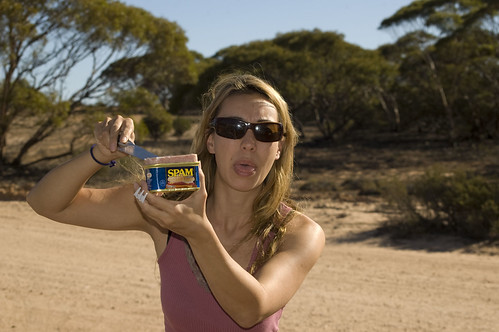
I can’t remember the last time I had a piece of chocolate, a big deal for a girl, a piece of gateaux or an ice-cream, gees what I wouldn’t give sometimes for an ice-lolly in the heat of the day in the desert when I’m surrounded on all sides by hoards of tourists in service stations deciding if they should go for the orange or lemonade flavoured ices. We can’t have cereal and milk because we have no milk, or cereal for that matter. Meals have little distinction except for what time of day we eat them, breakfast containing pretty much the same substance as what lunch and dinner will contain the only difference being lunch is eaten cold out of a can, smothered in its own tomato sauce and dinner will be heated over the camping stove if there is any gas, which at the moment we also do not have. So, on the road without the money to purchase a beer after a hard days graft, nor the money for a soda or basics like bread, us three Brits don’t even have the means to make a cup of tea, a very big deal, which anyone from the UK can sympathise with.

DSC_7783

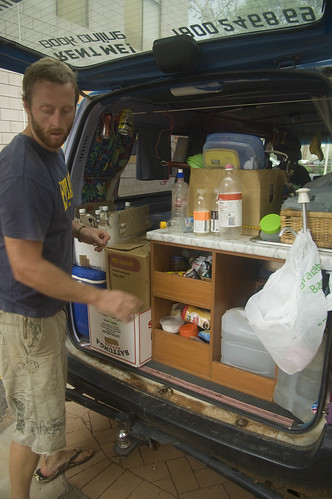
Gareth checking out what food supplies we have left in the van

While we would love to have a larder filled with goodies and a refrigerator full to the brim of fresh produce, we don’t. We make do with what is donated to us along our travels and look forward to home made food at the homes of those who invite us for a feed, or to those restaurants and cafes which take pity on us. Sometimes we eat like kings and other times we open the tin of Christmas chick peas and the last can of spaghetti hoops.

DSC_9760
We hadn’t had any fresh food supplies for a while, but Tony Milhinos, the guy in Darwin who had done so much for us, paid for our supermarket sweep and we carefully selected fresh fruit and vegetable we thought would last though out our long trip to the West Australian coast. We ate a few grapes and apples, rationing the rest of the fruit to last the journey. Unfortunately, we were completely unprepared for what was to happen to us next. We arrived at the Northern Territory/Western Australia (WA) border and we were told to hand over everything! Most of the food items we had been rationing were on their quarantine list, we had to give up our fruit, our onions, our vegetables, garlic, honey, coconuts and nuts, in fact, everything that wasn’t dried or in a tin. We sat at the border control, for a while, eating as much fruit as we could cram in.
We really regretted our previous rationing.
DSC_1757


Read a cheeky bit more!
The Wet and The Smell - Katherine to WA Border

DSC_9147

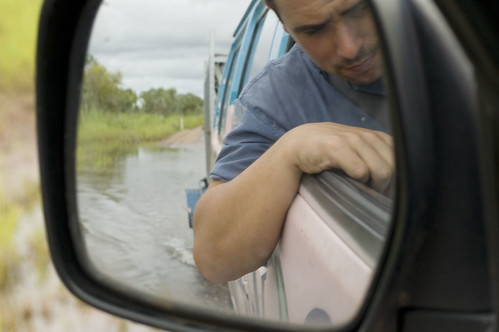
Phil checks the water level as we drive through a flooded road

After a soggy, damp night, we moved on from Katherine. The dash down the day before had delayed dinner, and we hardly ate, and we woke hungry and sullen next morning. That aside, we were looking forward to getting a move on and see what all the fuss was about. The Victoria River had been a thorn in our side, an obstacle immovable and for many, the talk of the town. It was the Vic River this, Vic River that. ‘You’ll never make it across… you’ll be at least 6 weeks marooned… might as well go another way (there is no other way)… I remember a time when it was up to the nostril of every man-jack this side of the Nullarbor…’ and we listened and nodded much the way we did when they (a different ‘they’) forewarned us about these floods that have a tendency to occur up here.

floods DSC_9229

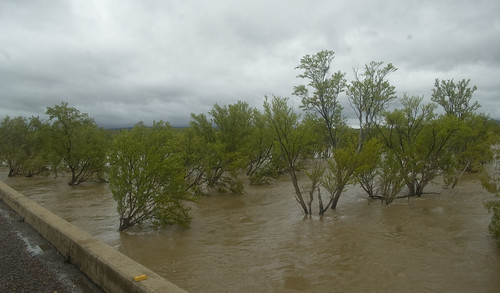
Phil takes a picture of the bushland turned raging river

Blithely we vie for having our heads in the clouds or stuck firmly in the sand. It isn’t easy living like that, but necessary, and productive. Had we listened to the ‘they’ we would not have been able to see what all the fuss was about when the Wet hits, nor being so daring to at the drop of a hat dash down daredevil fashion and attempt a bold crossing of this behemoth river during flood season.

DSC_9105

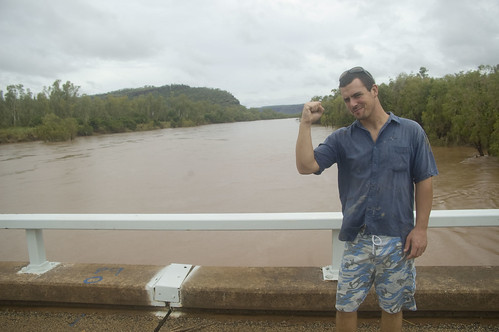
Phil triumphantly raises his fists at being able to cross the Victoria river

Recent reports were that the Victoria River was now a metre under the bridge, which was passable, having been two metres over until two days ago, and passable only by boat, if you had the courage to fight not only the swift current but the hungry crocs too. Not knowing what to expect (“it [the river] goes down as fast as it goes up, but it can go up quicker!” they would say enigmatically to frighten us) and it was with some trepidation mingled with excitement that we approached, nervous that it had risen overnight (‘watch yer nostrils buddy!’) but eager all the same to see this huge surge of water in full flood.

DSC_9106

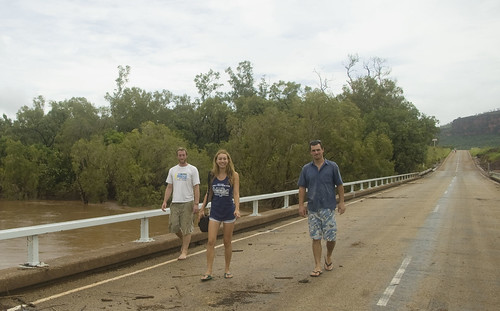
We all walk over the Vic Bridge to imagine what the water line was like at its peak height of over 4 meters above the road

It was all clear to cross. The strewn debris and washed-up detritus along both sides of the bridge substantiated where the river had been, but it ran a metre or so beneath it. Submerging some of the ghost gum trees on the banks below, though, and maybe four hundred metres wide, the rich red ochre flood water raced down, and it was hard to imagine how much extra water could make it rise a further six metres to the level it was at its highest point over the bridge. Maybe ‘they’ had a point about the Wet season.

DSC_9089

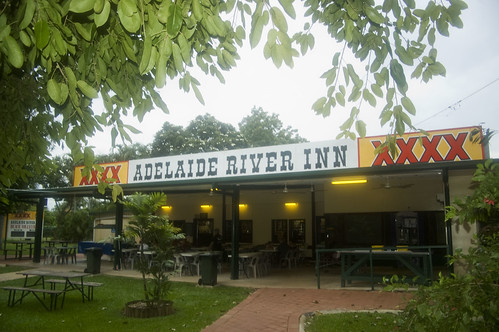
The Adelaide River Inn donates fuel to our cause

DSC_9093

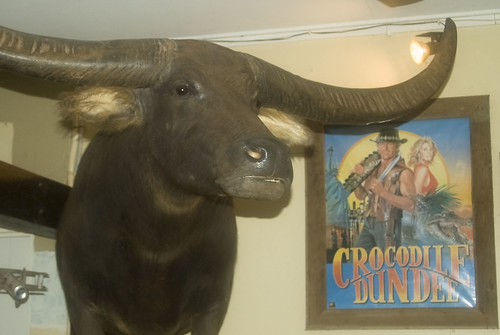
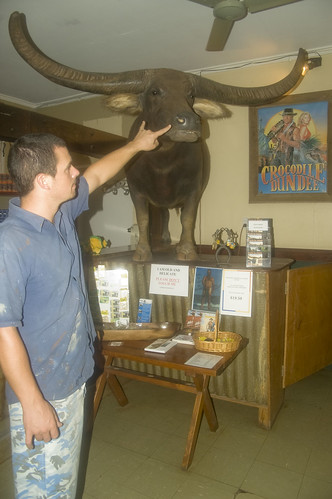
The actual bull that Crocodile Dundee hypnotises in the film!

DSC_9097

It has to be done, we all did it.

DSC_9100

DSC_9122

Untitled_Panoramatrailer

One hundred percent humidity and the stifling heat keeps you wet at all times, the sweat pours down your back and pools around your arse soaking the seat. Legs sticking to the material on the chair and hair greased to your scalp, I mostly feel incredibly sticky, smelling about as attractive as I look and looking about as attractive as I feel under my layer of dirt.

DSC_9156

DSC_9167

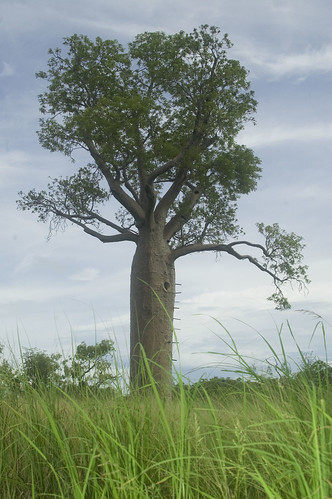
A boab tree with climbing pegs hammered into it

DSC_9176

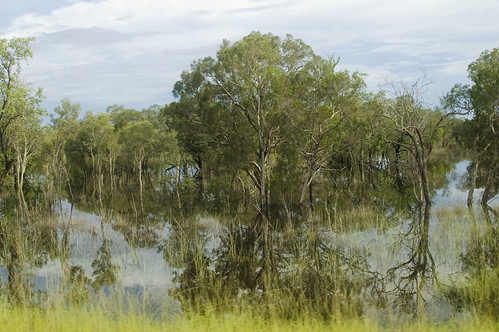
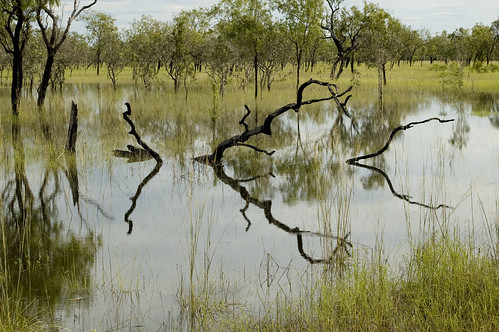
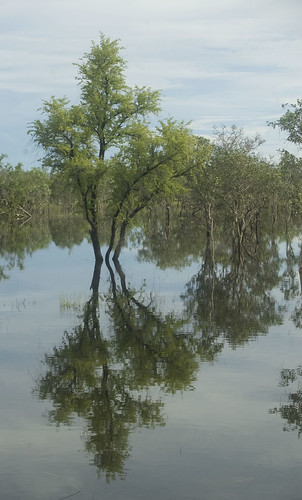
Reflexions in the flooded bush make beautiful links between the skies and the land

DSC_9199

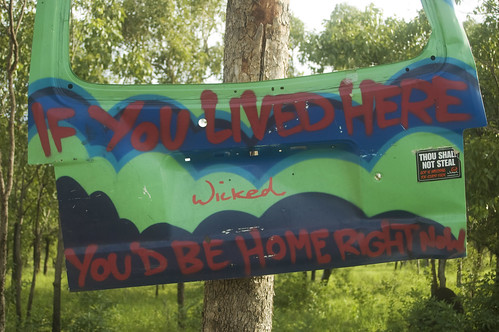
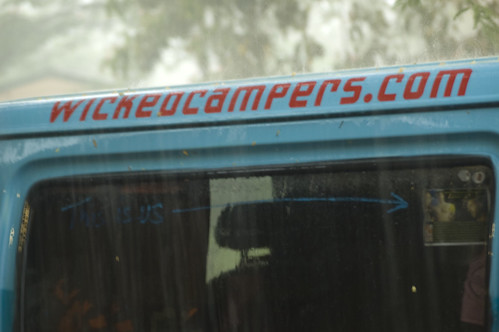
A Wicked Camper signature painted door

Living in such a small space for such extended periods of time with two boys means that aromas fester, mutating into unbreathable, putrid, gaseous clouds if left unchecked. Our sleeping quarters, cooking area, washing area, larder and storage space, one unto itself, means that stray whiffs are unavoidable.
It hits you as soon as you open the van door, the smell of deodorant battling with the pungent smell of foist, sweat, feet and fart. Be it shoe, sock, a long forgotten rotten spud down the back of a seat, a soup spillage left to go mouldy, a damp dirty towel gone unwashed for an age or a lentil fuelled fart unable to escape the van due to rain forced closed windows, we have experienced it all. Add to that, the pong of the discernable flavour of carrion coming in from outside and the stifling heat to intensify all the stenches, you have a devils reek of a symphony for the nostrils. Read a cheeky bit more!

Flooded in Darwin

DSC_8511

Picnicers at Mitchel Street Square

The final two weeks in Darwin were spent playing the old waiting game. We played it well, as it turns out, but we had no choice, we had to remain, we could not leave. We were well and truly trapped, caught in a jam, with nowhere to go.

DSC_8265
The rain came every day keeping the Victoria River Bridge flooded
It is as very simple tale to tell. You see, we did not listen to those who knew more than us. Or, if we did, we nodded, and thought it did not apply to us. At best we simply forgot to heed the (many and frequent) warnings to: "Make sure you get out of the Tropics before the Wet Season". Because: "You'll be stuck, flooded in". 'Oh, we will', we always replied, 'we will', we would agree, 'we'll be long gone before the rains come down, long gone'.

DSC_7205


We were slap-bang in the middle of it all weren't we.

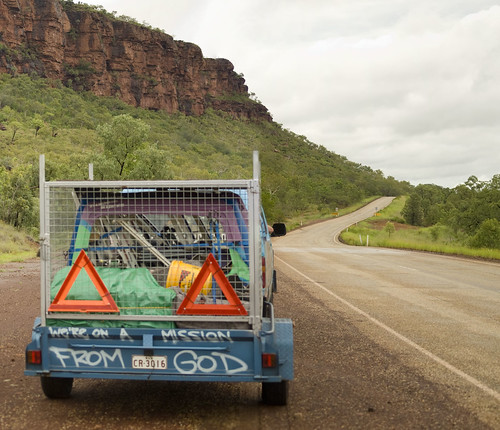
We got stuck, flooded in, like they said we would. To the south of us (then again, anywhere in Australia is south to the Darwin folk) towards Katherine the road was intermittently waterlogged, and west of Katherine towards the Western Australian border the road was closed. The Victoria River, 200 kilometres west along the Victoria Highway from the Mingaloo turn-off from Katherine had risen up and over the bridge, at one stage five metres over, a tremendous body of water in a great hurry to the sea and we were at its mercy.

DSC_9153

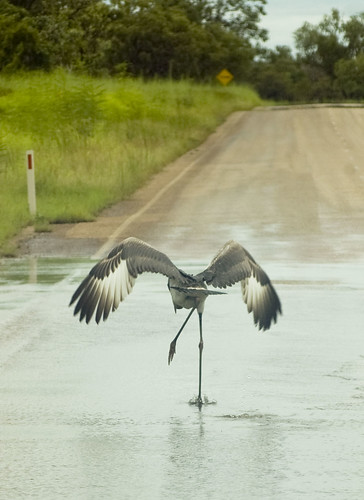
A bird enjoys the flooded roads
We decided to stay put in Darwin while the monsoonal trough passed over the Top End depositing more water to feed the catchment areas that force the Victoria River to swell and burst its banks. The Bureau of Meteorology website was daily checked, thanks to the free internet time given us by Parliament House Library, which became our second home. There we updated the sorely neglected blogsite and scoured the collection.

DSC_9104
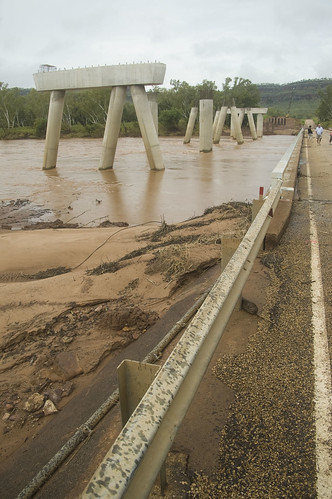
The Vic River bridge just after the rains went down, the river actually came 2.4 meters avove the bridge! That is just under the top of the supports of the new bridge you can see in the background!
DSC_8500

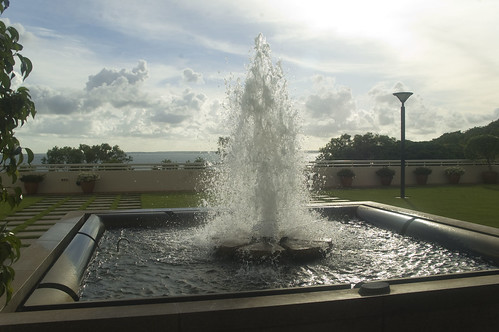
A fountain in the Parliament House gardens

After so long in Darwin (we were there nearly five weeks all told by the time we left), we were saved by the Library. They offer everyone one free hour per day, but were more than happy to allow us to work away uninterrupted as long as we liked. It became our office for those two weeks, the staff knew us, the coffee shop fed and watered us, and we got much done. We were also fortunate that the accomodation we found were sympathetic to our predicament. At first the Value Inn, then Meleleuka on Mitchell Hostel, followed by the Palms City Resort, who were amazingly supportive and gave us a luxurious apartment in paradise for nearly two weeks gratis, also doing our washing and giving us free internet access, and finally Ashton Lodge Backpackers, so we were able to have extended stays in the city centre.

DSC_8503

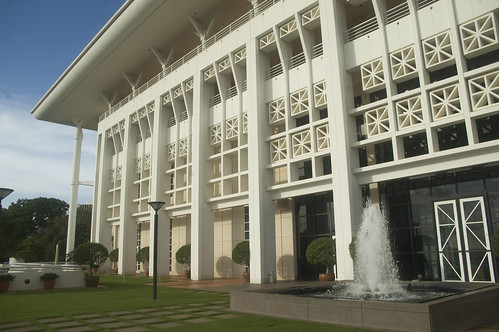
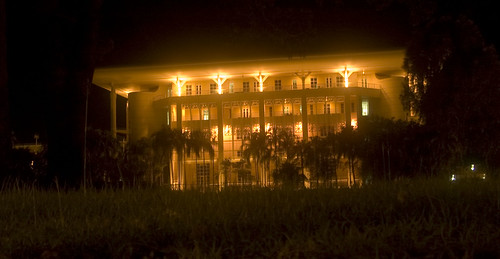
The Parliament House building by day and by night

DSC_8826

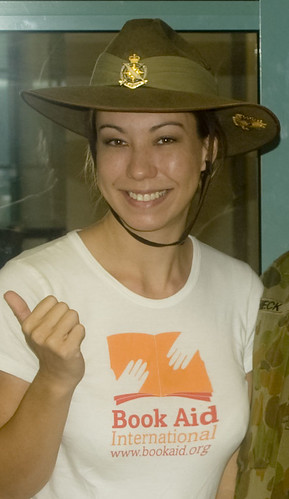
This convenient set-up allowed us to divide our time between the Library and organizing fundraising activities at the various pubs and bars in town, as well as at the Robertson and Larrakia Army Barracks. Deprived of the ease with which we were treated and the support of these people, we would have been severely hampered.

DSC_8509

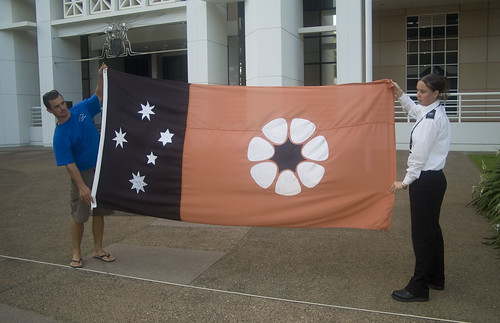
The Northern Territory flag

We were still being fed daily at the Vic Hotel thanks to the armfull of meal vouchers given to us when we arrived in Darwin by Chillies Backpackers, and despite spending so long in town we never went hungry for long. True, by the end we were asking some of the same people twice (unwittingly) and it became harder. Generosity is a finite resource to call upon, and so it became harder to gauge where we would find food next, especially when the meal vouchers ran out, but that was no major hardship and testament to the amount of businesses that readily came to our aid.

robertson barracks hat rack

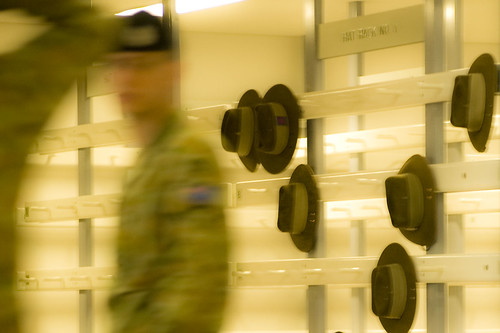
Australian army hats on racks outside the mess hall

All up we raised over $6,000 in Darwin. A very succesful time, and one we never felt wasted, even when flooded in. From bar to bar, pub to pub, we trundled with our jar, collecting donations, organizing raffles from the gifts donated by the local businesses, even appearing on local radio to auction some too. Finding ourselves on the front page on the NT News was very handy and we milked our celebrity for all it was worth.

DSC_8849 robertson barracks

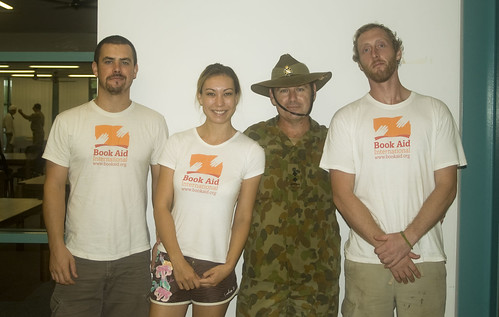
Lieutenant Bill Heck of Robertson Barracks
There is a charm to Darwin that we warmed to, an ease we fell right into. We worked hard and were rewarded. The conviviality of the residents was disarmingly benevolent and readily helpful. The fact that we were on the front page of the NT News obviously helped a lot of people recognize us and dig a little deeper when donating on our periodical tour of the bars. But it was the amount of businesses that donated to us that helped us get that much more money in. From meal vouchers, to a Pearl Necklace and Earring Set, to MP3 players, to a free massage voucher, and much more, we were able to talk the pubs and clubs into allowing us to raffle some of them and make the fundraising easier, and more fun.

DSC_8514

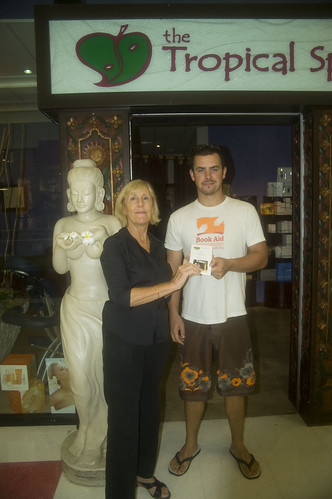
Tropical Spas donate voucher to raffle
Thinking about it later, while watching the news with all talk was centred on the Credit Crunch and the Global Financial Crisis, we could not have felt more removed from the situation. Not one person, even those who chose not to help, citing this as a reason for doing so. After all, the meltdown in the World Economy has been the hidden plotline to our trip, the grumbling underbelly of the world around us coughing up debt and disaster for many businesses and individuals. It would be all too easy for those we meet to be in the grip of it themselves, but so far either people are too good natured to use it as an excuse, or too busy getting on with things to worry us with their problems.

DSC_8942

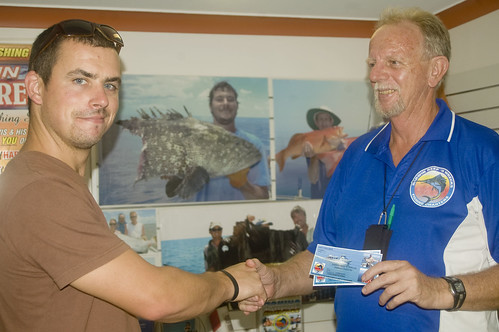
Jim Bancroft from Darwin Reef and Wrecks donates some fishing trips to raffle off

We are not oblivious to the circumstances, we hear of the closure of mines, the loss of jobs and the instability it is all generating, in or near some of the towns we pass through, but, as in the situation of the flood, when there is nothing you can do about it, you get on with things and keep working away. That is a very Aussie attitude also, I think. Get into it mate! So, as all we can do is ask, we kept asking, and people either obliged us or they didn't. More people helped out than not, though, and that made it easier to keep asking.

DSC_9065
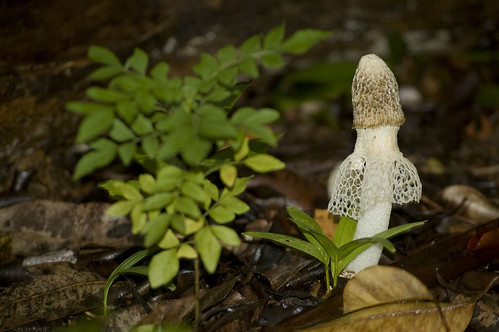
A skirted mushroom we food whilst clearin a rain forest

As February approached the Victoria River was still flowing over the bridge. Our friends Lou and Bernie were keeping us in the loop, as Bernie spends a lot of his days on the road, picking up and delivering goods westwards and, as there is only the one road west, he and Lou told us that as soon as he heard the bridge was passable, he would let us know. This was yet another situation we were to find ourselves in where serendipity smiled on us and allowed us the luxury of being able to use our time well. Bernie waited ten days beside the bridge at the Victoria River before getting through.

DSC_9182

The flooded roads of the northern Territory

Had we not been privvy to this insider knowledge we too may have been forced to wing it and wait by the side of the road, instead of air conditioned and comfortable in the Palms City Resort, able to fundraise and bring in the money. Part of me wanted to be stuck by the road though. Waiting it out. And as it turns out they had a great time there too. Someone would daily drive the 200 kilometres to Katherine, Bernie told us later, to pick up the cartons of booze and the steaks, and they would play cards, cook a barbie, drink stubbies and go fishing, watching for the crocs on the bank, of course.
DSC_9177


As week five was approaching we decided on leaving Darwin. We had to work for Jeremy and Michelle Barndon in Howard Springs, south of the city, so we figured this into our plans. Michelle had heard us on the radio and phoned in to offer a days work picking up palm fronds from their small rainforest. The river may rise five metres in an hour, but it is just as likely to fall by that too, we were told. The rain was abating a little and we felt the need to be nearer the action in case we only had a window of a day or so. We would make our way slowly out of Darwin and see what the river was doing each day.

DSC_9080

Jeremy and Michelle stood in their rain forest after we cleared it

It was raining when we cleared the palm fronds for Jeremy and Michelle, and there were a lot of them to pick up, but the work was made that much easier when Jeremy asked the question "what beers do you lot like? I'll get a slab in for ya". We stayed there that night and got royally drunk too. On our way next day to Humpty Doo to see a lady called Fiona Scott, who has been in touch with us for many months now, who we had promised to visit since we were in Tully, on the east coast, we heard from Lou, who had just heard from Bernie, that the Victoria Bridge was passable, but for who knows how long, so get yer arses down there sharpish. A flying visit to Fiona Scott followed, long enough to have a chat and a cup of tea, and we were off to Katherine that night, to make for the bridge the next morning. Sorry we couldn't stay longer Fiona, we were gutted to run in and out like that, thanks for the biscuits and the donations!

DSC_9088

The floods had subsided, and we could run but we could not hide, but for the moment we were on the road again, putting the slipper into it and at the drop of a hat heading to see the big fat load of water that had been in name only so far a very troublesome problem to us but a sight to behold we were sure. We were running out of time in the Northern Territory, but we had no time to stop and smell the roses. There were one thousand kilometres of floodplains to traverse until we were (apparently) safe in Broome, and the road was liable to flood again at any time.
Read a cheeky bit more!