Showing posts with label Alice Springs to Darwin. Show all posts

Mataranka to Palmerston, Darwin

DSC_8420
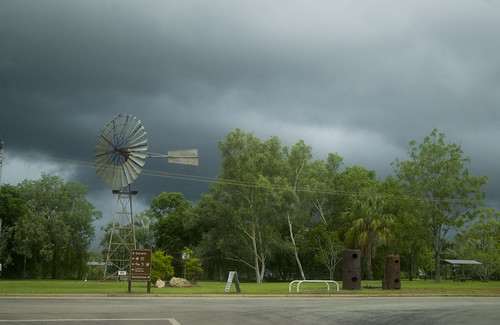
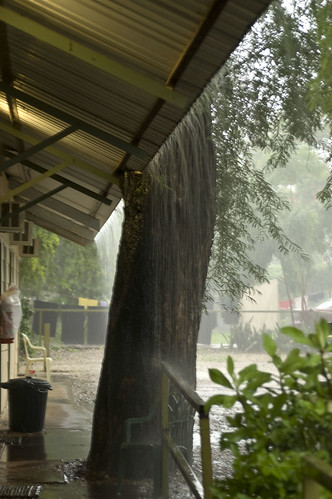
The rains brewing on the road from Mataranka to Darwin

At a steady 80kms an hour for six hours we made the 420km trip to Palmerston, Darwin, with the fuel we earned at Mataranka, in a quiet, uneventful manner. We were looking forward to once more seeing the boisterous family we had immediately loved during our work in the land of the Never Never. Arriving late in the evening we headed straight for the loud amplified electric guitar being played in a back yard we knew would belong to Bernie.

DSC_8428
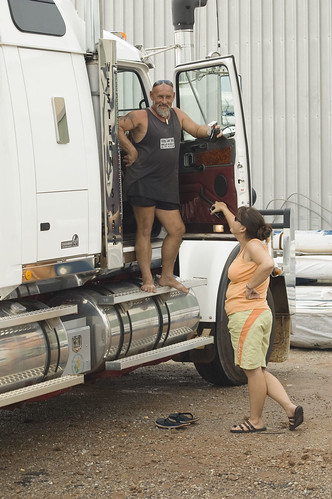
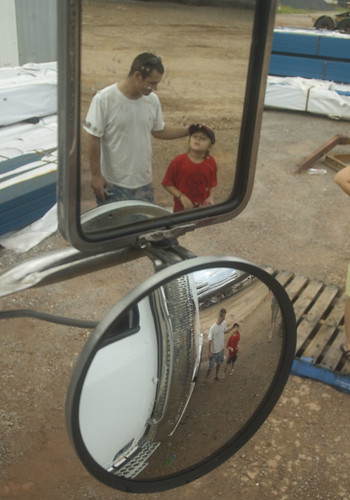
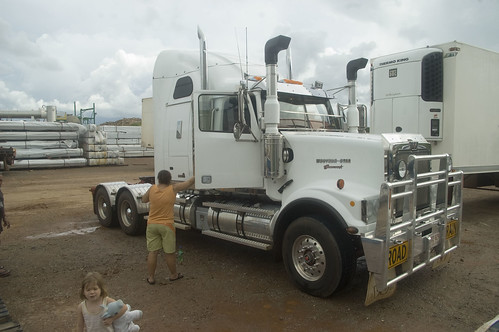
Lou greets Bernie at his Road Train

Bernie, wearer of humorous T-shirts, speaker of foul language, driver of road trains and drinker of Drambuie, is a bloke who consistently looks as if he needs to desperately have a kip and yet he has an energy for dirty yarns unlike any other man I have met. He has a passion for squeezing laughter out of serious faces, unashamedly using extreme toilet and x-rated humour, in order to keep a chuckle spreading around the table in waves.
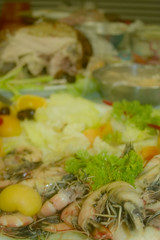
Immediately, a stubby of beer was put into one hand and Bernie declared me ‘some kind of pufter’ for not immediately downing the shot of Drambuie he put in my other hand - all my pleas of not eating yet and losing my tolerance for alcohol since the lack of it on the trip only fuelling his look of disbelief as I said I would have it after my beer and delicious sausage salad - yes, we are spoiled sometimes.

DSC_8448

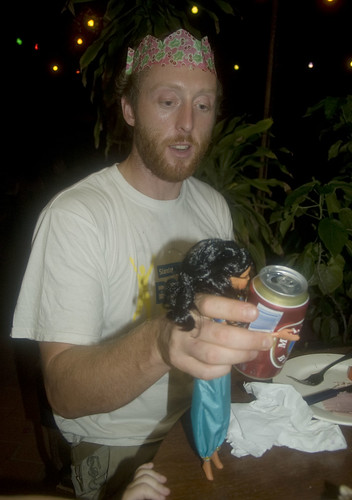
Taylor and Jake gave us a warm welcome and immediately went about showing us their various treasures, such as their pet snakes, dogs, dolls and swimming pool. We were in amidst the noise of a family and it was nice to feel part of, if only for a short while. We stayed with Lou and Bernie for a few days, baby sitting the kids, not one of the easiest jobs so far on the trip. As we are moving around so much it is hard to keep track of what kind of bed in whose place we went to sleep in. Every day it is necessary to spend the first few moments of consciousness trying to remember where we are and in what situation. But at Lou and Bernie’s we were not to have those few moments to gather our thoughts, we were suddenly woken up by children bouncing on our chests and a cat who also wanted in on the action. Attention giving is never done with children and animals.


DSC_8447DSC_8444

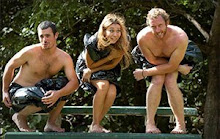
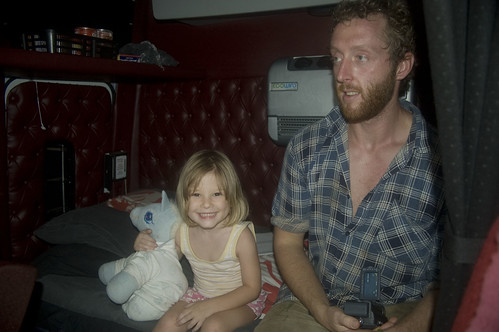
Gareth with Taylor in the road train cabin and Phil with Jake

In between the plethora of dirty jokes we were told stories of the road, stories of Japanese cyclists crashing into kangaroos taking all the skin off their backs. Stories of the things that up at height in a road train cabin you can see happening in the cars below and stories of the many kangaroos that Bernie runs over weekly in his 50m road train as if they were grasshoppers. He goes into great detail, telling of the kind of mess 'roos makes on impact, blood and guts everywhere, then eagerly tells us the boys next job. Washing the road train, of course! Bugs and 'roo juice, yuk!

DSC_8429

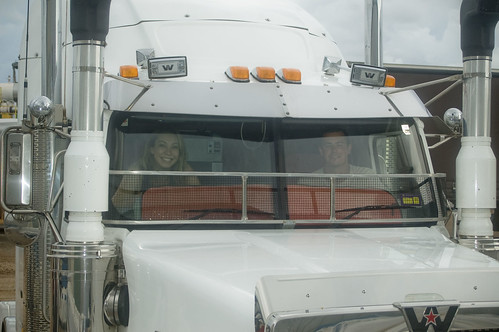
The front Bernie's road train

DSC_8432

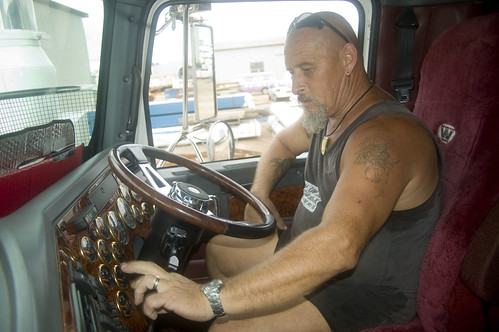
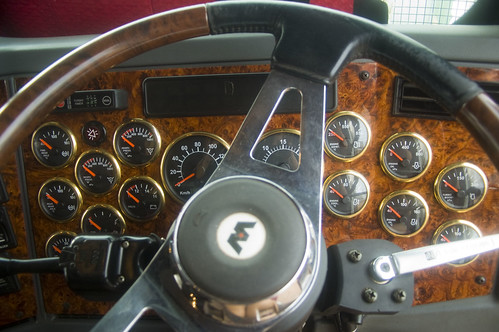
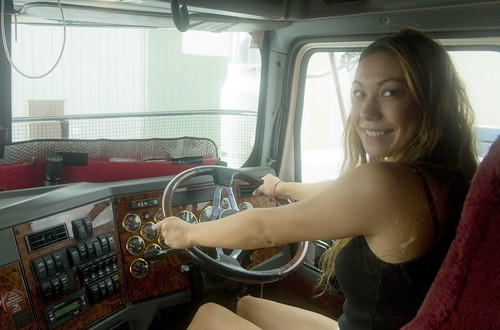
Road train cock pit

DSC_8438

DSC_8440

Anne and Phil in the sparkling clean road train the boys just washed

DSC_8441

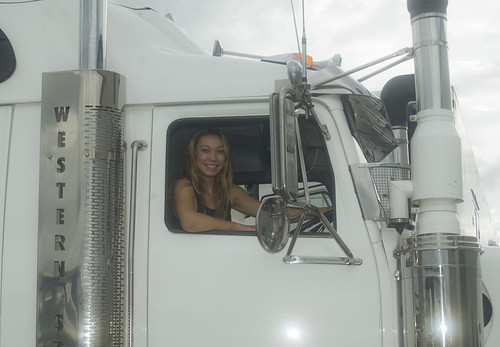
Anne can't get enough of the big lorries

Lou, bus driver and mother, organiser of parties and chief laugher at jokes rules the household we grew very fond of. In this animated family of laughter and scolding, crying and cooing, cuddles and hair pulling, in between the buzzing of the busy parents, the giggling of kids and the squawking of frantic animals we surprisingly found a very relaxing place to be. Our heartfelt thanks go out to Lou and Bernie, who opened up their home and their family life to us.
Read a cheeky bit more!

History of Darwin

If there were ever a place that deserved to be described as tough or uncompromising, that was blessed by a recalcitrant providence to suffer the slings and arrows of misfortune and that also happened to have a rather displeasing habit of being completely destroyed, then that place is Darwin. Not that I've heard the bathroom sink talking in tongues or seen Elvis pushing a bearded midget in a pram or anything, but Darwin has had its fair share of calamity, both natural and man made.


The Top End, as it is known, was just a dirty great big empty space for the settlers, and they vied to make it habitable from early on. Traversing the coast from the eastern colonies they tried repeatedly to set up outposts there, and repeatedly abandoned them. From 1824 to 1849 they made numerous attempts to settle along the coast and as each attempt disastrously failed, they took this as a sign to learn nothing from their mistakes and try again, failing every time.

This despite the local Aboriginal population, the Larrakia or 'saltwater' people finding in the area an abundance of marine life, game, rockpools and natural springs. Of course, notwithstanding the fact that the monsoonal rains during the 'wet' and prolonged drought during the 'dry' complicate things a little, but they sought no lessons from the native people, trusting their own methods, and, as a result, it took some mammoth endeavours and another twenty years before anyone tried to settle there again.


With the route to the Top End blazed by John McDouall Stuart in 1862, they decided to try this time to go overland to settle, but still could not quite get the hang of it, and abandoned the post again. They must have been scratching their heads at this, yet no one thought to seek some wisdom from the people who occupied the lands, and lived there comfortably, namely the Larrakia Aboriginals.


So, it was in 1869 that they tried again. You can almost hear the pen scratching through the paper onto the thick oak desk as the Government man sanctions another trip to the Top End and it would not have been without some grave words that they were dispatched to settle up there, this time for good. To the east of the point where Stuart and his crew first sighted the Timor Sea from land, they established a new town, and named it Palmerston.


Not a lot happened in Palmerston. They were over 3000 miles from their bosses in South Australia and probably feeling the pinch over privations, with supplies taking weeks to arrive. Any farming they did usually ended in failure as knowledge of the climate slowly, and I mean slowly, dawned on them. Fishing proved a little more successful, as did the Pearling industry, bringing incomers from Thursday Island, Malaysia, Indonesia, and Japan into Palmerston.


In 1872 the Overhead Telegraph Line, that linked Adelaide with Darwin and, via an undersea cable to Java, with London and thus the rest of the world, was completed and connected. While still small and remote, the new town of Palmerston gained something of note with this strategic placement, and was to benefit further from this when two workers, while digging the holes for the posts for the Overhead Telegraph discovered gold.


The Pine Creek Gold Rush in the 1880s brought in people from all over. Writing as a journalist at the time the great AB 'Banjo' Paterson wrote that:


"Palmerston is unique among Australian towns, insomuch as it is filled with the boilings over of the great cauldron of Oriental humanity. Here comes the vagrant population of all Eastern races. Here are gathered together Canton coolies, Japanese pearl divers, Malays, Manilamen, Portuguese from adjacent Timor, Cingalese, Zanzibar negroes looking for billets as stokers, frail (but not fair) damsels from Kobe, all sorts of conditions of men" ('Paterson', 1898, p.23)


So this pick-'n-mix population settled, Palmerston reaped the benefits of the gold rush as more people flocked to the territory, and continued to do so until 1897. How do we know this so precisely? Because that was the year a cyclone tore through the fledgling community, flattening everything, scattering the inhabitants, destroying their homes and buildings. There had been a few before, somewhat nasty, but this one took the biscuit, and hurled it at two hundred miles an hour into the sea. It gets pretty lively up Top End.

Maybe that is why in 1911 South Australia ceded control of the Northern Territory, allowing them to go it alone, and become part of the Commonwealth. Duly done, they promptly changed the name of Palmerston to that which most thought it was called anyway, and Darwin was born, and the town-formerly-known-as-Palmerston got on with it.

Darwin went about its business, encouraging more people, improving the town, expanding its boundaries, dealing with the Aborigines in typically robust style through placing them in camps, under curfew, prohibited moving freely. That aside, life was good for the Darwinians. As capital of the newly independent Northern Territory it received funding and grand buildings were erected to commemorate this honour.

An eminent architect called John George Knight came up from Adelaide and set to designing some of Darwin's most impressive buildings. He also had a novel, bright and quite liberated view on how to deal with life in the tropics, and one which had more in common with the locals, the Larrakia 'saltwater people', than maybe he realised, when he said that 'the great secret of maintaining health in a hot climate is to expose the naked body so much as possible to the direct rays of the sun'.

Darwin was burgeoning and it appeared as if even the white Europeans were adapting to life there, abandoning starched collars and greatcoats for some au naturel let-it-all-hang-out. It was too good to last though. So in 1942 the Japanese squadron that bomber Pearl Harbour let loose over Darwin and did to the Aussies what they did to the Americans. Darwin was flattened once more, the residents scattered, leaving en masse for the southern states in the months of worry leading up to the attack, or killed in the air raid itself, or left destitute and homeless. The damage was great, and the rebuild took its toll on those left behind.

But, the silver lining the Aussies are great at finding, was that occupation by the forces had improved much of the before non-existent infrastructure that had hindered Darwin's growth. The Army left behind a new improved wharf, had sealed the dirt road that was the Stuart Highway from Alice Springs and built and established the water and power sources. So Darwin flourished. In the ten years from the end of the war Darwin's population nearly doubled to 60,000, more coming, as the rebuild appealed not only to peoples sense of civic pride but to their nation building pioneering spirit too.


Darwin was the capital of the Northern Territory and proud of it. How happily they lived, these new Darwinians, the settlers building the schools that educated their children, the pubs and clubs that they sung and danced and indulged in the by now firmly entrenched true-blue Aussie tradition of 'getting on it', and drinking beer.


As they prepared for Christmas in 1974, some were indeed 'getting on it', others were simply asleep, or wide-eyed and waiting for Santa, but Christmas did not come, and Santa, if he had tried at all would have been hurtled at 250 miles an hour to Timbuktu. Cyclone Tracy arrived in Darwin at midnight on Christmas eve and in one night destroyed Darwin again.


There was a warning, issued in the weeks and days coming up to the event, that a cyclone was forming, and some decided to leave, heading south (everywhere is south from Darwin, ask any Darwinian where they go for a holiday and they invariably say 'south', be it to western or eastern Australia), and those that remained were, according to the reports "pretty sloshed" come the time the cyclone arrived.


The wind screamed in just after midnight. The anemometer, designed to record wind speeds, was damaged and stopped recording after reading a gust of 217 mph when the storm was still building. It was terrible. Families were airborne along with their homes, which just disintegrated. The roof came off, the rafters, the beams, then as the floorboards swirled violently they joined the fence posts, fridges and roof iron as projectiles.


What they woke up to on Christmas morning was a scene of total devastation. 90% of Darwin was utterly destroyed. There were 49 deaths, with 16 missing at sea. The wind was so ferocious that it stripped the paint off the boats, many of whom broke anchor and were tossed like toys around the harbour. 12,000 homes were completely destroyed.


Darwin was flattened and reduced to rubble once more. There would have been people living in Darwin in 1974 who remember the 1942 bombings, and who may have thought to themselves what was going on. But, indomitable as these people are, they roled up their sleves and got on with it.


The population in Darwin is around 101,000 now. It has a breezy, light feel to it, with the tropical palms and giant tamarind trees secluding shade from the insistant sun. It gets a fair bit of rain, and the weather gets a wee bit lively from January through to March, but the unhurried and laid back lifestyle is what people come to Darwin for. There are no airs and graces, you can still go to most pubs and bars in flip-flops and t-shirt, and the smoking ban has yet to be enforced.


Maybe, just maybe, having been through what the Darwin people have been through, they have realised somewhere along the way, that life's too short, permanence is illusory, so they don't worry, and take things as they come. Despite its habit of falling down, Darwin is a pretty stand-up place.
Read a cheeky bit more!

Merry Christmas We of the Never Never - Mataranka


DSC_8302

Chris and Chris play the part despite the Outback Aussie Xmas heat


With around 400 residents, the population of Mataranka fluctuates variously with the nearby Aboriginal community, with its seasonal influx of nomads and blowins. Walking into the Mataranka United Roadhouse, it was my turn to do the asking. An informal rotational system seems to be the way to do it. We have to ask a lot. Much asking gets done, and when you’re up you’re up and when you’re down just sit in the back of the van. I was feeling lucky after the lunch at the Homestead, and so strove to strike while the iron was hot.

DSC_8418

Nipper

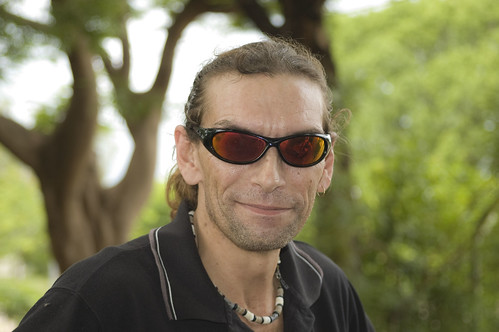
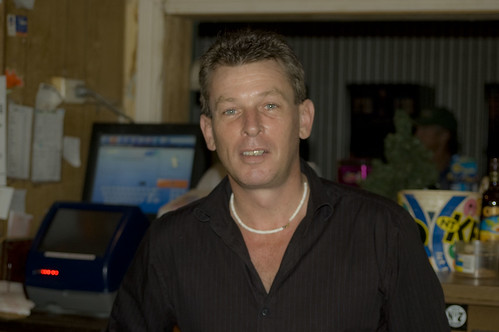
I parted the doors of the roadhouse. I held my gaze, looking around me for that hot potato, and mosied on in the door like a gun slinging extra from Mary Poppins, chim-chimenny-cherroo, par’dner, and breezed up to the counter. The guy serving was a tall, pony-tailed desperado, and he was serving an Aboriginal man with the kind of ferociously hard-hitting light-hearted banter that had me a-jangling my spurs.

“No! You can’t have it! I’m busy… Ok then. How many do you want? Three! Again! [Cue laughter all round. A tight, nervous grin coils my mouth] I’ll have to stop you coming in. Here you are. $6 please. Thank you. Now fuck off and don’t come back!” [Cue more laughter, on both sides; customer service round here is savage]

DSC_8414

Darren

It was my turn next. I was next in line. I looked behind me to see, hoping against hope that there was someone else wanting to buy something, as I was wanting to buy some time, knowing it’s the quick and the dead in these parts, and a solid reliable witness would back me up in a court of law. But it was time to ‘man up’, as they say in these parts, and with my composure filling my cowboy boots with a steady trickle, I stood there by the counter, (not in front of the counter, by it, out of the way) with a hand on the counter-top and after a cough to clear my throat, I asked politely (like a Marine!) if I could speak to the boss about something.

“I could be the boss. It depends what you want. Doesn’t it? Tell me what you want first?” he said coiling a tight-lipped smile that doubled as a you’re-going-to-have-to-get-through-me-first-buddy expression.

“Eerm”, I mumbled, trying to compose myself, shuffling my feet - chin-chimeny-cherroo - before telling him the nature of our mission, and our need for fuel for which we would work.

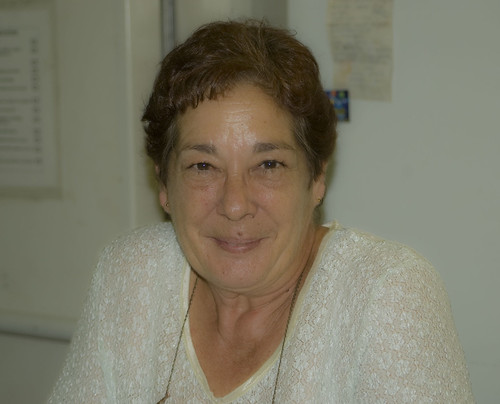
“Oh!” he exclaimed, “I’ll get Christine. She’s the boss. She’ll be into this sort of thing. Wait there, I’ll get her”. He disappeared into the kitchen behind him, emerging a minute later with the owner, the boss-lady, Christine, evidently busy and flat out. Nevertheless, she took the time to listen, offering to help straight away. They owned a Motel further up the street and had three rooms that needed to be remade; they would pay us for each room done, and convert this into fuel for us.

DSC_8417

Christine (Chris or Little Boss as known by the Aboriginal community)

“Cassie my granddaughter will show you where everything is. I’ve got to cook the meals for the pub now, so come see me when you’re done, ok?”

By the time we had finished it was getting on in the day, so we asked if we could stay for the night and work to pay for it. Christine told us not to worry, that she had an offer for us, but that she would tell us later on, when she was finished at the Roadhouse, in the meantime relax (and, I heard her say anyway, and Phil tells tales of how he heard it too, but Anne, she says it’s not so, that it was never said, that we should relax and… watch the cricket). So we did.

Later, Christine’s daughter Lou came a-knocking, passing on the message from a still busy Christine that there was enough work for us over Christmas and New Year if we wanted. Ponting hit Ntini for a glorious boundary off an attempted Yorker, the crowd went wild, Phil’s leg twitched, Anne’s nostrils flared, we told Lou to tell Christine the answer was yes, and we all started bright and early the next morning.


DSC_8400

Phil doing one of his chores

I was working at the Roadhouse with the guy I had spoken to at the counter, who, as it turns out, was more bark than bite, and called Nipper. Lou, also there at the Roadhouse, was helping out for a few days cooking, before going back to Darwin. Cassie her stepdaughter, split the shifts with me. Bernie, a Road Train driver, is Lou’s husband, together with the two cheeky imps Jake and Tayla running around, were down for the visit.

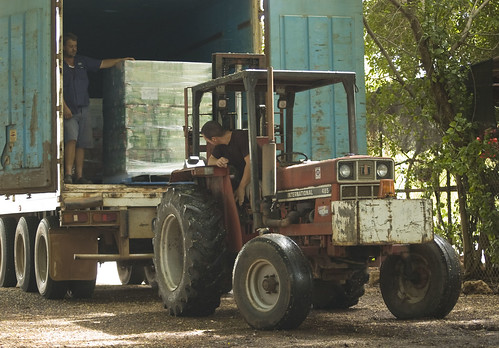
Cassie’s boyfriend Kiel was working there, with Phil, on Yard duty. The Yardies worked between the Roadhouse, the Pub and the Motel, fetching, carrying, leaf-blowing with barely enough time to sit and watch the cricket all day on the T.V at the Roadhouse. Heidi the Jillaroo Cowgirl was working the wet season as a cook, on sabbatical from her usual occupation working as a Ringer on a Cattle Station and as a Rodeo rider.

Anne found herself at the Pub, learning about Keno, and working with English barman Darren, a journeyman bartender working his way across Australia, and through the Territory. Chris, Christine’s husband, managed the whole affair, with a lot to do, having only taken the place over a month before we arrived.

DSC_8395

We spent the time leading up to Christmas working this way, divided between the Roadhouse, the Pub and the Motel, serving food, drink and blowing the leaves from the paths. Ever-present and part of the daily routine was our interaction with the local Aborigines. Always a lively topic in rural Australia, they are still, today, seen as a ‘problem’. This problem has been handled with various degrees of interventionist policies and strategies over the years, always implemented with the grander-scheme-of-things for-their-own-good high-minded intent and ranging from the brutal, savage and genocidal show of force to segregationist laws and an attempted ‘breeding out’ policy to an apologetic and now conciliatory stance.
The violence bestowed upon Australia’s Indigenous people is shocking to say the least. The Stolen Generations, for example, are part of Australia’s past it has only recently abjured. The forced removal of Aboriginal and Torres Strait Islander children from their families was official government policy from 1909 to 1969. The removal policy was managed by the Aborigines Protection Board (APB) which was a government board established in 1909 with the power to remove children without parental consent and without a court order.

Under the White Australia and assimilation policies Aboriginal and Torres Strait Islander people who were ‘not of full blood’ were encouraged to become assimilated into the broader society so that eventually there would be no more Indigenous people left. The poplar view at the time was that Indigenous people were an inferior race, and therefore unnecessary.

Children were taken from Aboriginal parents so they could be brought up ‘white’ and taught to reject their Aboriginality. Children were placed with institutions and from the 1950s began also being placed with white families. Aboriginal children were expected to become labourers or servants, and so the education they were provided with was very poor. Aboriginal girls in particular were sent to homes established by the Board to be trained in domestic service.
The lack of understanding and respect for Aboriginal people also meant that many people who supported the child removals believed that they were doing the ‘right thing’. Some people believed that Aboriginal people lived poor and unrewarding lives, and that institutions would provide a positive environment in which Aboriginal people could better themselves. The dominant views in the society and government also meant that people believed that Aboriginal people were bad parents and that Aboriginal woman did not look after their children, and, indeed, forgot about them as soon as they left.
No-one knows how many children were taken, most records have been lost or destroyed, but the estimates are at over 100,000. Many parents whose children were taken never saw them again, and siblings who were taken were deliberately separated from each other. Today many Aboriginal people still do not know who their relatives are or have been unable to track them down an unforgivable anomaly in a culture so closely tied to kinship and family.

The generations of children who were taken from their families became known as the Stolen Generations. The practice of removing children continued up until the late 1960s meaning today there are Aboriginal people as young as their late 30s and 40s who are members of the Stolen Generations.

DSC_8281

It is quite an extraordinary thing to contemplate this. The facts are shocking in themselves: They were not counted as citizens until 1967, when they were included in the census for the first time. It was still legal to hunt and kill Aboriginals for sport until the late 1920s. From 1911 until 1964 they were considered ‘wards of state’, with The Chief Protector of Aboriginals having control over every aspect of their lives –without his permission they could not marry, leave their compound, settlement or area of the country, dispose of property, travel across state borders, drink alcohol, own a gun, negotiate wages, open bank account or apply for social security benefits – and were segregated from the townspeople and subject to strictly enforced curfews.

In 2007 the former Howard Government announced a national emergency response to child sexual abuse and drug and alcohol abuse in the Northern Territory. The NT Intervention, as it became known, involved a range of different measures, involving the quarantining of welfare payments for Aboriginal people living in Northern Territory remote Aboriginal communities.

DSC_8275

In order to pass the laws the Government had to amend the Racial Discrimination Act. The welfare laws involve replacing 50% of welfare payments made to all residents living in one of the ‘prescribed’ Aboriginal communities with Basic Cards that can only be spent on food and clothing. The rules are also referred to as an Income Management Regime. The present Rudd Government, while reviewing the scheme, continue to support it, wishing to extend it to all communities, not only Aboriginal.

Another part of the project was the widespread banning of pornography, and the monitoring of alcohol consumption. Drinking in the streets and parks has been banned, as has bringing alcohol into Aboriginal communities.
Being drunk in public carries with it a night in the cells or prosecution, and allowing an Aboriginal to get drunk on the premises carries with it the suspension of the Publicans liquor license. All take-outs are monitored; their id’s scanned through a national database, recording how much they buy, when, and whether they are entitled to buy any at all. If they have been red-flagged, the system will show it, and, computer says no, you can not sell them any alcohol.

DSC_8282

The welfare system, and the Land Rights Act of 1976 which granted them royalties from the mines and cattle stations on Native Land has provided money the value of which they have no language for. There are no numbers in Aboriginal languages. “One, two, many” is a legitimate form of counting for some. Theirs is a culture that never needed anything greater.
Working at the Roadhouse and Pub we saw how the value of the money they carried was relative to how much they could get for it. They share their money, their extraordinary communality reflected as they buy each other food, drink and cigarettes, depending on who has money, and when. The regularity with which each Aboriginal customer bought the same brand of cigarettes, the same brand of beer, and the same deep-fried food reached the point of parody sometimes.

DSC_8276


With so many interventionist policies regarding the serving of alcohol and the monitoring of their behaviour while on the premises, it placed us in the role of policing them, placating them, or ejecting them. Drunk at 11 in the morning in the Roadhouse trying to buy food they couldn’t pay for, or angry at being told they had exceeded their daily quota of alcohol and were denied buying anymore, or humbugging (begging) for money, cigarettes or drink from each other and arguing, it wasn’t easy, or particularly endearing.


DSC_8415

The lovely Cassey

Chris and Christine had many years experience working with Aboriginal people in the Territory, and told us many stories of what it is like in some of the more remote out-stations, where the influences of drink and idleness are not so prevalent. It was astonishing to witness not only the way they were treated, the opinion held about them, but the behaviour that fuels this. That they are besieged by alcohol and beset by aimlessness and listlessness is very apparent, and that violence and destitution is a way of life among many of them seems clear.

DSC_8284DSC_8285
DSC_8286

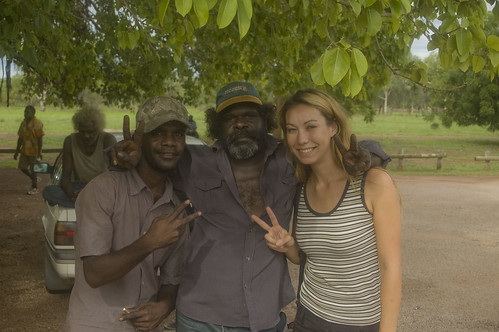
Some Aboriginals don't like to have their pictures taken but some are more than happy for you to snap away

The ‘Longrass’ Aboriginals are so called because they choose to sleep in the long spear grass that grows, up to two metres tall sometimes, around the Tropics. The bushland on the other side of the Highway is the shelter for the local Aboriginals. There is a settlement nearby, but the amount of people coming out of the long grass as we opened the Roadhouse at 7am, would suggest the majority of them had slept under the stars despite the heavy rains.
While the rain continued, and with nothing to do, the Aboriginal men and women would seek the cover of the large shade trees, or hunker down under the canopy of the Roadhouse. There they would sit and wait, listless and smoking. Pacing occasionally back and forth to look through the glass door repeatedly, hovering, half-in half-out, pace up and down, humbug smokes from friends emerging from the long grass to join them, wait, look at the time, hover, then at 10 o’clock, when the pub opened, they were gone.

DSC_8410

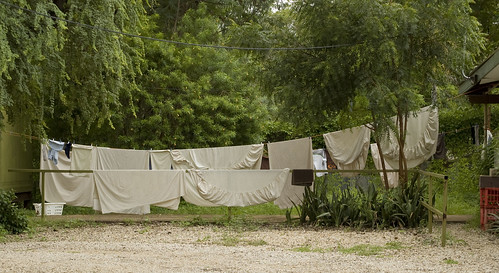
The laundry we had to hang up and take down up to six times a day because of the sudden tropical rain

That hardship, sorrow and sadness is closely associated with the plight of Aboriginal people in Australia became all the more clearly demonstrated during our stay in Mataranka. Still so closely tied to the land they inhabited alone for so long some prefer to sleep outside rather than in the homes provided, to be nearer the pub and shops, providing a neat metaphor for the state of affairs of a people neither one thing nor another, neither living as they did traditionally, nor as our custom in the western world dictates.

It truly is a problem, and one that the federal government can’t solve on its own. We didn’t come up with any answers, merely questions and however long you look at the issue, examining the grieving past , and the present-day fall out, the future is one that cannot include the perpetuation of the descent into alcoholism, ill-health, unemployment and prison that blight the population right now and force the hand of an ever-ready babysitting government to intervene on their behalf once more.

DSC_8267

It rains almost every day over Christmas and New Year

Christmas was, for us, a bit of a damp squib. With Chris and Christine celebrating with Lou and Bernie, who were in Darwin Christmas Day, on Boxing Day with a feast for all fit for the King of Kings, we spent Christmas Day day eating instant noodles, drinking milkless tea, watching black and white movies on badly tuned TVs while it rained.

DSC_8288

Boxing Day dinner made up for our instant noodle Xmas lunch

A barbeque cooked for us in the evening by Chris livened us up, and the next days feast, with a pub full of locals and family was more like the Christmas we had been hoping for. New Years Eve was better. While Phil and I had finished work around 2pm, Anne had just started at the pub, so, being the friends we are, we went to keep her company. A tab opened up by Chris and Christine for us paved the way for some celebratory drinks, to see in the Ney Year, and it was lucky thing we had those early drinks to see it in because come two o’clock in the morning, after downing shots of bourbon and singing along with everyone else, with New Years spirits high and salutations passed around, it was around the time that we were singing an ode we composed to Nipper, called ‘Trevor’, that the sight in one eye blurred double and as legs wobbled correspondingly arms started to gesticulate wildly. I did what I always do when wildly drunk - but for the first time in 2009 - and sang the next ode to the wonder of Phil, before passing out arms splayed.

DSC_8295 DSC_8299

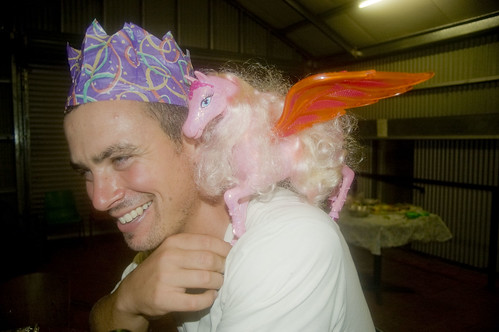
Anne catches Phil and Gareth entertaining themselves with Taylor's Christmas toys

We put off pushing on because we liked it with these people and knew we had had it good. But destiny was calling, actually it was Lou and Bernie, offering us a place to stay in Darwin when we got there, so, fully fuelled up with $1600 raised for Book Aid, we bade Chris and Christine a fond farewell, Nipper too, and Heidi, Kiel and Cassie, and shook fellow countryman Darren by the hand, then departed up the Stuart Highway bound, at last, for Darwin.

DSC_8408

DSC_8314

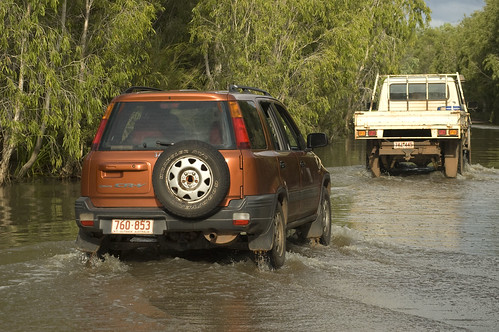
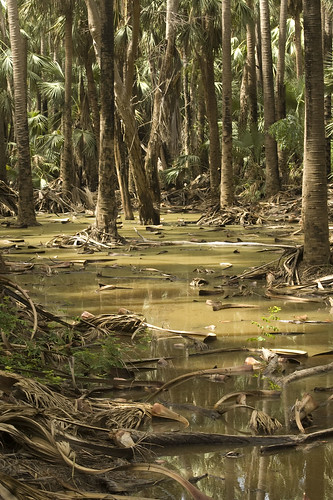
Much of Mataranka was flooded in whilst we were there

DSC_8334

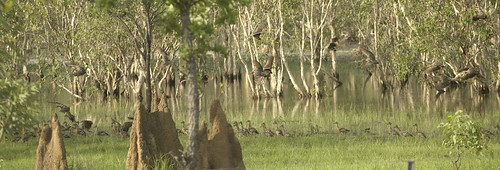
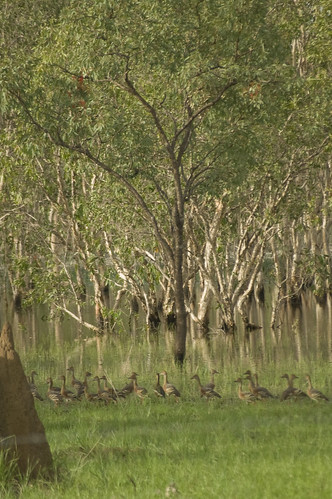
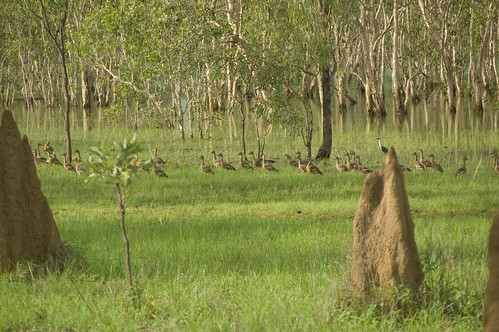
The surrounding wildlife was incredible

DSC_8335

DSC_8339

DSC_8353

Read a cheeky bit more!

Mataranka Thermal Springs and Flying Foxes

DSC_8229

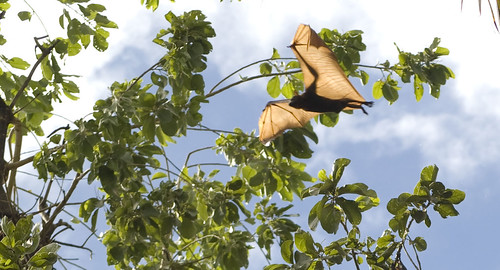
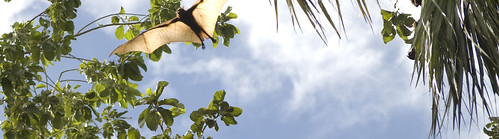
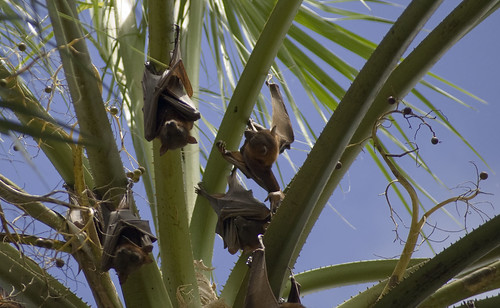
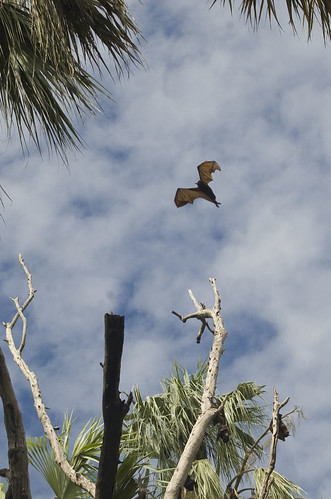
A flying fox soars over head


‘Mataranka thermal springs, go there, you will love it’, cried anyone we spoke to who had visited the Top End. Now, without dismissing the authenticity of such statements, it was not without a pinch of salt that we listened to them, because, in the desolation of amusement that is driving the Outback, where counting roadkill counts as fun, and where falling asleep at the wheel is only prevented when you find an obscure radio channel broadcasting old Scottish ladies reciting old Scottish poems, or an investigation into the ‘toothless people of London’, you learn that ‘loving it’ may be relative to the unending boredom of repetition.

DSC_8118

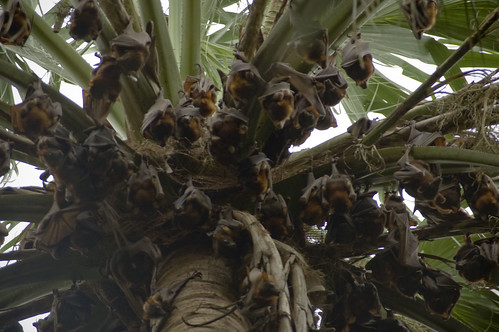
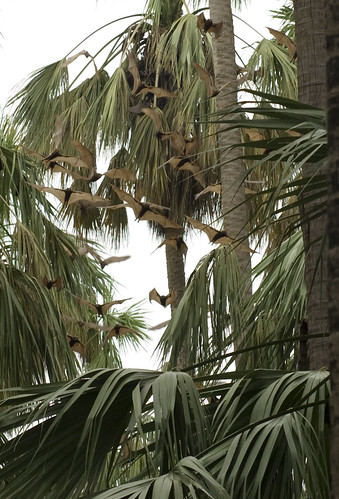
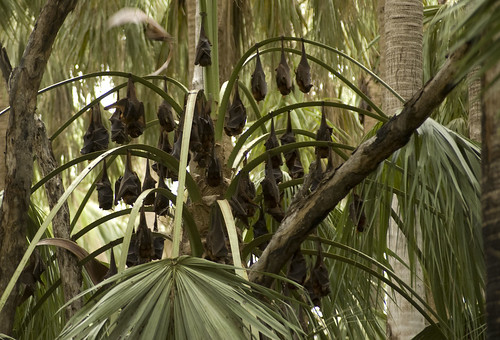
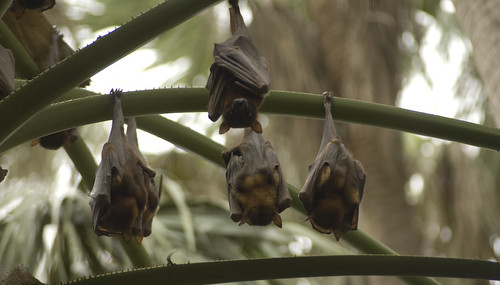
The immense number of flying foxes fight for a space to hang in the trees

DSC_8227

DSC_8198

Having previously seen a grinning nine foot Pink Panther smoking a pipe we were prepared for perhaps a giant statue of Ned Kelly urinating thermal spring water into a giant bath-that-used-to-be-a-fuel-tank, but it was not anything of the kind. We found the thermal pool not far from the site of the reconstructed Mataranka Homestead, home of Jeanie Gunn, author of the book “We of the Never-Never”, who lived there in 1902, when the Stuart Highway was a dirt track, and the Never-Never meant the back of beyond past the middle of nowhere. Her home was recreated when the film of her life was made, and now a pub resides nearby catering for the visitors who throng there, no doubt, told, like us, that they should not, in the avalanche of sameness, miss out on the one thing worth seeing.

DSC_8099

DSC_8110

The aquamarine waters of the hot springs

DSC_8150

The unwalled part of the hot spring swimming pools

DSC_8128

DSC_8237

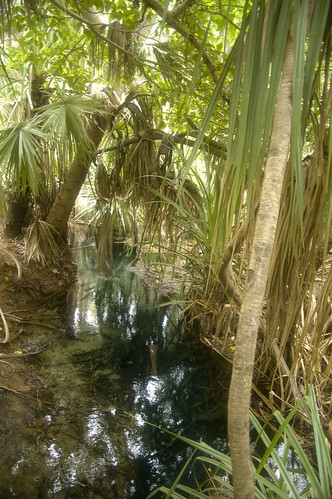
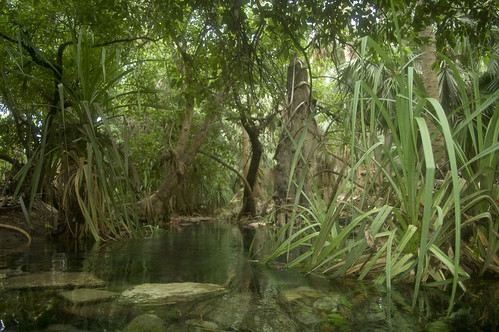
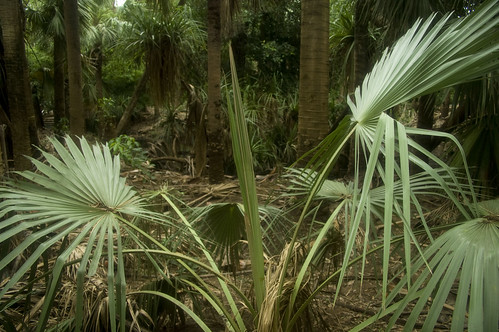
The thermal springs themselves are located a short distance from the Homestead, on a curving path past the pub (of course it is. How many visitors never-never make it any further?) and along a walkway through the tall, shady Mataranka Palm and Paperbark trees that line it and the water that surrounds it.

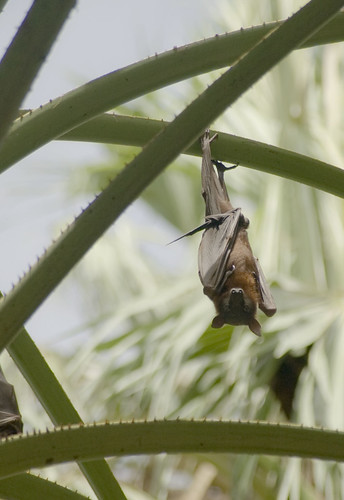
The colony of Flying Foxes make quite a din. 200,000 of the little reds spiral in columns above the foliage whenever the sun sets.
They use their tongues to get nectar and pollen from eucalypts and other trees, spreading seeds of nature much like bees. It's really quite hard to aptly describe the sounds and scenes from the immense numbers of these fury flying friends. They are everywhere. Swooping low and flying high, the beating of wings make an amazing swooshing sound and I expectantly turn round, surprised to not find Adam West or Christian Bale looking at me with intense masked eyes.

DSC_8236

DSC_8111

It was with a neat sense of disbelief that we saw the thermal pool, enclosed as it is by stone steps and walled around in an arc. Apparently it was built for army generals, who would bathe here during the war. The spring flows in a serpentine curve through it, but you are encouraged to remain in the pool. For safety reasons.

DSC_8140

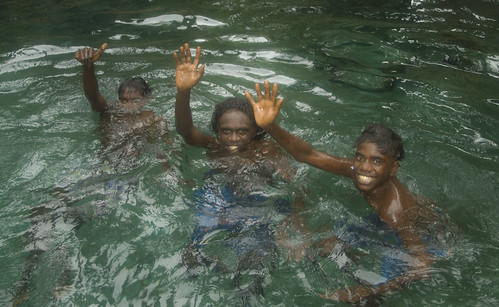
We join some aborininal boys in the pools to cool down

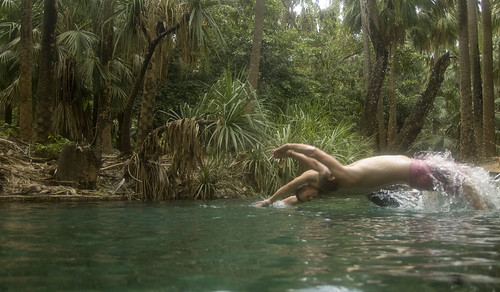
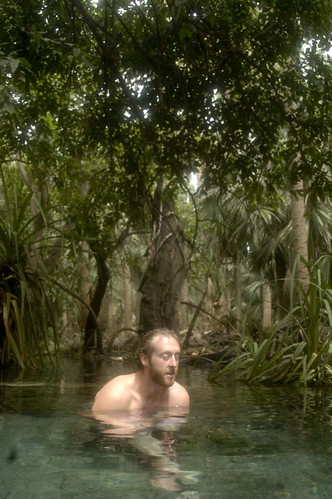
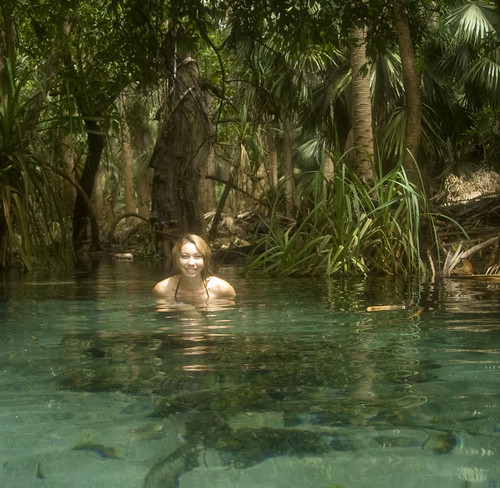
The thermal pool maintains a near constant 34ยบ Celsius, which is, despite the humidity and heat, very refreshing to lounge around in. As we escaped from sticky clothing, and floated, soothing our travel sore muscles the light filtered down between the tall palm trees, lingering softly, silhouetting the red flying foxes nesting and bustling above us, the hubbub of their activity adding to the backdrop, while their splashing guano added to the pool.

DSC_8138

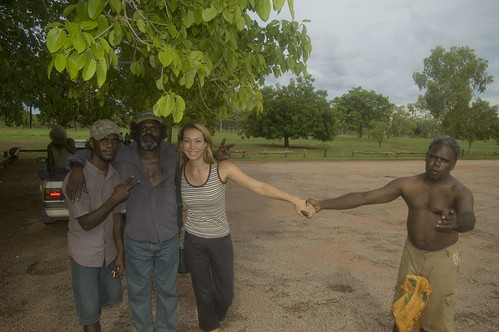
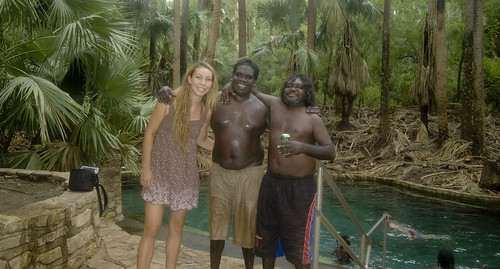
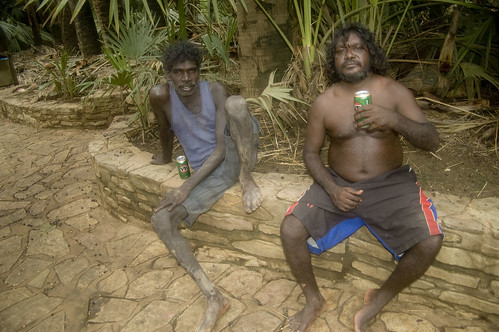
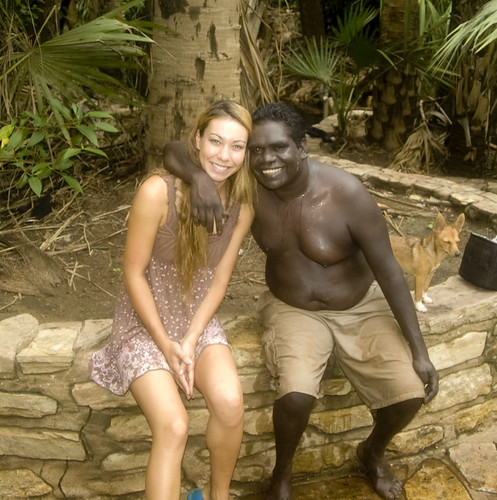
Anne makes some friends with some visiting Aboriginal guys as they enjoy a beer by the waters

DSC_8141

DSC_8142

DSC_8172

DSC_8187

DSC_8194

After relaxing there awhile we approached the pub for something to eat and were treated to some lunch, which we had while the Aussies played South Africa in the first of five Test Matches. Anne, no fan of cricket, turned her back in disdain and attempted conversation with two gawping, slowly chewing guys, and gave up, preferring real life to the cricket. Our Aussie friends Matt and Grant have subjected Phil and I to hours of cricket, and I suppose, by osmosis, we have come to love it.
DSC_8223

DSC_8123

But it is a ridiculously drawn out game. When Anne asks ‘how long does it last?’ we can see she envisages a time in the not too distant future when she may be able to communicate with her friends in a normal, adult way, so when we look at one another then mutter into our sandwiches ‘5 days’ we know she is testing the limits of her resolve. A game that lasts for 5 days is one you have to want to see to put up with. The fact that it cannot end after 1, or 2 days, or even 3 unless one of the teams is truly rubbish (the Accrington Stanley of Test Match Cricket. Accrington Stanley? Who are they? Exactly) renders it a sport incomprehensible to those who know nothing about it. And there are many of those who wish to remain so. Anne toasted her sandwich with the fire of a thousand years of torment as Hayden was caught at mid-off and the crowd went wild.

DSC_8238

DSC_8240

DSC_8244

DSC_8250

DSC_8251

DSC_8258

DSC_8255


Read a cheeky bit more!