Showing posts with label Townsville to Alice Springs. Show all posts

Playing with the The Devil's Marbles

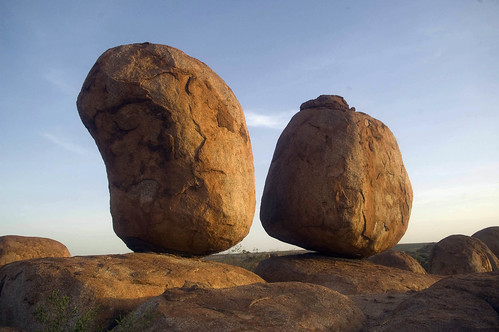
Devil's Marbles

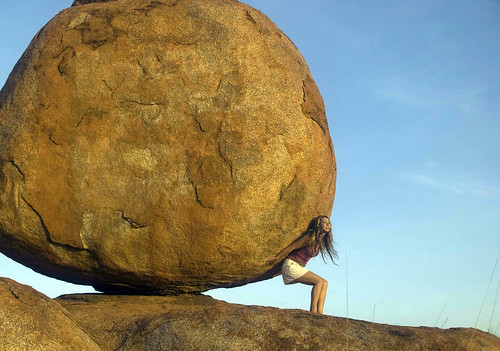
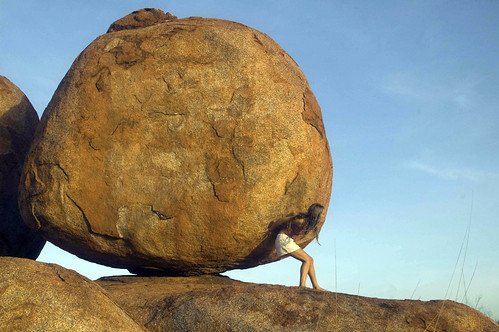
Anne plays around with the Devil's Marbles

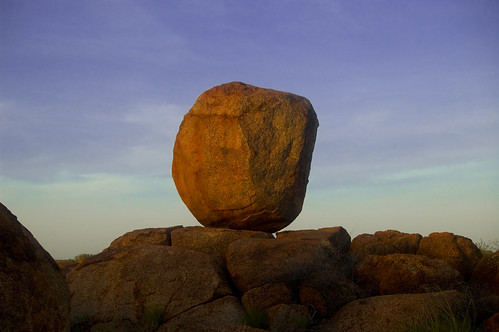
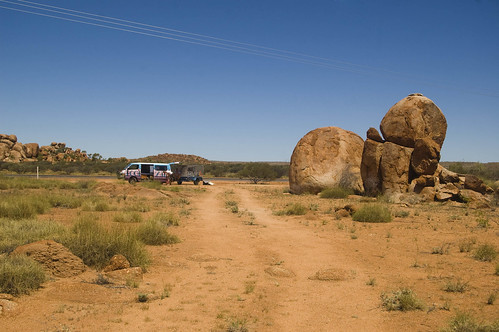
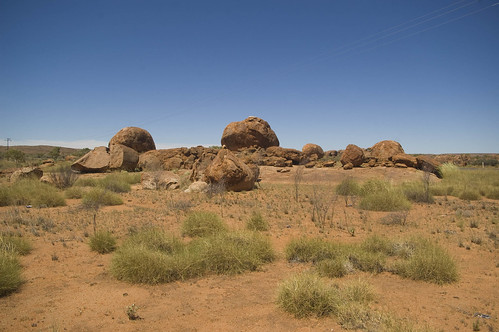
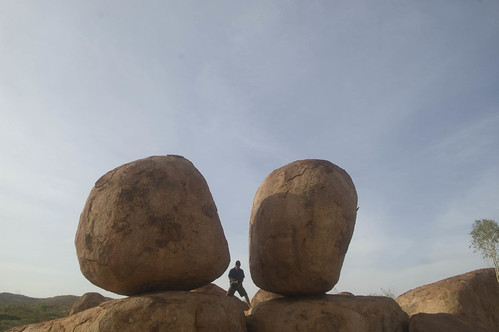
The Devil's Marbles, or Karlu Karlu as they are known by the lands traditional Aboriginal owners, are huge granite boulders scattered across a wide shallow valley. It is a remarkable landscape with some of the boulders resting atop others in a seemingly impossible arrangement. This site is a nationally and internationally recognised symbol of Australia's outback and it has great importance as a spiritual meeting place for the Aboriginal people of Central Australia. The boulders are located in a boundary area for both Warumungu and Kaytetye language groups, and Walpiri and Alyawarra language groups also have traditional associations with the area.

DSC_7141

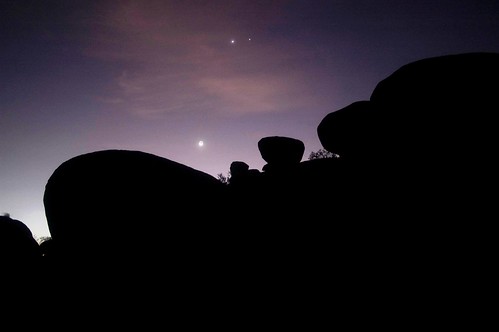
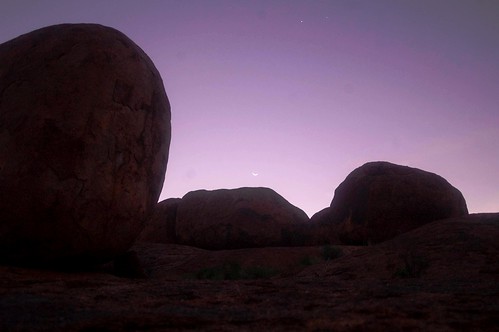
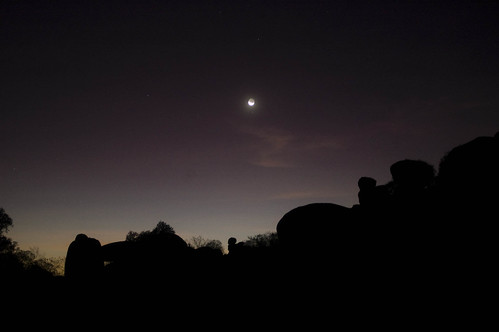
The Stone Marbles silloetted by moon light

The traditional Aboriginal owners of the area regard the marbles as having extraordinary powers and damage to them can have life threatening consequences for their custodians.

Many traditional dreaming stories intersect at or around Karlu Karlu and unlike many sacred aboriginal sites which are specifically male or female, men, women and children meet here.

Accounts of Aboriginals believing the site to be eggs of the mythical Rainbow Serpent are now believed to be incorrect. The dreaming stories are alive and well today and are passed on from generation to generation of Traditional Owners. However only a handful are considered suitable to tell to uninitiated visitors and it is therefore probable that we may never learn all their stories relating to this ancient landscape.

DSC_7105

One story is of Arranji, the Devil man who while travelling through the area stopped to make a ritual hair belt. Twisting the hair into strings he dropped clusters of it on the ground and these turned into the Karlu Karlu. On his return journey to Ayleparrarntenhe Arranji is also believed to have spat on the ground, his spit forming more boulders.

DSC_7915

DSC_7918

Geologists however believe the mysterious shapes to be caused by erosion. The Marbles are made of granite and were surrounded by sandstone deep within the earth. Over time this layer is brought to the earths surface and the sandstone erodes quicker than the granite leaving little islands of the harder rock. The lack of pressure above ground allows the granite to expand and crack, falling apart in big square blocks. On the surface wind and water can now play its part in shaping these rocks in a process called spheroidal weathering. The extremes in temperature between night and day causes some of the boulders to crack and in some cases even split in half.

DSC_7919

No matter what you believe, surrounded by these enormous sacred boulders you sense the peace and tranquility of the outback and it is hard not to get enchanted with the magic of the place. On Tuesday the 28th October 2008 ownership of Karlu Karlu/Devils Marbles was officially passed from the Parks and Wildlife Service of the Northern Territory back to the Traditional Owners at a ceremony held on the Reserve. The Reserve is now leased back to the Parks Service under a 99 year lease and the site is now managed by Rangers and Traditional Owners in joint partnership.

Devil's Marbles

Devil's Marbles

DSC_7098

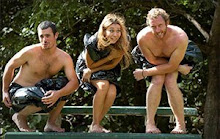
Gareth takes a photo of Phil playing amongst the stone marbles

DSC_7133

The sun sets and leaves a magical purple light in the sky sillouetting the powerful shapes of the Devil's Marbles

DSC_7145

This place has been one of our favourite places thus far and we highly recommend a visit here should you get the chance.
Read a cheeky bit more!

From Isa to Alice - Anne Falls Asleep at the Wheel!

DSC_7072
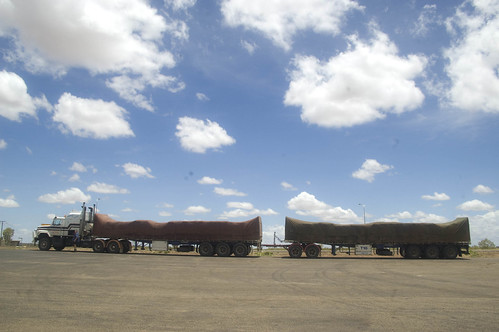
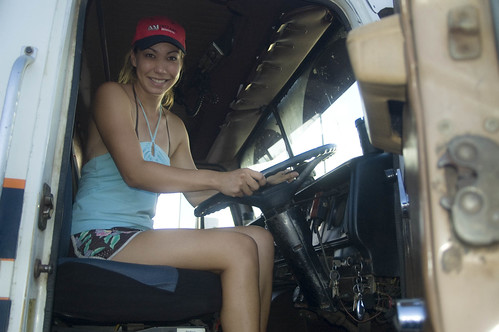
The 47m long road train Anne drove

Phil (the hero of this piece) suddenly grabs the wheel and pushes it anticlockwise, the van veers back onto the road and we are back again where we belong - on the bitumen. The wheels wobble beneath me as I try to correct my course. I non-chalantely utter "Oh, sorry" and then carry on driving, feeling extremely calm. Phil’s furrowed brow and incredulous eyes burn into the side of my face as he simply shouts “Anne!”. “What?” I say calmly. “Pull over!!!!” he firmly demands of me.

DSC_7824
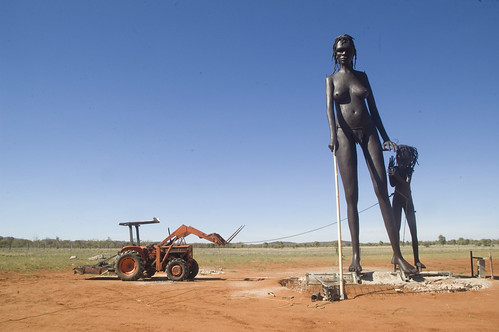
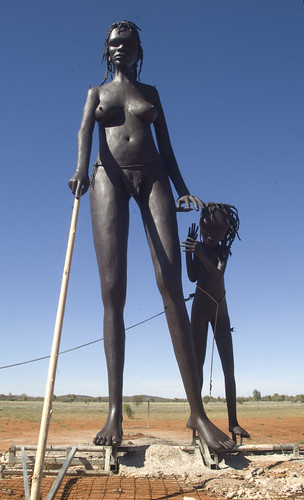
One of the Alleron Aboriginal statues

What strikes me most as I look back now is my lack of surprise. There was no jump start, no adrenaline released to help me deal with the imminent danger at hand, no increased heart rate and no worries. The sincere apologies and worry came later that evening as I lay in bed and was just about to fall asleep and my brain kicked in and suddenly filled me with dread as I thought “Good grief! I nearly killed us all today!”

DSC_7084

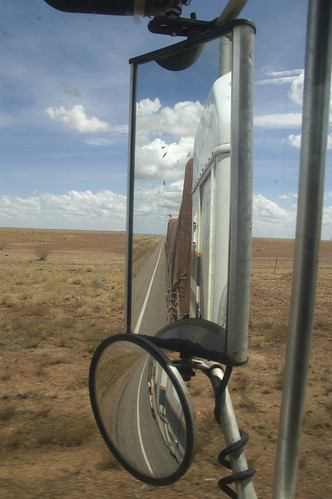
For as far as you can see in all directions the land is featureless

The dangers of driving in the immense heat on roads which are straight, flat and featureless, the only exciting thing to happen is the smell of road kill wafting in from the roadside. We have no air-conditioning and we can’t pick up any radio signals. It really is incredible how far and wide Australian roads can take you without changing at all. It is hard to imagine the immense stretches without driving over them yourself, especially coming from small island countries as we have.

DSC_8063

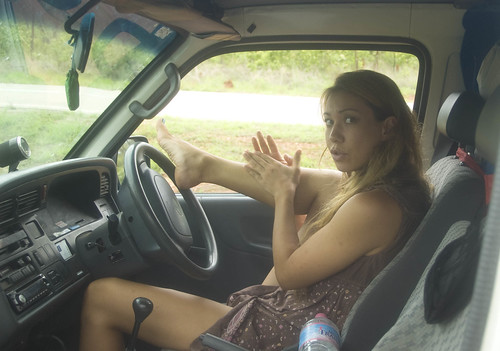
Anne tries to wake herself up with a leg massage

I was lucky to awake just in time to see us heading in the direction of a cattle fence and trying not to wake the snoring Anne, gently steered us back onto the bitumen. Anne had just experienced a micro sleep. It happens a lot with truckies and road train drivers in the Australian outback. Anne's eyes didn’t shut but her brain shut down, she didn’t realise she had veered off the road and she was still in a dream like trance when I asked her politely to stop the car.
A note to all friends and relatives - we have since made sure we swap drivers often and one of us is always awake and alert as a passenger when driving.

DSC_7060

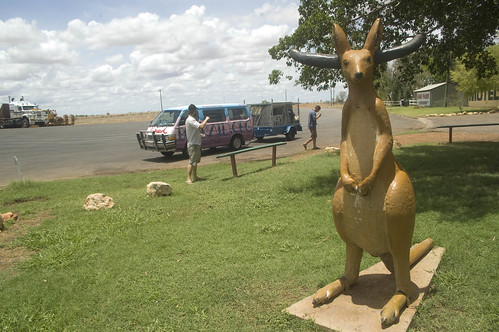
The Camooweal Bullaroo, an imaginary creature Australians like to fool tourists about

The Barkly Highway joins the Flinders Highway at Cloncurry forming the last part of the Overlanders way. We travelled the 188 kms along the worlds longest high street and arrived in the town of Camooweal at lunch time. Only 12 kms from the Northern Territory border this small settlement consists of a pub and a couple of servo's. The BP Roadhouse on the edge of town kindly donated $20 worth of fuel, cheers David and Susana.

DSC_7066

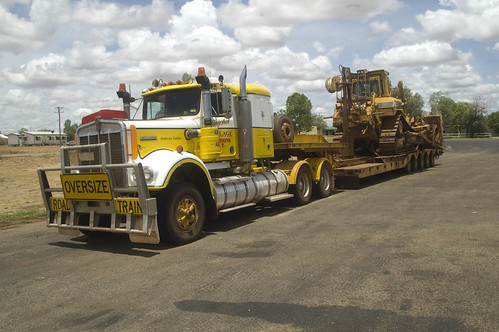
A poor road train driver who had been stuck waiting at a road house for three days for two cars to arrive so that they could drive infront and behind him warning others of the wide load he was carrying

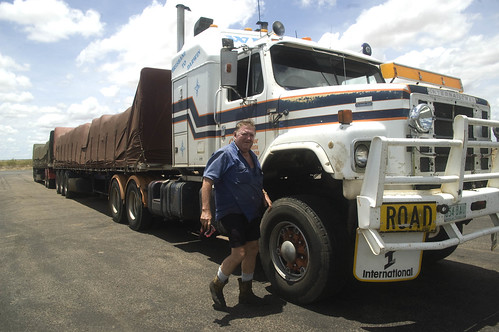
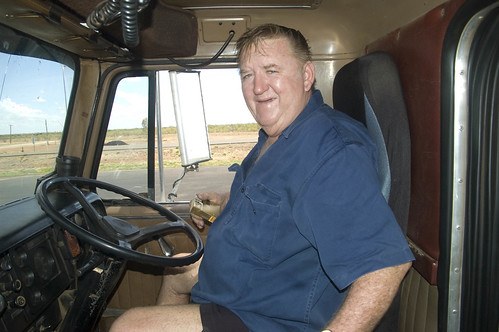
The museum attached to the general store being closed, we sat and talked to a couple of road train drivers over lunch. Col, a trucky who had just stopped to make use of the free shower facilities at the road house kindly agreed to let Anne travel with him for the 250 kms to the next fuel stop at Barkly homestead where we would later meet up with them.

DSC_7069

Wide load road train

DSC_7067

Col with his road train

DSC_7091

Anne has a go at driving the 20+ gear, double-shift road train and manages to get it to go at a whopping 40kms an hour

DSC_7073

We decided to stay at Barkly Homestead for the night and approached the roadhouse to ask if this would be okay. The man we needed to ask was a young lad called David and he had apparently just nipped home for a quick while, so we retired to the van for a much needed cup of tea and some cake. Returning half an hour later we were informed that he was still out and 'sure to be back anytime soon', 'he had just gone home for a quick shower'. This process repeated itself for the next couple of hours and reluctant to just pitch a tent without asking we waited patiently in the van. It became too late to move on. The next place to camp was 200 kms away and the thought of playing dodge the Kangaroo didn't interest anyone, so determined to finally set up camp and cook a warm meal we staked out the roadhouse. Every half hour we approached the counter for an update and every time we were rebuffed. It crossed our minds that he had possibly drowned.

DSC_7078

Anne was at times more than a little shocked at Col's uncouth truckie humour
Unlike some of Australia's city's, parts of the outback have huge underground springs and basins full of water so there would be no water restrictions in place here. It hit midnight and there was still no sign of David, not knowing where he lived and with the nearest lifeguard station over 500 kms away we were at a loss for what to do. In one last valiant attempt we ventured forth into the roadhouse, again we were confronted with an exasperated assistant wearing a look half of incredulity and half admiration (presumably at our staying power). They finally relented and agreed it would be okay for us to sleep at the side of the forecourt in the van and that David would definitely be there between nine and ten the next morning. We climbed into the van and were lulled to sleep by the constant hum of a diesel generator and the occasional thundering road train but at least we had some real dunnies (toilets) to go to in the morning.
DSC_7090


DSC_7089

It's impossible to forget where you are in Australia
The next morning exhausted and hungry we set off for Tennant Creek. The road between Barkly and Tennant was much the same as most outback roads we had travelled, long, straight and hot and after three hours travelling at a steady 80 km/h we were in Tennant Creek. Knowing that all being well we would pass back through here on the way up to Darwin we decided to motor through and try and reach The Devil's Marbles before sunset. We had no idea what to expect or who we might meet.
Australian Outback

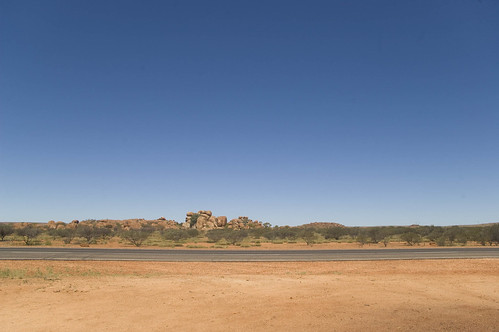
The long straight road suddenly starts to contain some rocky features to one side.
The Devil's Marbles are a geological oddity situated just off the Stuart Highway between Tennant Creek and Alice Springs. We arrived late in the afternoon, just in time to see them glowing in the warm dusk light. It wasn't hard to understand why the lands traditional owners held this site as sacred. Aboriginals from the local four language groups still meet at this place today.

There is a campground on the Devils Marbles Conservation Reserve and as the sun went down we decided to set up camp. It was here that we met Jon Duncan, the manager of a cattle station east of Alice Springs. Before finding out his name and before having the chance to introduce ourselves a beer was thrust into our sweaty palms and cigarettes and insect repellent were offered. Stood around, slaking our collective thirst we discovered that Jon was up here from Alice trying to find somewhere he could water his cattle for a while.

Stations in this vast territory need to work together and it is common place that one station will allow neighbouring stations to temporarily graze cattle on their land if they have any to spare. Without this cooperation a lot of cattle would lose their condition or even perish during the extremely harsh dry season. In outback Australia this can mean moving cattle huge distances, as some of the stations in this part of the world are larger than some European countries.
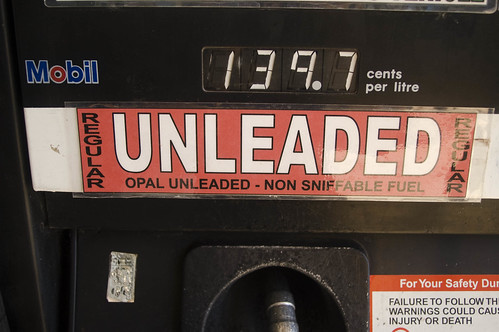
DSC_7747The Northern Territory uses none sniffable fuel as many youths abuse the sustance

After hearing about what we were trying to achieve Jon took it upon himself to give us a well earned break and the cold frosty beers kept on flowing. Talking further we discovered that Jon hadn't always been a station hand and had only moved here in the last few years flying back to see his family in Brisbane whenever he gets the chance. He had a laboratory background in the sciences, but had done many different jobs in many parts of the country before arriving here. When the beer began to run low he suggested a short trip to the nearest pub where he kindly donated a couple more and we propped up the bar for the first time since leaving Brisbane. A bottle of Bundaberg and some more tinnies were acquired and off we headed back to camp.
Bush Weed

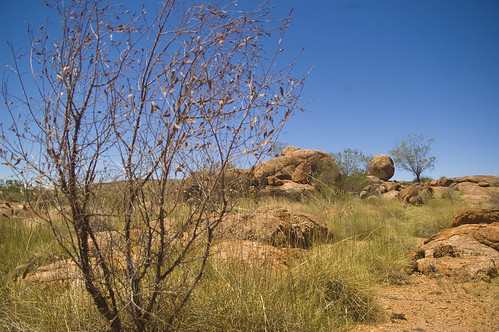
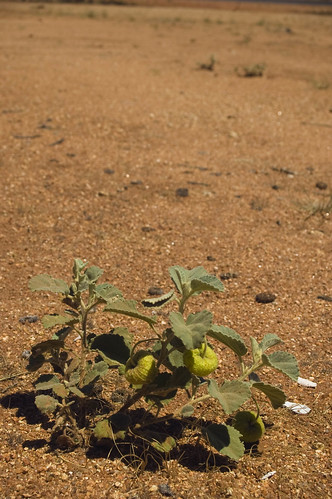
With no shade from the intense sun and very little water we were surprised to still see the odd plant forcing it's way through the red earth


Having been to the UK himself a few years ago Jon had discovered a band called the Kinks and being from that part of the world he knew we would have heard of them. Inserting the CD and pumping up the volume he asked, in fact he politely insisted that we sing along and wanting to thank him for his unwavering generosity we broke into song. This scenario repeated itself regularly throughout the night and was interspersed with a couple of his old Aussie favourites from Slim Dusty and Kevin 'Bloody' Wilson. When it seemed like we were faltering and couldn't remember all the words to 'Waterloo Sunset' Jon produced a printed sheet with the lyrics on and with no excuses we valiantly sang on into the small hours. Eventually tired but elated we hoarsely strained our good nights before stumbling off in the direction of our van. We had a few hours to sleep before waking to our well earned hangovers.

DSC_7149

The pub Jon Duncan took the boys to for singing supplies
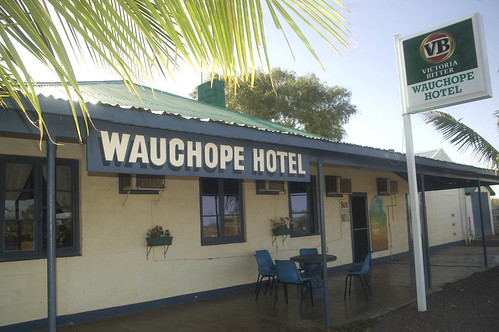
Apart from Anne deciding to take a brief nap at the wheel of the van, the road down from here down to Alice was less eventful. We stopped at Wauchope and Wycliffe Well and both service stations donated fuel.
We reached Alice Springs that evening and met up with another Woof host called J9. Fed and refreshed we went to bed wondering what adventures Alice would bring.
DSC_7818
One of the immpressive, giant Aboriginal statues at Alleron
Read a cheeky bit more!

'The Isa'

DSC_7043
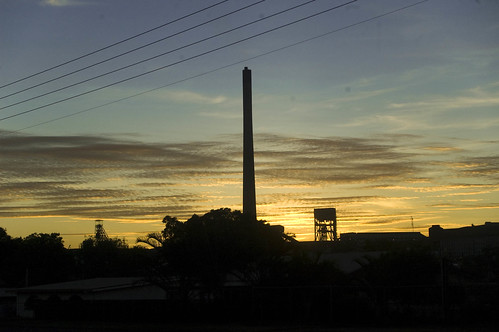
Mount Isa's falic mining chimney
'The Isa' as it is known by locals is surrounded by red hills and blessed by an abundance of minerals. In 1923 John Campbell Miles camped on the banks of the Leichhardt River whilst prospecting for gold. Sampling rocky outcrops nearby he discovered that they were full of minerals, he had inadvertantly found one of the worlds richest copper, silver, lead and zinc ore bodies. He named the area Mount Isa after hearing tales of the Mount Ida goldfields in Western Australia.
DSC_6990
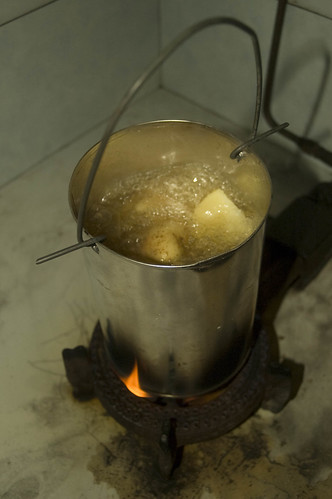
We try out our billy can

Today Mt Isa is one of the most productive single mines in world history and the town is now the administrative, commercial and industrial centre for Queenslands vast North-West region. The early pioneers however faced many problems including a lack of water, extreme summer temperatures and a scarcity of essential items.
Mayor John Molony drew international press attention to Mt Isa in August 2008 when he told the Townsville Bulletin newspaper that Mt. Isa's gender imbalance makes it a good place for "not so attractive" women to live. "With five blokes to every girl, may I suggest that beauty-disadvantaged women should proceed to Mount Isa," he said.
DSC_5672
Everybody we had met along the way had reinforced this idea with tales of how desperate, lonely men would be drooling and fighting over Anne and we feared for Gareth with his pink thongs and matching boardshorts. We were expecting a dusty square with a line of saloon bars on each side and had visions of brawling men spilling out into the square through saloon doors to settle their differences. In reality Mt Isa is a city with a modern feel, acentral business district and due to its early immigrant workforce is about as cosmopolitan as any outback settlement is likely to get.


We arrived in the late afternoon and after asking around managed to get a spot for the night at Mt Isa caravan park.
The next morning we were up early and it was over for a visit to the School of the Air Radio.


DSC_7055

DSC_7053

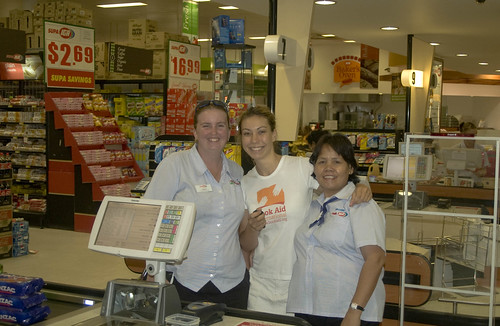
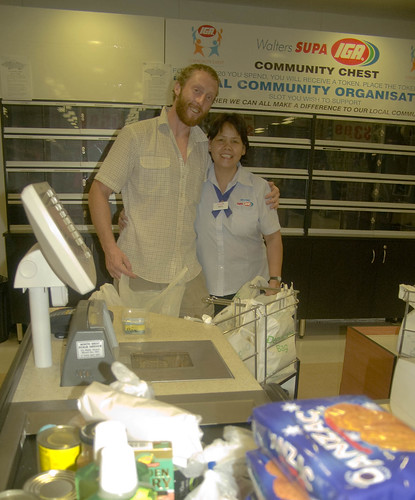
IGA staff members present us with fuel and food

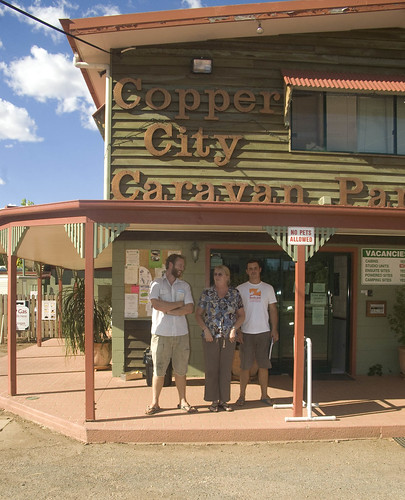
We then called our old friends at the IGA and they agreed yet again to donate some groceries and fill up our tank if we did a days work for one of their chosen charities. Needing another couple of nights in Mt Isa the lovely couple at Copper City Caravan Park donated two nights in an air-conditioned cabin, a gesture most appreciated in the intense heat. This meant we could do a days work at St Vinnies hospice the next day and pick up our food and fuel before moving on.

DSC_7039

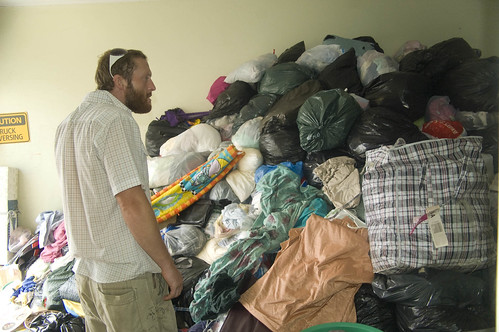
Our work at St Vinnies involved sorting through endless bags of clothes that people had generously donated and sorting them in terms whether or not they could be used again for resale. A great many generous people donate items to St Vinnies however a great percentage of these donations can't be used as they are of poor quality and as we witnessed a huge number of people donate clothes that haven't been washed. Much to our amusement (but not Anne's) and frequent wretching these items included used undercrackers with soiled gussets and baby suits covered in vomit. Whilst St Vinnies appreciate donations, it is impossible for them to do anything with these soiled or dirty items as to wash clothes given to them would cost them way too much. Sadly a lot donated items just get binned. It felt good to help one charity by working for another one and the staff at St Vinnies also made a generous donation to our cause.

DSC_7051

Gareth chases Anne with a pair of soiled knickers found in a donation bag, puke!

DSC_7050

A mountain of donated clothes


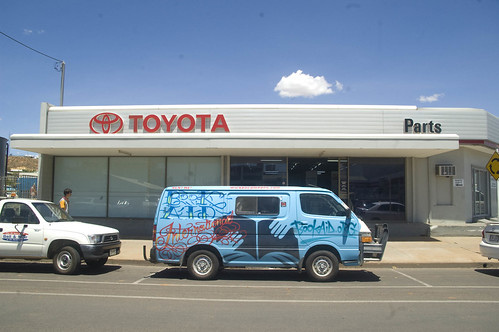
The next morning after an interview with the local ABC Radio station we were on our way and heading up the longest main street in the world. Camooweal lies 188km North-West of Mt Isa and is included in its city limits, for this reason Mt Isa was once listed in the Guinness Book of Records as being the biggest city in the world. Unlike most main streets however this one is lined on both sides with bushland. We were now leaving Queensland and about to enter the Northern Territory but first we would have to find a replacement for the fuel cap, which was lost at one of the fuel stations on the road. Toyota parts in Mount Isa come to the rescue and donate a brand new cap for our cheeky van.

DSC_7038

Toyota Parts donate a missing fuel cap for our cheeky van


DSC_7047

We are given frueit and veg by one of Mount Isa's independent stores


DSC_7037

DSC_7056

DSC_6988
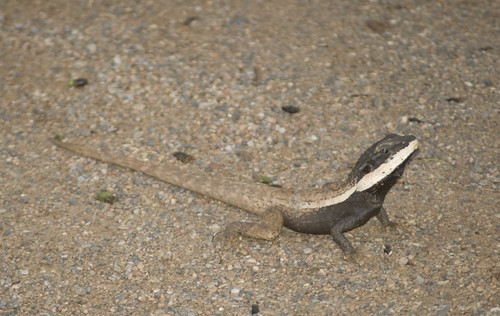
One of the many lizards we see in our path
Read a cheeky bit more!

School of the Air

DSC_7004

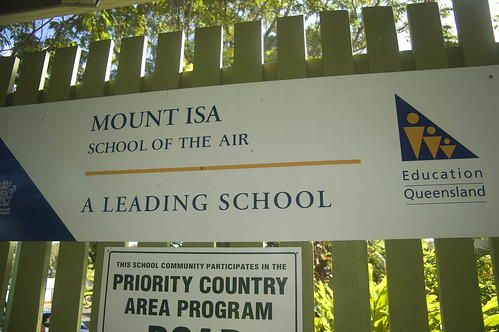
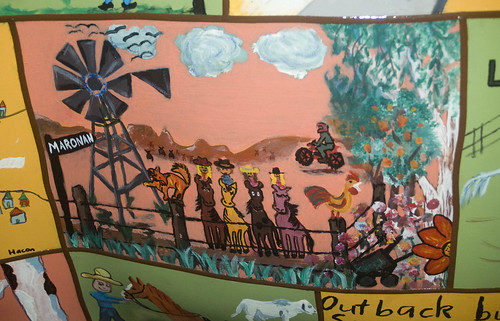
At Maronan we were introduced to The School of the Air. Kasie and Rose, living so far from town, as do many other children living on cattle and sheep stations throughout Australia, are educated from home, over the phone, or as it is now, via satellite link, or the internet, in as much of a classroom environment as can be achieved when the pupils are dispersed over 800 000 square kilometres.
DSC_7022

Put in touch with the Principal by Nevenka, we visited the School of the Air in Mount Isa. Principal Thomas, or Sir, as we called him, showed us round, and told us about this remarkable school. The first one in Queensland was based in Cloncurry, in 1960, on the Royal Flying Doctor Service radio network, before both moved in 1964 to their current locations in Mount Isa. The School of the Air’s first teacher was a lady called Miss Bid O’Sullivan, for those of you keen to know such things.

The format is simple: the teachers broadcast radio lessons and mail learning materials to children spread throughout a vast area of the country. Mount Isa School of the Air covers Outback North West Queensland, encompassing some 150 rural properties, from the Gulf cattle stations of Normanton and Burketown, east to the sheep country on the plains of Julia Creek and Richmond, and south to the channel country of Birdsville and Bedourie and west as far as Brunette Downs in the Northern Territory, an area of almost a million square kilometres.

DSC_7000

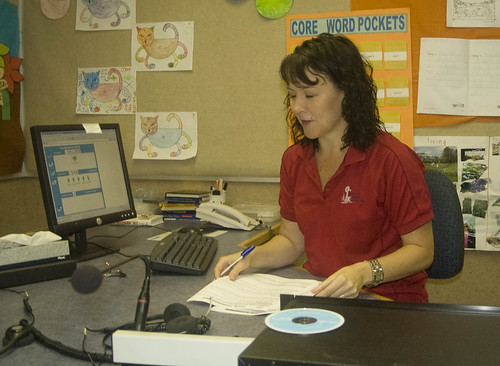
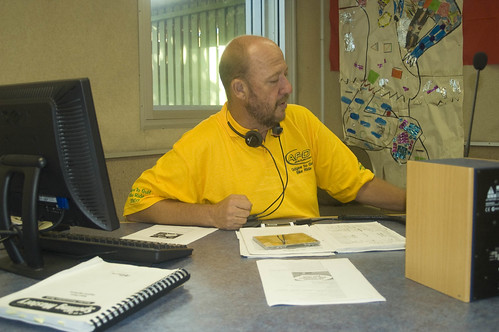
They have approximately 220 children from prep to year 10, looked after by a staff of 25 teachers. They are given one 30 minute lesson a day, the teacher talking during that time to no more than 10 kids at a time to provide them with some sort of classroom experience. All the children can hear the teacher, who asks questions individually to each student, then waits for the crackle of a response. The various methods of communication involved mean there are some delays and interference, with some using broadband internet, others on satellite phones, some on regular phones.

They try to give the kids some sort of a classroom experience so that they are not entirely isolated and dismayed on entering the boarding school the majority of them go to complete their studies. Roy, the Principal, told us that the main thrust of the School was in the development of classroom relationships while on air, and in the completion of the curriculum papers, the 30 minute phone lesson supplementing this work. For some of the pupils this half hour a day is the only contact they have with other human beings outside of their own family’s station.
DSC_7025

DSC_7034

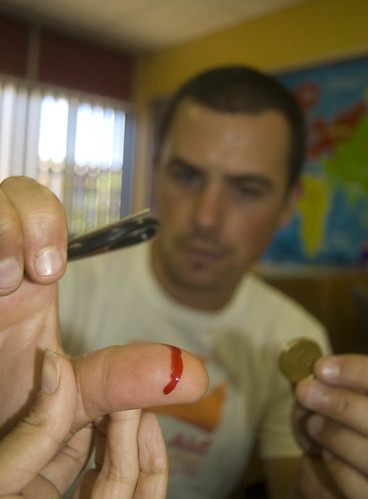
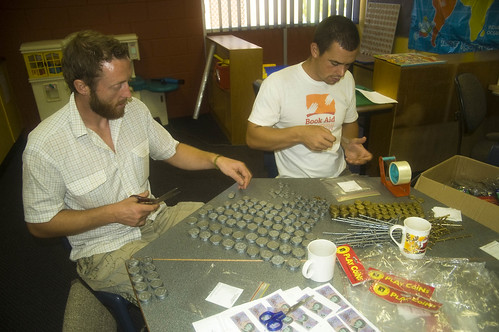
Phil has a small injury whilst counting fake money

DSC_7032

We were told that they were always very eager to relay news of any events – be it mustering the cattle or branding, a rodeo, gymkhana, all that is relevant to their lives; be it any rainfall, everyone wants to hear where the rain is, or new babies, human or animal, or even the fact that your mum called your dad a fat shit for kissing a girl at the pub on Saturday night, and that he’s now living in the shed having been kicked out.
DSC_7001
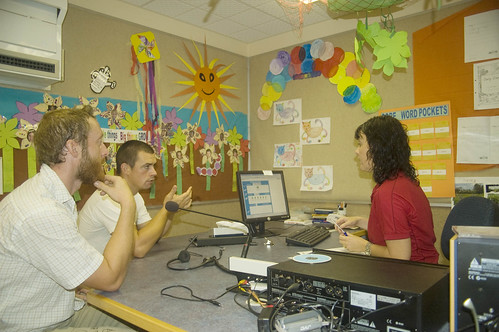
We sit in one of the School of the Air Lessons

While sitting in on one lesson, entirely by the happenstance of intent it being the very one in which Kasie was about to recite her Christmas song, we saw how it works. The teacher asks questions, and a flurry of names reply they know the answer, or want the chance to speak, the teacher then says one of the names, and that child speaks. It’s very orderly. The ones who don’t shout that often are noticed and duly invited to participate, which they do, with a little cajoling. Kasie’s Christmas song by the way was Weird Al Jankovic’s The Night Santa Went Crazy, a story about St Nick’s descent into alcoholism, murder and jail.
DSC_7030
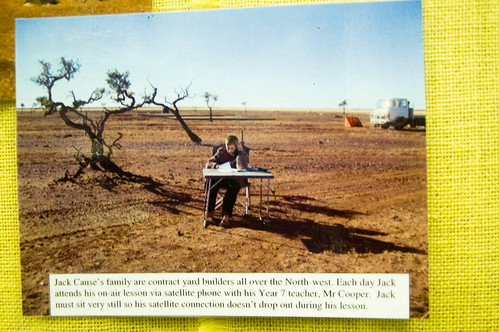
Jack isAn intinerant
Then came the joke telling. It being the last day of term, they were taking it easy. Most of the jokes were pretty good, either that, or I’m that easily amused. What do you get if you cross a skunk with a horse? Whinny the poo. See, funny eh. What do you call a chicken crossing the road? Poultry in motion. This one slayed me: did you hear of the man who fell over in the upholstery store? He’s now fully recovered. Ha!

Later, as I was reading about the people in Mount Isa, in the early days, who went to see the small plane come in when it arrived every month or so, not because they were expecting anyone, but to see who it is, and what they wore, to see what fashion had been up to since the last person stepped off last dry seasons plane, I was called into one of the classrooms by a teacher, who urgently needed a Santa Claus for the year one children, because, wily things that they are, they would be sure to spot the voice of anyone they knew.

So I ho ho ho’d and Merry Christmas Children’ed them all. And a ho ho ho in Aussie is no easy thing I’ll have you know, although thinking about it, I don’t know why I felt I had to be Aussie Claus, it just sort of came out. And as soon as I asked them what do you all want for Christmas (“wot dou you nippers all wants fer christmers then eh?) there were what sounded like a million shrill little voices screaming into the headset asking for bikes and barbies and dolls and cars, cars? and a guitar, and and and... and while I did my best with my “G’day Lirrell Chil’ren” Aussie Claus impersonation, I have to say I did get a little flustered, especially when I told little Jeb he couldn’t have his Thai Bride because she’d asphyxiate in the post. Kids eh, they do say the funniest things.

Lessons centre around all subject areas, they have a fully automated library which involves mailing individual books to all 220 children. They even have Scouts of the Air, Religious Instruction, and Recorder and Violin instruction. The next week they were to have a Sports Day at Krutschnitt Oval, and all the kids, from all over come down for a week, and meet the classmates whose voices they have heard all year, and compete in a week of games and events.

The School of the Air is made all the more impressive when we were told by one of the teachers that for ten years he was a Home Tutor. A Home Tutor drives, in a car, he drives, from property to property, to talk with the children face-to-face. This gives the school a human face, gives the children the opportunity to ask questions they may be too shy to ask, or to just get to know one of their teachers. It is a support network, a liaison too, between the school and the parents.

It is one hell of a job though. You have to like driving to do it. You turn up, first day of term, fresh faced and beach tanned, with a spring in your step and a new necklace with a sharks tooth in it you bought from some hippy you probably could have snogged if you had wanted to. “Good morning Terry”, says the Principal gaily. “Good holidays? Great stuff. Back to work now eh. Here’s your patch for this term. It’s de-de-de de-dum”, checking the paperwork “oh! only 800 000 square kilometres this term. See you in nine months”. Driving from South Australia to the Northern Territory, 2000 kilometres, the final 500 along a corrugated dirt track to a cattle station, to say hello and how’s about you to a kid, then in the morning off again, to another property to do the same. The Home Tutor is on the road 40 weeks of the year.
DSC_7011

It is a remarkable resource, and one, that is again, as far as I know anyway, confined to Australia alone. That kids can learn like this, that being remote and cut off needn’t limit your education, is a wonderful resource to have available.
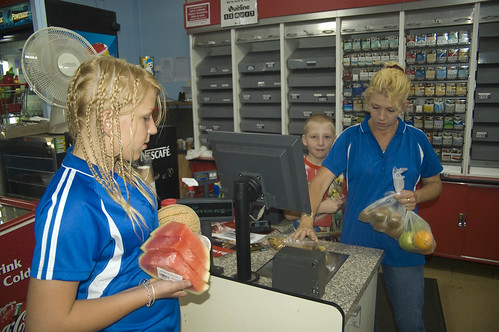
Now quickly, to see who has been paying attention: who can tell me who Bid O’Sullivan is?


Mount Isa School of the Air allows children in the more remote areas of the outback to gain an education (for more information visit School of the Air online). Read a cheeky bit more!