




The thing about Australia is that, as a nation, it is still relatively young. As a continent it is, of course, eons old, and, if you count the Indigenous occupation, inhabited for the past 50,000 years. But, as the dates recorded by the European settlers who founded the Commonwealth of Australia, their history is an exciting one, a daring one; a brave and bold adventure, not without its mistakes, of course, and its triumphs, undoubtedly, but you don’t have to go too far back to find it, and, proud as they are of this history, it is not too difficult to find it either.
One of these triumphs, that incorporated some mistakes and misadventures, and that forged the Aussie spirit, that opened a giant land of barren expanse to the new settlers and pioneered a new chapter in the history of this sapling nation is the story of John McDouall Stuart and his role in connecting Australia to the rest of the world.
In 1839 HMS Beagle led by John Clements Wickham, who had on board a young naturalist called Charles Darwin, sailed around the north on a surveying trip, stopping at what he later named Port Darwin and the reports of this natural harbour obviously excited those who wished not only to explore the continent but to develop it, and to establish links to the rest of the world.
The Northern Territory was then linked to South Australia, governed from Adelaide, who were itching to expand their horizons into the vast blank space occupied by the Territory. By 1855 speculation had intensified about possible routes for the connection of Australia to the new telegraph cable in Java and thus Europe. Among the possible routes were either Ceylon to Albany in Western Australia, or Java to Darwin and on to either Burketown in north western Queensland, or across the dead heart to Adelaide.
Initiating what was later to become known as the indomitable Aussie spirit of fierce competitiveness and me-first rivalry Adelaide decided they wanted it. Competition between the colonies over the route was fierce. The Victorian government organised an expedition led by Burke and Wills to cross the continent from Menindee to the Gulf of Carpentaria in 1860. The South Australian government recognised the economic benefits that would result from becoming the centre of the telegraph network and so offered a reward of £2 000 to encourage an expedition to find a route between South Australia and Darwin.
If this were a film, there would be a lot of stuffy bureaucrats in overly-tight suits huffing and puffing inside a plush room thick with cigar smoke, curling impressive moustaches, vying for the top spot no matter what the cost. The hero, unknown to us at the beginning, would be drunk somewhere, possible fighting, certainly unkempt, swigging deeply from a long-neck bottle of whisky. ‘Where will we find this man to cross the heart of the continent, to go where no man before him has been?’ the stuffy men in the tight suits ask. The scene cuts, it is morning, the hero sits up in bed, takes a giant swig from his ever-present bottle and belches loudly.
Cue John McDouall Stuart. Born in 1815 in Fifeshire, Scotland, the son of William Stuart, an army captain. A slight, delicately built young man, standing about 5' 6" tall and weighing less than 9 stone. He arrived in South Australia in 1838 where he entered the government survey department. He gained experience with Captain Charles Sturt some of his expeditions, and had by 1859 established a reputation as a sterling explorer, brilliant surveyor and as a fellow who was rather fond of a drink.
Very fond of a drink. In fact, it could be said, that when he was not exploring he was drinking. This is not to denigrate the man, but he was a born explorer, a man for whom vast distances and a walk towards the horizon held nothing but the most delightful awe. In the cities, where big-wigs curled their moustaches and guffawed over brandies, he felt hemmed in, claustrophobic, and so drank to compensate, or maybe he ‘went bush’ to escape from loneliness and fear. Who knows. If Nicole Kidman were part of this plot she would figure him out alrite, but she’s not, so indulge me. He liked a drink and we don’t know why. And if those jerks up in City Hall don’t like it well they can….
In 1859, the South Australian Government were crying out for someone to cross Australia from south to north. Like the interior of Africa, inland Australia stood out as an embarrassing blank area on the map and although the long-held dreams of a fertile inland sea had faded, there was an intense desire to see the continent crossed. This was the apex of the age of heroic exploration. And a hero was waiting in the wings.
The proposed telegraph line made things more urgent still. Invented only a few decades earlier, the technology had matured rapidly and a global network of undersea and overland cables was taking shape. The line from England had already reached India and plans were being made to extend it to the major population centres of Australia in Victoria and New South Wales. Several of the mainland colonies were competing to host the Australian terminus of the telegraph: Western Australia and New South Wales proposed long undersea cables; South Australia proposed employing the shortest possible undersea cable bringing the telegraph ashore in Australia's Top End. From there it would run overland for 3000 kilometers south to Adelaide. The difficulty was obvious: the proposed route was not only remote and (as far as European settlers were concerned) uninhabited, it was simply a vast blank space on the map.
At much the same time, the wealthy rival colony Victoria was preparing the biggest and most lavishly equipped expedition in Australia's history. The South Australian government offered the reward of £2,000 to any person able to cross the continent and discover a suitable route for the telegraph from Adelaide to the north coast. Stuart's friends and sponsors, James & John Chambers and Finke, asked the government to put up £1,000 to equip an expedition to be led by Stuart. The South Australian government, however, ignored Stuart and instead sponsored an expedition led by the hapless Alexander Tolmer, which failed miserably, failing even to travel beyond the settled districts.
So, sponsored by James & John Chambers Finke he set out. From March 1860 until 1862 Stuart made three attempts to cross the continent. Travelling light and quick, avoiding the problems associated with a large expedition party, he knew the terrain and where to find water, but supplies were a problem, as were a hostile native mob, who attacked the party and stole from them. Stuart’s eye was a pain, the result of sandy blight from so much work surveying the desert, he was suffering from scurvy, and so they turned back, not without first venturing further than anyone had previously done. The Victorian Burke and Wills party had set off two months before he returned on October 1860.
In January 1861 he was ready to do it again. James Chambers once more put it to the government to support Stuart. The government prevaricated and quibbled about cost, personnel, and ultimate control of the expedition, twiddling moustaches and patting overfed stomachs, but eventually agreed to contribute ten armed men to guard against another attack by the native Aboriginals and a purse of £2500; and put Stuart in operational command. (In contrast, the Victorian government had provided Burke and Wills with the massive sum of £12,000. That expedition had already reached the Darling River in northern New South Wales).
When this expedition failed near the Victoria River only four hundred kilometers south of the top it was due to Bullwaddie Bush. A natural sort of razor wire it grew in a dense forest halting Stuart’s progress, ripping, tearing and puncturing clothing, flesh, saddle bags, and the animals. They tried to find an alternate way, but with supplies running low, and again, the native Aboriginals hostile to their presence, they turned back for home in September 1861, six months after they left Adelaide.
On their return they heard that Burke and Wills were missing. Stuart offered to help with the search party, but he was not needed, however, as news reached them that all but one of Australia’s most lavishly funded and equipped expeditions had expired on the trail and died. Stuart came back to a frosty reception, dark news and fell again into his old habit of drinking.
The public’s appetite for these expeditions was cooling too by now. Stuart wanted one more shot, godamitt, but the South Australian Government were reluctant to fund another effort, despite the fact that Stuart has led his men to within a few hundred miles of the top and back without losing one. However, the prospect of establishing a route for an overland telegraph line had the Government rubbing their hands in glee and they finally dug deep and provided Stuart with £2000 at the last minute on condition that Stuart took a scientist with him. James & John Chambers along with William Finke remained the principal private backers.
Only two months after he returned from his last effort to reach the Top End, he was off again. In October 1861 he and his loyal band of explorers set off and this time made it. In July 1862 he reached the beach at Chambers Bay, due east of where Darwin is today. In his notes he commented:
I believe this country (i.e., from the Roper to the Adelaide and thence to
the shores of the Gulf), to be well adapted for the settlement of an
European population, the climate being in every respect suitable, and the
surrounding country of excellent quality and of great extent. Timber,
stringy-bark, iron-bark, gum, etc., with bamboo fifty to sixty feet high on
the banks of the river, is abundant, and at convenient distances. The
country is intersected by numerous springs and watercourses in every
direction. In my journey across I was not fortunate in meeting with thunder
showers or heavy rains; but, with the exception of two nights, I was never
without a sufficient supply of water. (‘Explorations in Australia’, John
McDouall Stuart, Adelaide, Decmber 18, 1862)
Yet he did not linger there. Turning back at once for Adelaide they made it back to with Stuart almost skeletal in appearance, practically blind, suffering from scurvy, and carried for the last part on a makeshift stretcher, from which, when he entered Adelaide, and they saw who it was and the big-wigs came out, and saw Stuart stretcherd and wretched they patted their bellies, drew on their cigars, and tut-tutted, until a scrawny finger beckoned them hither, Stewart’s, and waddling over they went. ‘Closer’, whispered Stewart, ‘closer’, he whispered almost inaudibly until they were upon him.
The Big-Wigs indulged him, laughing, and as they leant in, with smirks on their big round fleshly faces, a thin haggard hand grabbed a lapel pulling a surprised face down until level with Stuart’s own, and his gaunt voice told them ‘we did it’, and as the penny dropped, the jowls of that surprised face drop to his knees as the news kicks in. The big-wigs begin to understand. Stuart had reached the Top End. It was 1862 and he was 47 years old.
This enabled the Governors of South Australia to proceed with the plans for the Overhead Telegraph Line with the same rapidity of intent and coming into fruition that saw them delay and hinder Stuart for so long. So a mere eight years of prevaricating, conniving and convincing later they finally contracted the linking of Adelaide to Darwin via 3200 kilometers of overhead telegraph line. The British-Australian Telegraph Company promised to lay the undersea cable from Java to Darwin by 31st December 1871, with severe penalties were to be applied if the connecting link was not ready.
As it was in 1859, so the race was now on in 1870. The South Australian Superintendent of Telegraphs, Charles Todd, was appointed head of the project, had overseen its progress so far and worked tirelessly and devotedly to try to complete the immense project on schedule. He planned on dividing the route into three regions: the northern section from Darwin 1200 kilometres to Tennant’s Creek and the southern section from Port Augusta 800 kilometres across the treeless wastes of the gibber deserts were to be handled by private contractors, and a central section which would be constructed by his own department, under John Ross and Alfred Giles whose job it was to find a gap through the MacDonnell Ranges, which they eventually did, discovering a beautiful natural spring, an ideal location for a base camp, naming it Alice Springs, after Todd’s wife.
The telegraph line required more than 36,000 wooden poles, insulators, batteries, wire and other equipment, all ordered from England and all carried into the interior. It was a mammoth project and one that would not be an Australian project were it not beset by the problems associated with working in the conditions that the country provides; the northern contractors were hit hard by the onset of the tropical wet season in November 1870, with torrential rain and heavy flooding making work impossible and the men, riddled with scurvy, and, demoralised had progressed barely 400 kilometres by February 1871, and with 700 kilometres left to do, they went on strike, and the luckless contractor was sacked.
The southern and central sections were progressing well and it required an army of 500 workers led by engineer Robert Patterson arriving in July 1871 to rally the northern effort from Darwin. Running months behind schedule and with calls from the Queensland government to have the project aborted, in May 1872 Charles Todd moved into action, urging everyone involved to press on, visiting all the gangs working along the length of the line up to Darwin to lift their spirits and rally them alongside him. This call to arms from Todd spurred the workers on and they commenced furiously in an effort to realize the dream of connecting Australia to the rest of the world.
On 22nd of August 1872, the Overhead Telegraph Line was finally connected. Charles Todd, overseeing the project he thought of as his own, the man whose perseverance saw the project into fruition, was given the honour of sending the first message along the completed line to Adelaide:
"WE HAVE THIS DAY, WITHIN TWO YEARS, COMPLETED A LINE OF COMMUNICATIONS TWO
THOUSAND MILES LONG THROUGH THE VERY CENTRE OF AUSTRALIA, UNTIL A FEW YEARS AGO
A TERRA INCOGNITA BELIEVED TO BE A DESERT +++ "
The Overhead Telegraph Line was connected to the undersea cable, giving Australia the historical advantage of rapid communication with the outside world. The many months of travel and the years spent trying again and again by John McDouall Stuart to trace a way through the interior to the Top End, suffering along the way the ravages of thirst and hunger, scurvy, sand blindness and the depredation of expedition after expedition through the unyielding heart until he finally succeeded, is one of Australia’s most courageous stories.
This one man’s dogged perseverance, indomitable courage and brilliance, whose expertise saw to it that each man who went with him return home, who was an outsider to the big-wigs of the time who thought him a lush, is a classic Australian story, and wonderful folklore. The man who travelled light and quick and with trusted companions, when others were exploring with a cavalcade of equipment, made the journey that people thought impossible.
Is it ironic, or merely fitting, that when workers were digging the holes for the telegraph poles at Pine Creek they found gold, starting what was to become the Great Australian Gold Rush of the 1870s, filling the previously barren, empty Northern Territory with thousands of prospectors. More gold was found, at Tennant’s Creek. The Territory was now open.
The route John McDouall Stuart took, that the Overhead Telegraph Line followed, that linked Australia with the world, that they found all that gold along, is now the main route running from Port Augusta in the south, to Darwin in the north, and is named in his honour, the 3000 kilometer Stuart Highway. It is quite a story for one mans endeavours to enrich a country so much, and inadvertently so into the bargain.
He spent the intervening years until his death suffering from the hardships he endured, locked in a silence he never broke, in an alcoholism he never rid himself of, unaffected by the adulation of being the first to cross the interior of his adopted country. He was never to know of the opportunities he had created for others and in April 1864, after 24 years in Australia, he proceeded to England and died in London on 5 June 1866, aged 51. Five mourners attended his funeral and no mention was made of his epic endeavours.
The trail that Stuart found through the heart to the Top End owes as much to his extraordinary skill in finding water as it does to his bravery and ability to endure. For 3000 kilometers, from Adelaide to Darwin, he consistently found drinkable water; knowing where to look, what to look for and how to get it.
He recognized the land formations where a creek or a waterhole were to be found, he knew “the sight and sound of numerous diamond birds, a sure sign of the proximity of water” (“Explorations in Australia 1858-62”) even the insects, the native bees, wasps and ants that were indicators of an underground source. The desert succulents and other arid plants were made use of with “a great deal of moisture in the Pig Face (carpobrutus sp) which was a first rate thing for thirsty horses”.
Setting up camp wherever he found a good supply, at Alice Springs, Barrow Creek, Wycliffe Well, Tennant’s Creek, Daly Waters, Birdum, Mataranka (fed by the mighty Roper River), Pine Creek, Katherine (supplied by the Katherine River) and on up to Darwin, he found such regular and reliable sources of water that these places were subsequently used as Repeater Telegraph Stations for the Overhead Telegraph Line, then grew into the towns and townships that line the Stuart Highway today.
It should not be underestimated how reliable were his predictions. The history of settlement and exploration in the Outback is rife with examples of erroneous reports of a ripe and fruitful area with excellent potential and a reliable source of drinking water, only to settle there, or send a party through, and find the place parched, the water only temporary, or else subject to wild seasonal variations. Stuart was dead-on with his assertions and many people reaped the benefits of his acumen.
Stuart’s is a story of courage and bravery, of determination against adversity, of immense skill and judgment in the face of hardship and struggle, and ultimately one of loss in the face of triumph, but what stories worth remembering are ever anything but.
Back to Cheeky Homepage
Read a cheeky bit more!


History of Darwin
If there were ever a place that deserved to be described as tough or uncompromising, that was blessed by a recalcitrant providence to suffer the slings and arrows of misfortune and that also happened to have a rather displeasing habit of being completely destroyed, then that place is Darwin. Not that I've heard the bathroom sink talking in tongues or seen Elvis pushing a bearded midget in a pram or anything, but Darwin has had its fair share of calamity, both natural and man made.
The Top End, as it is known, was just a dirty great big empty space for the settlers, and they vied to make it habitable from early on. Traversing the coast from the eastern colonies they tried repeatedly to set up outposts there, and repeatedly abandoned them. From 1824 to 1849 they made numerous attempts to settle along the coast and as each attempt disastrously failed, they took this as a sign to learn nothing from their mistakes and try again, failing every time.
This despite the local Aboriginal population, the Larrakia or 'saltwater' people finding in the area an abundance of marine life, game, rockpools and natural springs. Of course, notwithstanding the fact that the monsoonal rains during the 'wet' and prolonged drought during the 'dry' complicate things a little, but they sought no lessons from the native people, trusting their own methods, and, as a result, it took some mammoth endeavours and another twenty years before anyone tried to settle there again.
With the route to the Top End blazed by John McDouall Stuart in 1862, they decided to try this time to go overland to settle, but still could not quite get the hang of it, and abandoned the post again. They must have been scratching their heads at this, yet no one thought to seek some wisdom from the people who occupied the lands, and lived there comfortably, namely the Larrakia Aboriginals.
So, it was in 1869 that they tried again. You can almost hear the pen scratching through the paper onto the thick oak desk as the Government man sanctions another trip to the Top End and it would not have been without some grave words that they were dispatched to settle up there, this time for good. To the east of the point where Stuart and his crew first sighted the Timor Sea from land, they established a new town, and named it Palmerston.
Not a lot happened in Palmerston. They were over 3000 miles from their bosses in South Australia and probably feeling the pinch over privations, with supplies taking weeks to arrive. Any farming they did usually ended in failure as knowledge of the climate slowly, and I mean slowly, dawned on them. Fishing proved a little more successful, as did the Pearling industry, bringing incomers from Thursday Island, Malaysia, Indonesia, and Japan into Palmerston.
In 1872 the Overhead Telegraph Line, that linked Adelaide with Darwin and, via an undersea cable to Java, with London and thus the rest of the world, was completed and connected. While still small and remote, the new town of Palmerston gained something of note with this strategic placement, and was to benefit further from this when two workers, while digging the holes for the posts for the Overhead Telegraph discovered gold.
The Pine Creek Gold Rush in the 1880s brought in people from all over. Writing as a journalist at the time the great AB 'Banjo' Paterson wrote that:
"Palmerston is unique among Australian towns, insomuch as it is filled with the boilings over of the great cauldron of Oriental humanity. Here comes the vagrant population of all Eastern races. Here are gathered together Canton coolies, Japanese pearl divers, Malays, Manilamen, Portuguese from adjacent Timor, Cingalese, Zanzibar negroes looking for billets as stokers, frail (but not fair) damsels from Kobe, all sorts of conditions of men" ('Paterson', 1898, p.23)
So this pick-'n-mix population settled, Palmerston reaped the benefits of the gold rush as more people flocked to the territory, and continued to do so until 1897. How do we know this so precisely? Because that was the year a cyclone tore through the fledgling community, flattening everything, scattering the inhabitants, destroying their homes and buildings. There had been a few before, somewhat nasty, but this one took the biscuit, and hurled it at two hundred miles an hour into the sea. It gets pretty lively up Top End.
Maybe that is why in 1911 South Australia ceded control of the Northern Territory, allowing them to go it alone, and become part of the Commonwealth. Duly done, they promptly changed the name of Palmerston to that which most thought it was called anyway, and Darwin was born, and the town-formerly-known-as-Palmerston got on with it.
Darwin went about its business, encouraging more people, improving the town, expanding its boundaries, dealing with the Aborigines in typically robust style through placing them in camps, under curfew, prohibited moving freely. That aside, life was good for the Darwinians. As capital of the newly independent Northern Territory it received funding and grand buildings were erected to commemorate this honour.
An eminent architect called John George Knight came up from Adelaide and set to designing some of Darwin's most impressive buildings. He also had a novel, bright and quite liberated view on how to deal with life in the tropics, and one which had more in common with the locals, the Larrakia 'saltwater people', than maybe he realised, when he said that 'the great secret of maintaining health in a hot climate is to expose the naked body so much as possible to the direct rays of the sun'.
Darwin was burgeoning and it appeared as if even the white Europeans were adapting to life there, abandoning starched collars and greatcoats for some au naturel let-it-all-hang-out. It was too good to last though. So in 1942 the Japanese squadron that bomber Pearl Harbour let loose over Darwin and did to the Aussies what they did to the Americans. Darwin was flattened once more, the residents scattered, leaving en masse for the southern states in the months of worry leading up to the attack, or killed in the air raid itself, or left destitute and homeless. The damage was great, and the rebuild took its toll on those left behind.
But, the silver lining the Aussies are great at finding, was that occupation by the forces had improved much of the before non-existent infrastructure that had hindered Darwin's growth. The Army left behind a new improved wharf, had sealed the dirt road that was the Stuart Highway from Alice Springs and built and established the water and power sources. So Darwin flourished. In the ten years from the end of the war Darwin's population nearly doubled to 60,000, more coming, as the rebuild appealed not only to peoples sense of civic pride but to their nation building pioneering spirit too.
Darwin was the capital of the Northern Territory and proud of it. How happily they lived, these new Darwinians, the settlers building the schools that educated their children, the pubs and clubs that they sung and danced and indulged in the by now firmly entrenched true-blue Aussie tradition of 'getting on it', and drinking beer.
As they prepared for Christmas in 1974, some were indeed 'getting on it', others were simply asleep, or wide-eyed and waiting for Santa, but Christmas did not come, and Santa, if he had tried at all would have been hurtled at 250 miles an hour to Timbuktu. Cyclone Tracy arrived in Darwin at midnight on Christmas eve and in one night destroyed Darwin again.
There was a warning, issued in the weeks and days coming up to the event, that a cyclone was forming, and some decided to leave, heading south (everywhere is south from Darwin, ask any Darwinian where they go for a holiday and they invariably say 'south', be it to western or eastern Australia), and those that remained were, according to the reports "pretty sloshed" come the time the cyclone arrived.
The wind screamed in just after midnight. The anemometer, designed to record wind speeds, was damaged and stopped recording after reading a gust of 217 mph when the storm was still building.
It was terrible. Families were airborne along with their homes, which just disintegrated. The roof came off, the rafters, the beams, then as the floorboards swirled violently they joined the fence posts, fridges and roof iron as projectiles.What they woke up to on Christmas morning was a scene of total devastation. 90% of Darwin was utterly destroyed. There were 49 deaths, with 16 missing at sea. The wind was so ferocious that it stripped the paint off the boats, many of whom broke anchor and were tossed like toys around the harbour. 12,000 homes were completely destroyed.
Darwin was flattened and reduced to rubble once more. There would have been people living in Darwin in 1974 who remember the 1942 bombings, and who may have thought to themselves what was going on. But, indomitable as these people are, they roled up their sleves and got on with it.
The population in Darwin is around 101,000 now. It has a breezy, light feel to it, with the tropical palms and giant tamarind trees secluding shade from the insistant sun. It gets a fair bit of rain, and the weather gets a wee bit lively from January through to March, but the unhurried and laid back lifestyle is what people come to Darwin for. There are no airs and graces, you can still go to most pubs and bars in flip-flops and t-shirt, and the smoking ban has yet to be enforced.
Maybe, just maybe, having been through what the Darwin people have been through, they have realised somewhere along the way, that life's too short, permanence is illusory, so they don't worry, and take things as they come. Despite its habit of falling down, Darwin is a pretty stand-up place.
Read a cheeky bit more!Spectacular Jumping Crocodiles, Adelaide River, Darwin
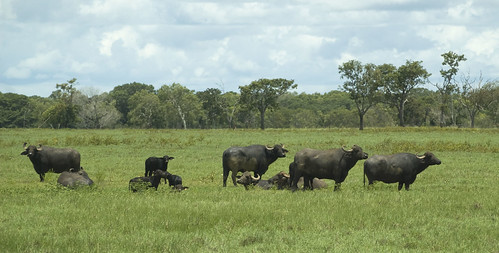
Peter, owner of a Cruise company calls us during our stay in Darwin and on hearing that we were trapped there due to the floods said that we must come and see what the Adelaide river has to offer.
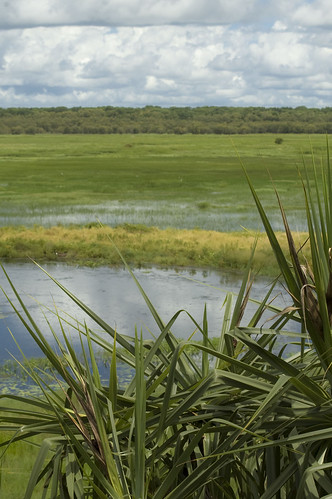
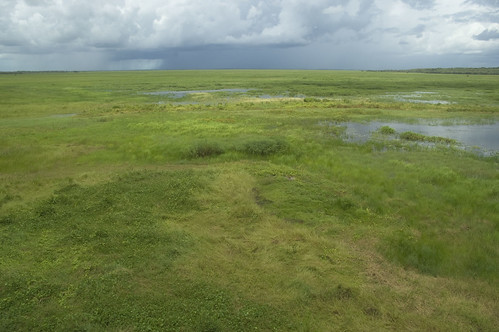
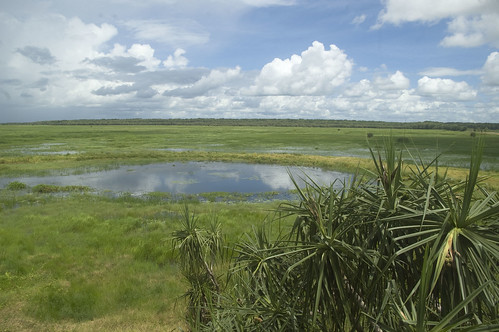
We board the pick up bus in Darwin City Centre and we head towards Jabiru, our friendly, informative driver talks away, tells us interesting tit bits of information about the things we can see to the left or the right, answering all questions thrown at him with confidence and ease. The land surrounding Darwin is lush and green, and with the wet season also comes the vast array fauna and flora, in fact, we are told that this area of the Northern Territory has more bio diversity than that of the Serengeti Plains. To see this much green and water around, especially after sleeping on the red earth of central Australia was astonishing. However, the most astonishing fact, and one which further explains our being trapped by the rains is that at one point over the last few years one part of the Adelaide river, normally 92m across expanded to engulf all surrounding land during ‘The Wet’ as it swelled to an incredible 14kms! The brief stop to the visitors centre gave us impressive aerial views of the land bellow us and offered explanations of some of the roles of the small creatures which help maintain the balance of the ecosystem.
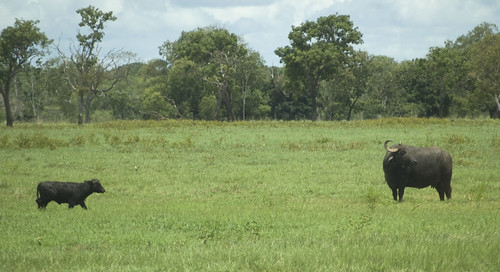
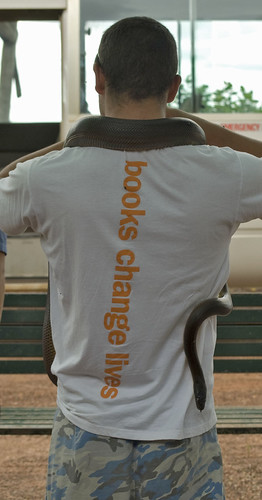
On arriving at the jetty we were greeted with a snake around our shoulders much like an Aussie version of a flower lei and we shook hands with our skipper Peter himself, who promised us something a little different.
Very shortly after we set off Peter assures us that there is a croc of at least fours meters in length coming toward the boat. All the passengers quickly move to the right side of the boat, cameras at the ready, all pointing in different directions as we make wild guesses as to which ripple in the water is the croc. Eventually he has to verbally guide us to the exact location of the camouflaged killer so that our untrained eyes could focus in.
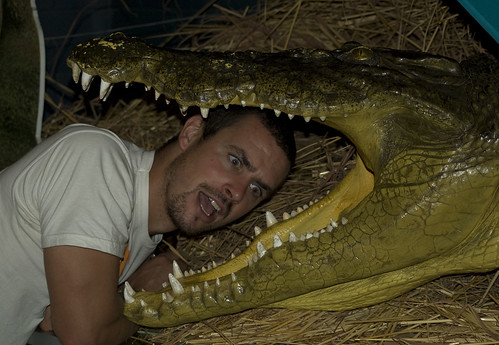
I’m leaning over the side of the boat; waiting for the shot I’ve been promised. Zoom lense ready, I’m waiting for the slight rippling of the water to give away the start of the jump. Suddenly he makes a giant, muscular, adrenalin fuelled jump. My zoom lense shows the teeth fast coming nearer to my face, he is really big. So startled by the swift movement I jump back, recoiling from the danger, I'm too surprised to react to the impressiveness of the beast in a professional manner and completely miss the shot.
Crooked, yellow, aging teeth amongst the fresh new nashers squeezed into a powerful jaw come closer and closer and closer as the prehistoric throw back lunges out of the muddy waters, opened mouthed, toward the crowd looking over the side of the boat. Up, up, up he jumps until two thirds of his tail is completely out of the water. Nothing had quite prepared me for the sight of the crocodile lunging so far out of the water bearing all its teeth. With my eyes only just back in their sockets. My exact words of exclamation were uncouth and unrepeatable so I will lie and say I said something along the lines of “Holy Cannoli!” followed by “Wow, he sure is a big old chap, how simply awe inspiring”. He snaps at the meat on a stick which has roused him but at the very last moment it is teased out of his reach and he disappears back into the water. The lure is lowered back within reach again and he makes another spectacular jump for it, this time clamping down on the bait and swallowing it whole after landing with a splash back into the depths, camouflaged once more.
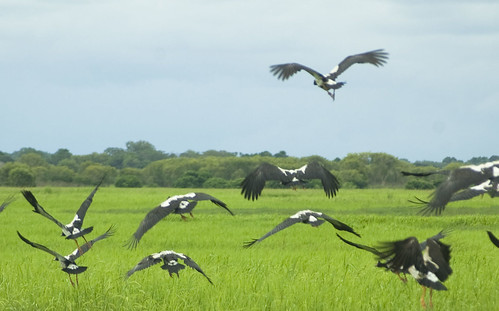
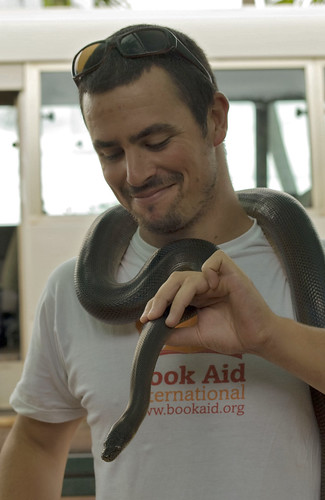
The huge specimens we see today have recently been fighting one another, fresh scars over old ones leave white marks on their heads, apparently a six meter crocodile named ‘Hannibal the Cannibal’, who has recently moved into the area has been throwing his weight around and showing the other crocs who’s boss. Powerful, age old monsters, fierce and ruthless, persistently scout the Adelaide River, learning the habits of those who venture into the waters, either to moor a boat, empty crab pots or to swim. But why would anyone with a decent sense of life saving fear go anywhere near the river? It is crawling with these man eaters. Ruthless, without sympathy or remorse they guard their territory, patrolling the turf. If you are in, or nearby the water, and they are hungry, you haven’t got a chance. You can’t appeal to their better nature and whilst Croc Dundee fans would like to believe it is possible to talk your way out of becoming dinner, the reality is that it is the croc you don’t see that will get you and you won’t ever see it’s face to get a chance to stab it in the nose with your hunting knife. We’ve seen pictures of tourist in small boats being stalked by crocs and listened to countless tales of crocs from almost everyone we meet. But, the truth is you don’t meet people with croc scars, and after seeing the big ones up close and personal, I can clearly see how it would be impossible to survive to tell the tale.
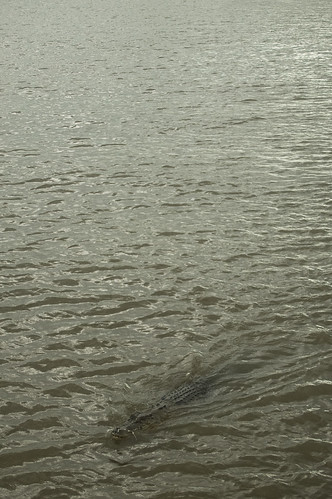
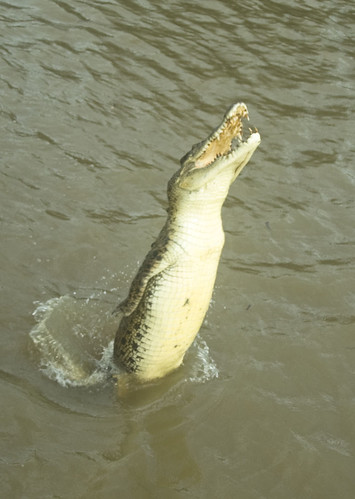
The news is saturated with croc stories, one day a photo of a blurred croc in the distance graces the front page, the next, descriptions of a sandal being found on the banks near where the victim was last seen, or a hat found floating down stream. Croc attacks are not as uncommon as you would hope in the Northern Territory. Since our time in Oz we have followed the reporting of a man, a father and husband, who had been taken by a crocodile whilst he was checking his crab pots. He should have known better than to put his pots out in the same place three days in a row, say some, whilst others say kill the croc. An debate on the local radio stations about what should be done causes an outcry in the outback communities who believe things should be left as they are and people should stop interfering with the natural food chain.
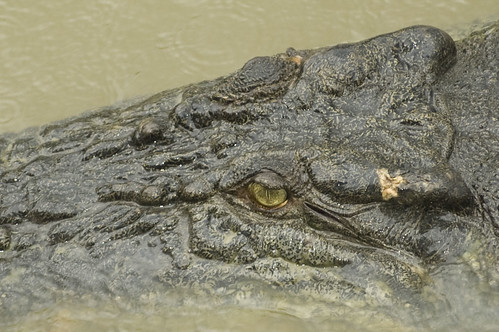
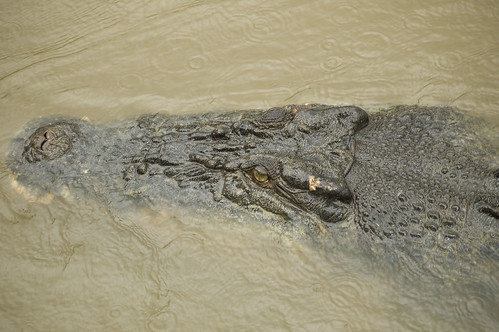
What is so misleading about the media use of the croc sightings is that they print stories of crocs as if they are a rare occurrence. The truth is that they are everywhere, Phil and I couldn’t believe how many we saw and we know for sure there was a whole bunch more hiding in the waters that were not visible to us. A croc picture on the front page sells more papers, in fact, we find out that they tend to double or triple their sales whenever our prehistoric predators grace the front cover.
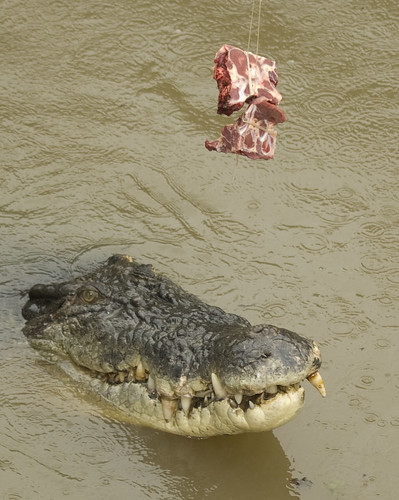
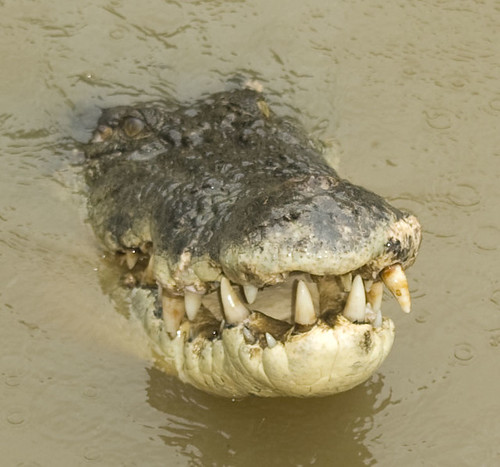
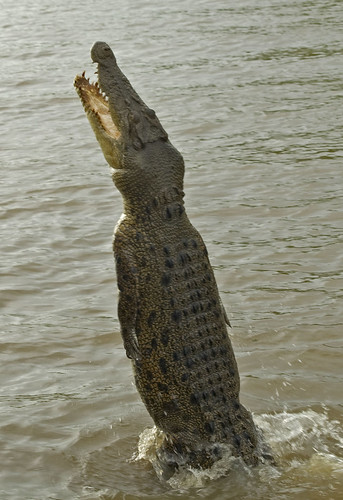
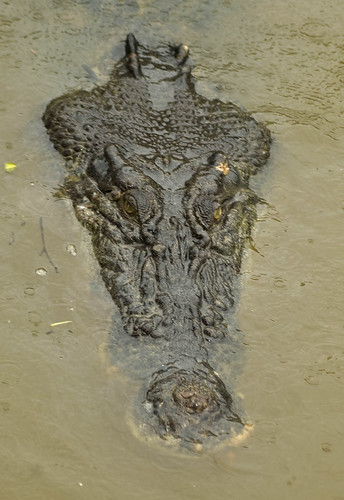
Croc Facts
They can leap so that 2/3rds of their tale is out of the water
They grow new teeth as and when they are needed
They swallow stones to aid with digestion and for balance
They bask in the sun with their mouths open so their brains don’t over heat.
If croc eggs are stored below 30degrees they usually become female, if stored below they become male.
They can become really big!!!
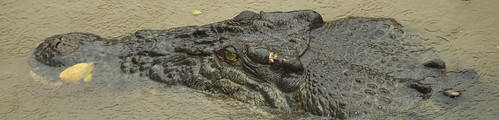
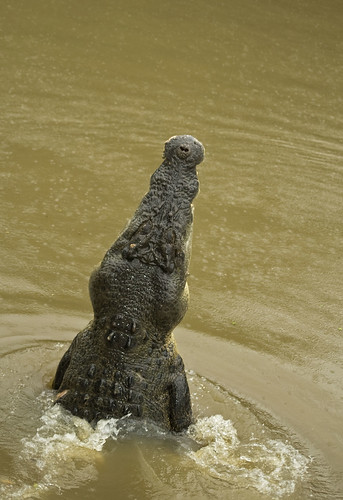
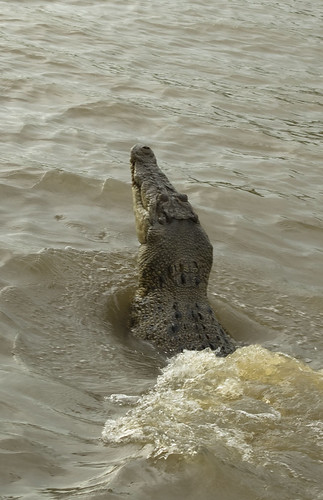
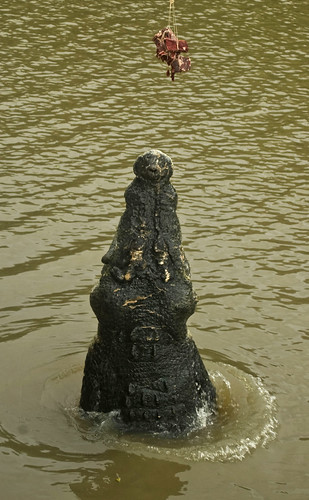
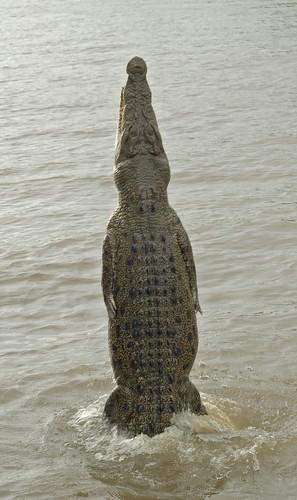
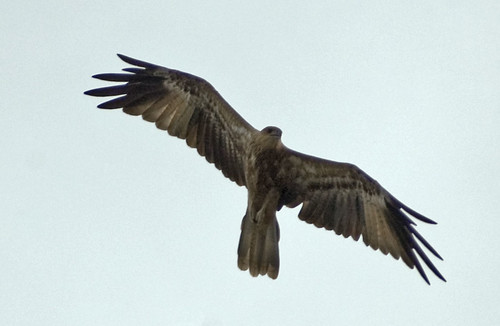
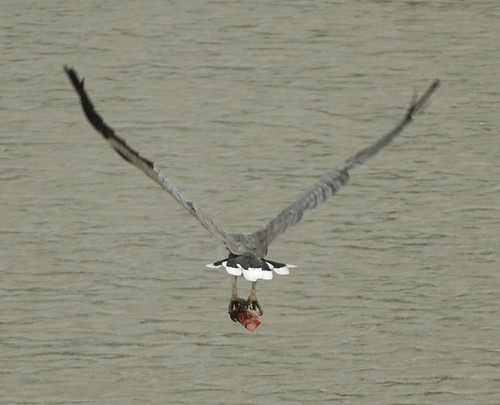
Birds of prey steal tit bits of meat as it is thrown in for the crocs
Phil and I were so thoroughly impressed with what we saw on this trip, it was something we were not expecting to ever see in the wild.
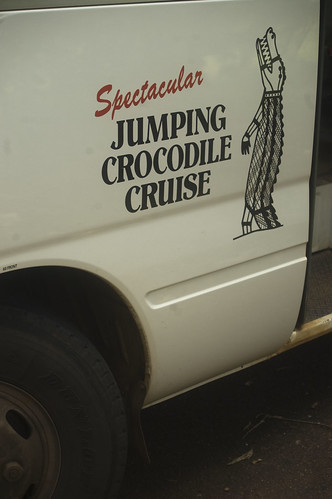
For bookings and information visit Spectacular Jumping Crocodile Cruises
Read a cheeky bit more!
Pee Wee's at the Point Restaurant, Darwin
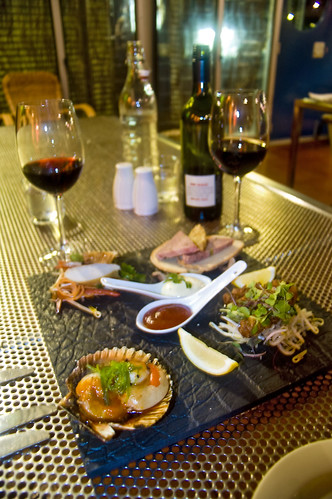
Our entree, a smorgasbord of savoury delights
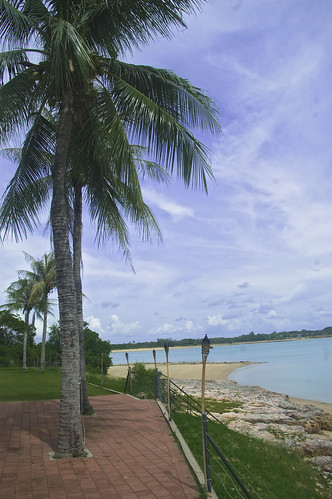
Pee Wee’s at the Point Restaurant, Darwin, sits at the end of a long path, between East Point Reserve and the sea. Dining late, we arrived after dark. Driving into the unlit car park we couldn’t help wondering if we were perhaps going the wrong way. At first I had a brief thought that the advertisements in the various brochures found around town must have largely doctored their impressive looking photographs as I was confronted with plain and unimpressive looking buildings with corrugated aluminium fronts and its modest and ordinary shop front with a round the back feel to it. As it turned out this sensation of back door entry was absolutely correct, as that was precisely what we were doing, the front being the glorious beachfront was accessible only through the restaurant. And, as long as you arrive before dark, you can see nothing but nature for kilometres in front of you. And on the other side of the waters, the skyline of Darwin city sits on the peninsular while the sea calmly laps the palm lined shore in the foreground, as we later saw when we revisited Pee Wee’s the following day to see what the day view had to offer.
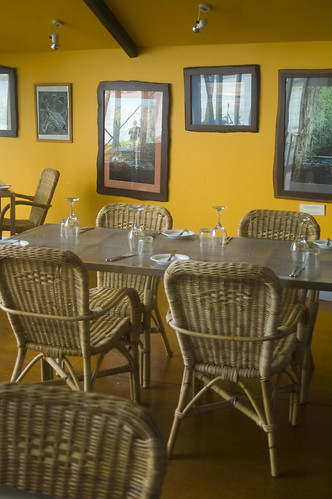
Pee Wee's interior
We were immediately greeted with a plethora of friendly smiles by very attentive staff, who after offering us cocktails and wine, talked us through the specialities of the evening and with great talent roused my taste buds as they described by heart the chef’s recommendations, which we couldn’t wait to sample.
The furnishings were made for keeping patrons cool as opposed to keeping them intimate. As I sat on the other side of a vast table, feeling I was a little too far from my dining partner to talk discretely, I really felt the spaciousness of the room. But rather than embracing the legroom I felt the need to be closer to my company and moved my chair around the side of the table to better reach for a toast to be closer to our giant shared chef’s special entrée, elegantly laid out in front of us. And as we clinked our glasses of delicious house red together I thought to myself that this is the first toast we have had in a long while made with an actual wine glass and not a yellow plastic mug. All that was missing was a few candles, although the lighting was very pleasing regardless.
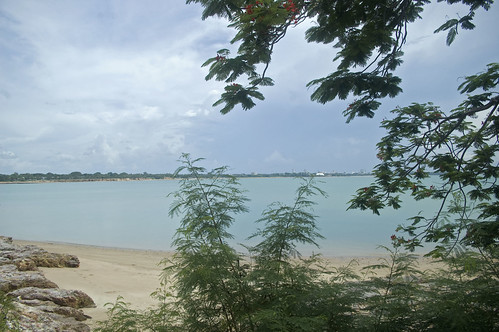
The view from Pee Wee's
We slowly savoured each of the many treats, each of us very happy not only about the freshness of the sea food but of the mouth-watering savoury jams and sauces. The duck dish was juicy and tender, the sauce superbly complimenting without overpowering. The salt water barramundi was sumptuous.
When the dessert menu was offered, patting our stomachs and finding ourselves a little over satisfied with the food so far we thought we probably shouldn’t. ‘Well, I’ll just tell you about the specials quickly then.’ Said the waitress. And as soon as she described the first offering we simultaneously declared ‘ohhhh that sounds good!’ ‘It would be rude not to, given the complimentary treat we were being offered tonight.’ Funny how you can suddenly acquire a second stomach for sweets, it’s referred to in Japan as betsu bara, the second stomach, which pretty much perfectly describes the fact that you can go on eating dessert after you are positive you couldn’t eat another savoury bite, no matter how glutinous you’ve been with the starters, entrees and mains.
The dessert dish we chose was a taster plate, a smorgasbord of delectables, a sample of each of the evening’s specialities, no need to choose because you get to sample everything! This way of eating is perfect for me, as I always covet the dish someone else orders. A huge marble plinth was placed before us with home made rum raison ice-cream, sorbet with fruit puree, chocolate cakes, cheesecakes and other treats. Each sample more delicious than the previous, the prefect, scrumptious ending to a most satisfying meal and we leave the restaurant full of cheer, full of delicious morsels and full of chocolate induced mirth.
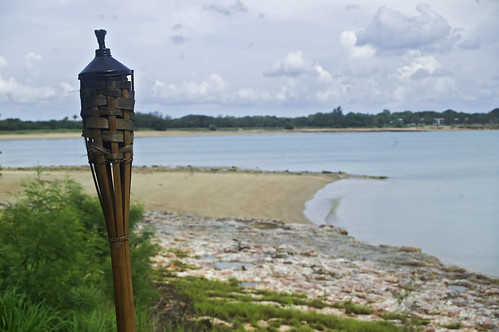
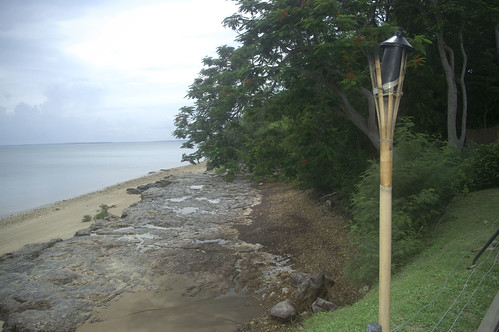
Josh, manger and employee of Pee Wee’s for 11 years told us that he find great pleasure in his work. On visiting him out of hours the following day to take some pictures, we found him walking his dog along the lawn and attending to the outdoor candles. ‘I come in early every day to be by the sea, to watch the sharks, dolphins and crocs, and to put some food out for the wallabies that visit the grounds. Who else gets to do that at work?’ ‘I love my job here.’ He said. And it shows. Staff members wear genuine smiles. They have taken the time to learn menu items, offering you all available choices with mouth-watering knowledge, making sure you are treated the way you always want to be served in all those restaurants, whose service often disappoints. Either we made the best choice possible on the menu for each course and luck was on our side, or everything on the menu was just as delectable as the dishes we tried, it’s hard to know, but one thing is for sure, this restaurant comes high on my recommendations. The food is superb, the staff are wonderful and the views are beautiful.
For bookings and further information visit Pee Wee’s here
Read a cheeky bit more!
Merry Christmas We of the Never Never - Mataranka
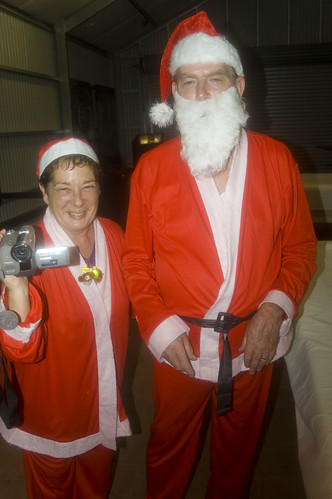
Chris and Chris play the part despite the Outback Aussie Xmas heat
With around 400 residents, the population of Mataranka fluctuates variously with the nearby Aboriginal community, with its seasonal influx of nomads and blowins. Walking into the Mataranka United Roadhouse, it was my turn to do the asking. An informal rotational system seems to be the way to do it. We have to ask a lot. Much asking gets done, and when you’re up you’re up and when you’re down just sit in the back of the van. I was feeling lucky after the lunch at the Homestead, and so strove to strike while the iron was hot.
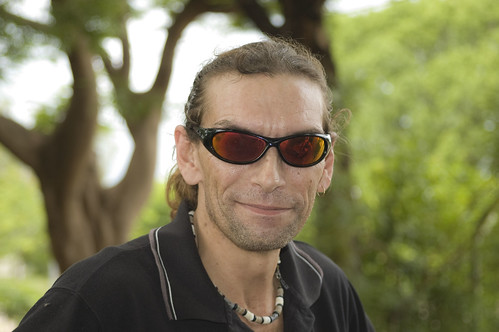
Nipper
I parted the doors of the roadhouse. I held my gaze, looking around me for that hot potato, and mosied on in the door like a gun slinging extra from Mary Poppins, chim-chimenny-cherroo, par’dner, and breezed up to the counter. The guy serving was a tall, pony-tailed desperado, and he was serving an Aboriginal man with the kind of ferociously hard-hitting light-hearted banter that had me a-jangling my spurs.
“No! You can’t have it! I’m busy… Ok then. How many do you want? Three! Again! [Cue laughter all round. A tight, nervous grin coils my mouth] I’ll have to stop you coming in. Here you are. $6 please. Thank you. Now fuck off and don’t come back!” [Cue more laughter, on both sides; customer service round here is savage]
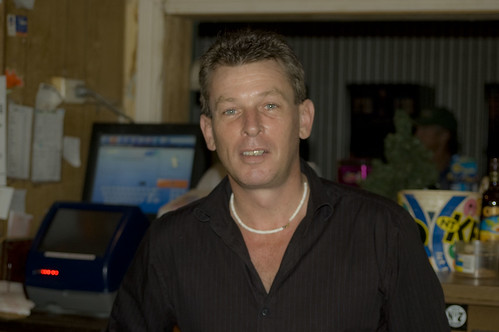
Darren
It was my turn next. I was next in line. I looked behind me to see, hoping against hope that there was someone else wanting to buy something, as I was wanting to buy some time, knowing it’s the quick and the dead in these parts, and a solid reliable witness would back me up in a court of law. But it was time to ‘man up’, as they say in these parts, and with my composure filling my cowboy boots with a steady trickle, I stood there by the counter, (not in front of the counter, by it, out of the way) with a hand on the counter-top and after a cough to clear my throat, I asked politely (like a Marine!) if I could speak to the boss about something.
“I could be the boss. It depends what you want. Doesn’t it? Tell me what you want first?” he said coiling a tight-lipped smile that doubled as a you’re-going-to-have-to-get-through-me-first-buddy expression.
“Eerm”, I mumbled, trying to compose myself, shuffling my feet - chin-chimeny-cherroo - before telling him the nature of our mission, and our need for fuel for which we would work.
“Oh!” he exclaimed, “I’ll get Christine. She’s the boss. She’ll be into this sort of thing. Wait there, I’ll get her”. He disappeared into the kitchen behind him, emerging a minute later with the owner, the boss-lady, Christine, evidently busy and flat out. Nevertheless, she took the time to listen, offering to help straight away. They owned a Motel further up the street and had three rooms that needed to be remade; they would pay us for each room done, and convert this into fuel for us.
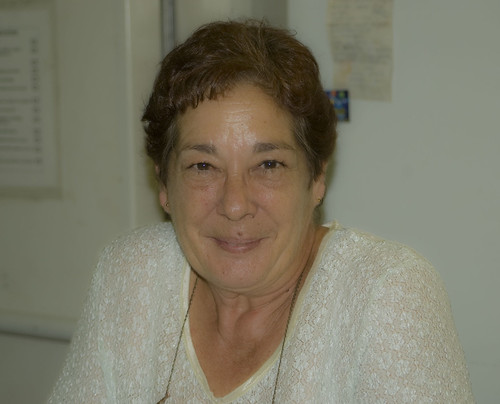
Christine (Chris or Little Boss as known by the Aboriginal community)
“Cassie my granddaughter will show you where everything is. I’ve got to cook the meals for the pub now, so come see me when you’re done, ok?”
By the time we had finished it was getting on in the day, so we asked if we could stay for the night and work to pay for it. Christine told us not to worry, that she had an offer for us, but that she would tell us later on, when she was finished at the Roadhouse, in the meantime relax (and, I heard her say anyway, and Phil tells tales of how he heard it too, but Anne, she says it’s not so, that it was never said, that we should relax and… watch the cricket). So we did.
Later, Christine’s daughter Lou came a-knocking, passing on the message from a still busy Christine that there was enough work for us over Christmas and New Year if we wanted. Ponting hit Ntini for a glorious boundary off an attempted Yorker, the crowd went wild, Phil’s leg twitched, Anne’s nostrils flared, we told Lou to tell Christine the answer was yes, and we all started bright and early the next morning.
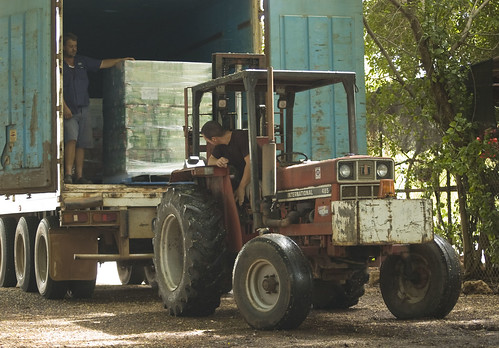
Phil doing one of his chores
I was working at the Roadhouse with the guy I had spoken to at the counter, who, as it turns out, was more bark than bite, and called Nipper. Lou, also there at the Roadhouse, was helping out for a few days cooking, before going back to Darwin. Cassie her stepdaughter, split the shifts with me. Bernie, a Road Train driver, is Lou’s husband, together with the two cheeky imps Jake and Tayla running around, were down for the visit.
Cassie’s boyfriend Kiel was working there, with Phil, on Yard duty. The Yardies worked between the Roadhouse, the Pub and the Motel, fetching, carrying, leaf-blowing with barely enough time to sit and watch the cricket all day on the T.V at the Roadhouse. Heidi the Jillaroo Cowgirl was working the wet season as a cook, on sabbatical from her usual occupation working as a Ringer on a Cattle Station and as a Rodeo rider.
Anne found herself at the Pub, learning about Keno, and working with English barman Darren, a journeyman bartender working his way across Australia, and through the Territory. Chris, Christine’s husband, managed the whole affair, with a lot to do, having only taken the place over a month before we arrived.
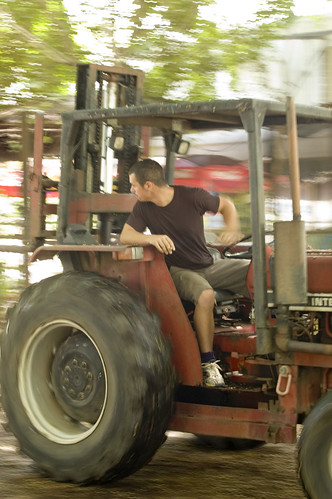
We spent the time leading up to Christmas working this way, divided between the Roadhouse, the Pub and the Motel, serving food, drink and blowing the leaves from the paths. Ever-present and part of the daily routine was our interaction with the local Aborigines. Always a lively topic in rural Australia, they are still, today, seen as a ‘problem’. This problem has been handled with various degrees of interventionist policies and strategies over the years, always implemented with the grander-scheme-of-things for-their-own-good high-minded intent and ranging from the brutal, savage and genocidal show of force to segregationist laws and an attempted ‘breeding out’ policy to an apologetic and now conciliatory stance.
The violence bestowed upon Australia’s Indigenous people is shocking to say the least. The Stolen Generations, for example, are part of Australia’s past it has only recently abjured. The forced removal of Aboriginal and Torres Strait Islander children from their families was official government policy from 1909 to 1969. The removal policy was managed by the Aborigines Protection Board (APB) which was a government board established in 1909 with the power to remove children without parental consent and without a court order.
Under the White Australia and assimilation policies Aboriginal and Torres Strait Islander people who were ‘not of full blood’ were encouraged to become assimilated into the broader society so that eventually there would be no more Indigenous people left. The poplar view at the time was that Indigenous people were an inferior race, and therefore unnecessary.
Children were taken from Aboriginal parents so they could be brought up ‘white’ and taught to reject their Aboriginality. Children were placed with institutions and from the 1950s began also being placed with white families. Aboriginal children were expected to become labourers or servants, and so the education they were provided with was very poor. Aboriginal girls in particular were sent to homes established by the Board to be trained in domestic service.
The lack of understanding and respect for Aboriginal people also meant that many people who supported the child removals believed that they were doing the ‘right thing’. Some people believed that Aboriginal people lived poor and unrewarding lives, and that institutions would provide a positive environment in which Aboriginal people could better themselves. The dominant views in the society and government also meant that people believed that Aboriginal people were bad parents and that Aboriginal woman did not look after their children, and, indeed, forgot about them as soon as they left.
No-one knows how many children were taken, most records have been lost or destroyed, but the estimates are at over 100,000. Many parents whose children were taken never saw them again, and siblings who were taken were deliberately separated from each other. Today many Aboriginal people still do not know who their relatives are or have been unable to track them down an unforgivable anomaly in a culture so closely tied to kinship and family.
The generations of children who were taken from their families became known as the Stolen Generations. The practice of removing children continued up until the late 1960s meaning today there are Aboriginal people as young as their late 30s and 40s who are members of the Stolen Generations.
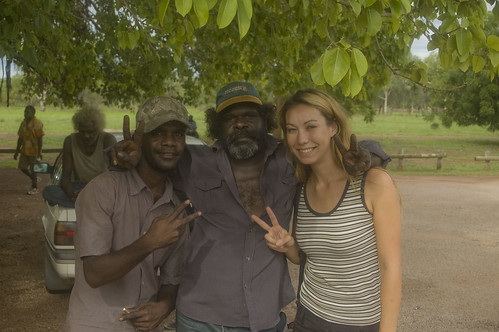
It is quite an extraordinary thing to contemplate this. The facts are shocking in themselves: They were not counted as citizens until 1967, when they were included in the census for the first time. It was still legal to hunt and kill Aboriginals for sport until the late 1920s. From 1911 until 1964 they were considered ‘wards of state’, with The Chief Protector of Aboriginals having control over every aspect of their lives –without his permission they could not marry, leave their compound, settlement or area of the country, dispose of property, travel across state borders, drink alcohol, own a gun, negotiate wages, open bank account or apply for social security benefits – and were segregated from the townspeople and subject to strictly enforced curfews.
In 2007 the former Howard Government announced a national emergency response to child sexual abuse and drug and alcohol abuse in the Northern Territory. The NT Intervention, as it became known, involved a range of different measures, involving the quarantining of welfare payments for Aboriginal people living in Northern Territory remote Aboriginal communities.
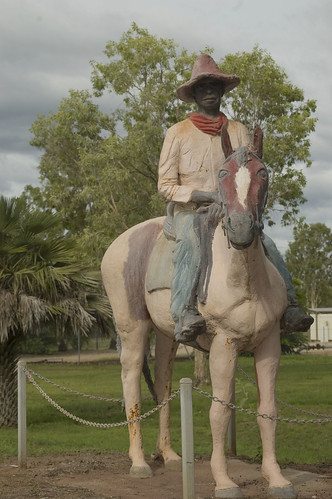
In order to pass the laws the Government had to amend the Racial Discrimination Act. The welfare laws involve replacing 50% of welfare payments made to all residents living in one of the ‘prescribed’ Aboriginal communities with Basic Cards that can only be spent on food and clothing. The rules are also referred to as an Income Management Regime. The present Rudd Government, while reviewing the scheme, continue to support it, wishing to extend it to all communities, not only Aboriginal.
Another part of the project was the widespread banning of pornography, and the monitoring of alcohol consumption. Drinking in the streets and parks has been banned, as has bringing alcohol into Aboriginal communities. Being drunk in public carries with it a night in the cells or prosecution, and allowing an Aboriginal to get drunk on the premises carries with it the suspension of the Publicans liquor license. All take-outs are monitored; their id’s scanned through a national database, recording how much they buy, when, and whether they are entitled to buy any at all. If they have been red-flagged, the system will show it, and, computer says no, you can not sell them any alcohol.
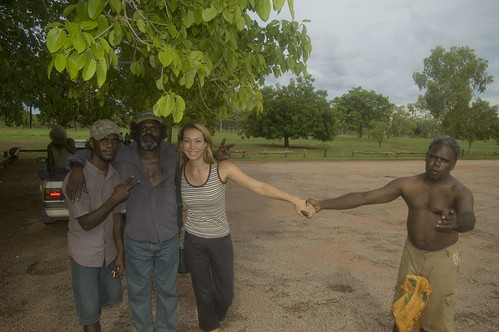
The welfare system, and the Land Rights Act of 1976 which granted them royalties from the mines and cattle stations on Native Land has provided money the value of which they have no language for. There are no numbers in Aboriginal languages. “One, two, many” is a legitimate form of counting for some. Theirs is a culture that never needed anything greater.
Working at the Roadhouse and Pub we saw how the value of the money they carried was relative to how much they could get for it. They share their money, their extraordinary communality reflected as they buy each other food, drink and cigarettes, depending on who has money, and when. The regularity with which each Aboriginal customer bought the same brand of cigarettes, the same brand of beer, and the same deep-fried food reached the point of parody sometimes.
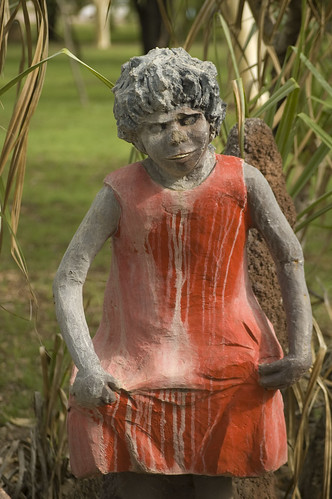
With so many interventionist policies regarding the serving of alcohol and the monitoring of their behaviour while on the premises, it placed us in the role of policing them, placating them, or ejecting them. Drunk at 11 in the morning in the Roadhouse trying to buy food they couldn’t pay for, or angry at being told they had exceeded their daily quota of alcohol and were denied buying anymore, or humbugging (begging) for money, cigarettes or drink from each other and arguing, it wasn’t easy, or particularly endearing.
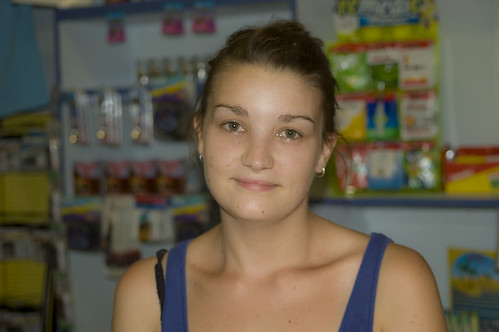
The lovely Cassey
Chris and Christine had many years experience working with Aboriginal people in the Territory, and told us many stories of what it is like in some of the more remote out-stations, where the influences of drink and idleness are not so prevalent. It was astonishing to witness not only the way they were treated, the opinion held about them, but the behaviour that fuels this. That they are besieged by alcohol and beset by aimlessness and listlessness is very apparent, and that violence and destitution is a way of life among many of them seems clear.
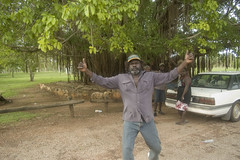
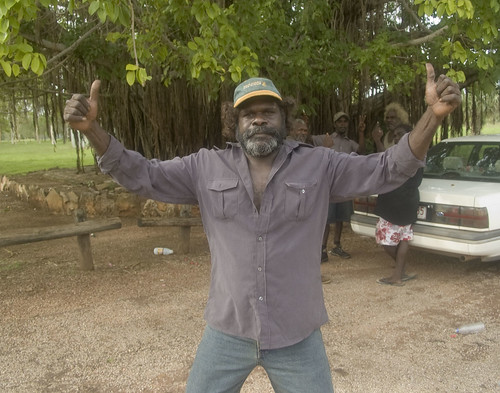
Some Aboriginals don't like to have their pictures taken but some are more than happy for you to snap away
The ‘Longrass’ Aboriginals are so called because they choose to sleep in the long spear grass that grows, up to two metres tall sometimes, around the Tropics. The bushland on the other side of the Highway is the shelter for the local Aboriginals. There is a settlement nearby, but the amount of people coming out of the long grass as we opened the Roadhouse at 7am, would suggest the majority of them had slept under the stars despite the heavy rains.
While the rain continued, and with nothing to do, the Aboriginal men and women would seek the cover of the large shade trees, or hunker down under the canopy of the Roadhouse. There they would sit and wait, listless and smoking. Pacing occasionally back and forth to look through the glass door repeatedly, hovering, half-in half-out, pace up and down, humbug smokes from friends emerging from the long grass to join them, wait, look at the time, hover, then at 10 o’clock, when the pub opened, they were gone.
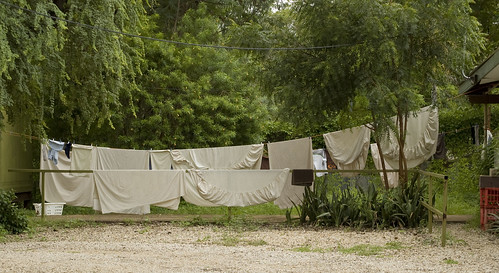
The laundry we had to hang up and take down up to six times a day because of the sudden tropical rain
That hardship, sorrow and sadness is closely associated with the plight of Aboriginal people in Australia became all the more clearly demonstrated during our stay in Mataranka. Still so closely tied to the land they inhabited alone for so long some prefer to sleep outside rather than in the homes provided, to be nearer the pub and shops, providing a neat metaphor for the state of affairs of a people neither one thing nor another, neither living as they did traditionally, nor as our custom in the western world dictates.
It truly is a problem, and one that the federal government can’t solve on its own. We didn’t come up with any answers, merely questions and however long you look at the issue, examining the grieving past , and the present-day fall out, the future is one that cannot include the perpetuation of the descent into alcoholism, ill-health, unemployment and prison that blight the population right now and force the hand of an ever-ready babysitting government to intervene on their behalf once more.
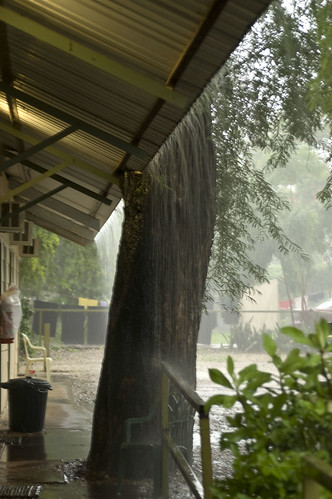
It rains almost every day over Christmas and New Year
Christmas was, for us, a bit of a damp squib. With Chris and Christine celebrating with Lou and Bernie, who were in Darwin Christmas Day, on Boxing Day with a feast for all fit for the King of Kings, we spent Christmas Day day eating instant noodles, drinking milkless tea, watching black and white movies on badly tuned TVs while it rained.
Boxing Day dinner made up for our instant noodle Xmas lunch
A barbeque cooked for us in the evening by Chris livened us up, and the next days feast, with a pub full of locals and family was more like the Christmas we had been hoping for. New Years Eve was better. While Phil and I had finished work around 2pm, Anne had just started at the pub, so, being the friends we are, we went to keep her company. A tab opened up by Chris and Christine for us paved the way for some celebratory drinks, to see in the Ney Year, and it was lucky thing we had those early drinks to see it in because come two o’clock in the morning, after downing shots of bourbon and singing along with everyone else, with New Years spirits high and salutations passed around, it was around the time that we were singing an ode we composed to Nipper, called ‘Trevor’, that the sight in one eye blurred double and as legs wobbled correspondingly arms started to gesticulate wildly. I did what I always do when wildly drunk - but for the first time in 2009 - and sang the next ode to the wonder of Phil, before passing out arms splayed.
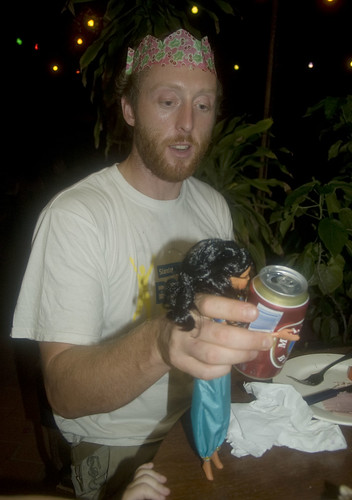
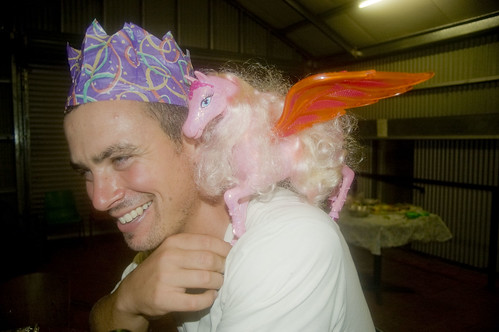
Anne catches Phil and Gareth entertaining themselves with Taylor's Christmas toys
We put off pushing on because we liked it with these people and knew we had had it good. But destiny was calling, actually it was Lou and Bernie, offering us a place to stay in Darwin when we got there, so, fully fuelled up with $1600 raised for Book Aid, we bade Chris and Christine a fond farewell, Nipper too, and Heidi, Kiel and Cassie, and shook fellow countryman Darren by the hand, then departed up the Stuart Highway bound, at last, for Darwin.
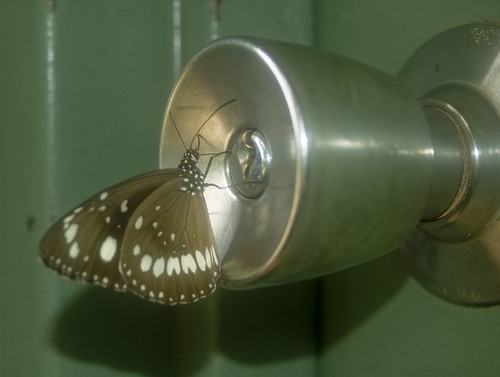
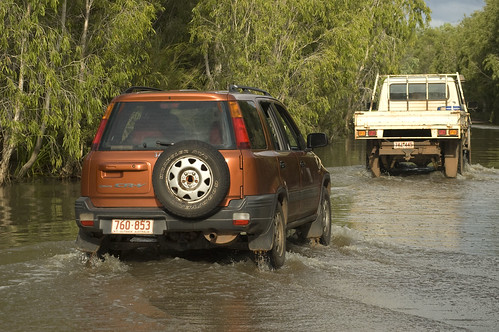
Much of Mataranka was flooded in whilst we were there
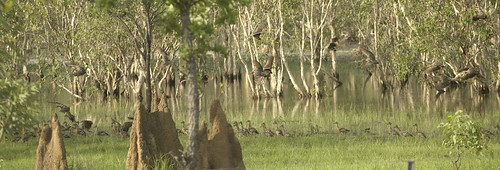
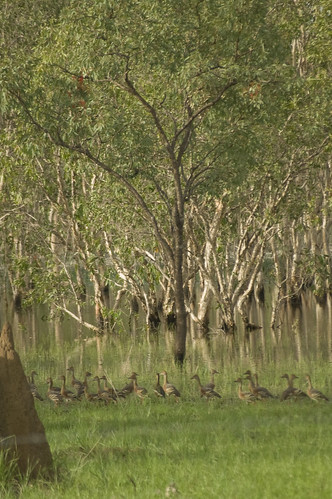
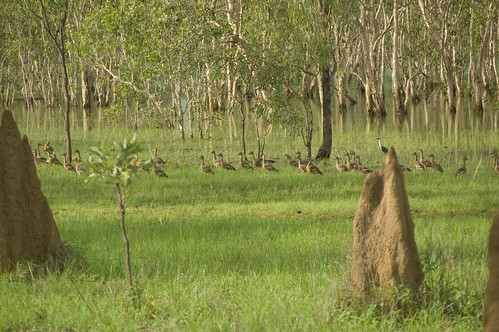
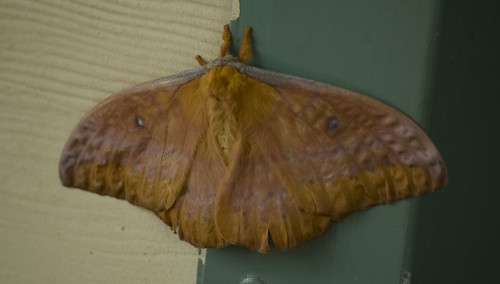
The surrounding wildlife was incredible
Read a cheeky bit more!
Subscribe to:
Posts (Atom)


 Posts
Posts


